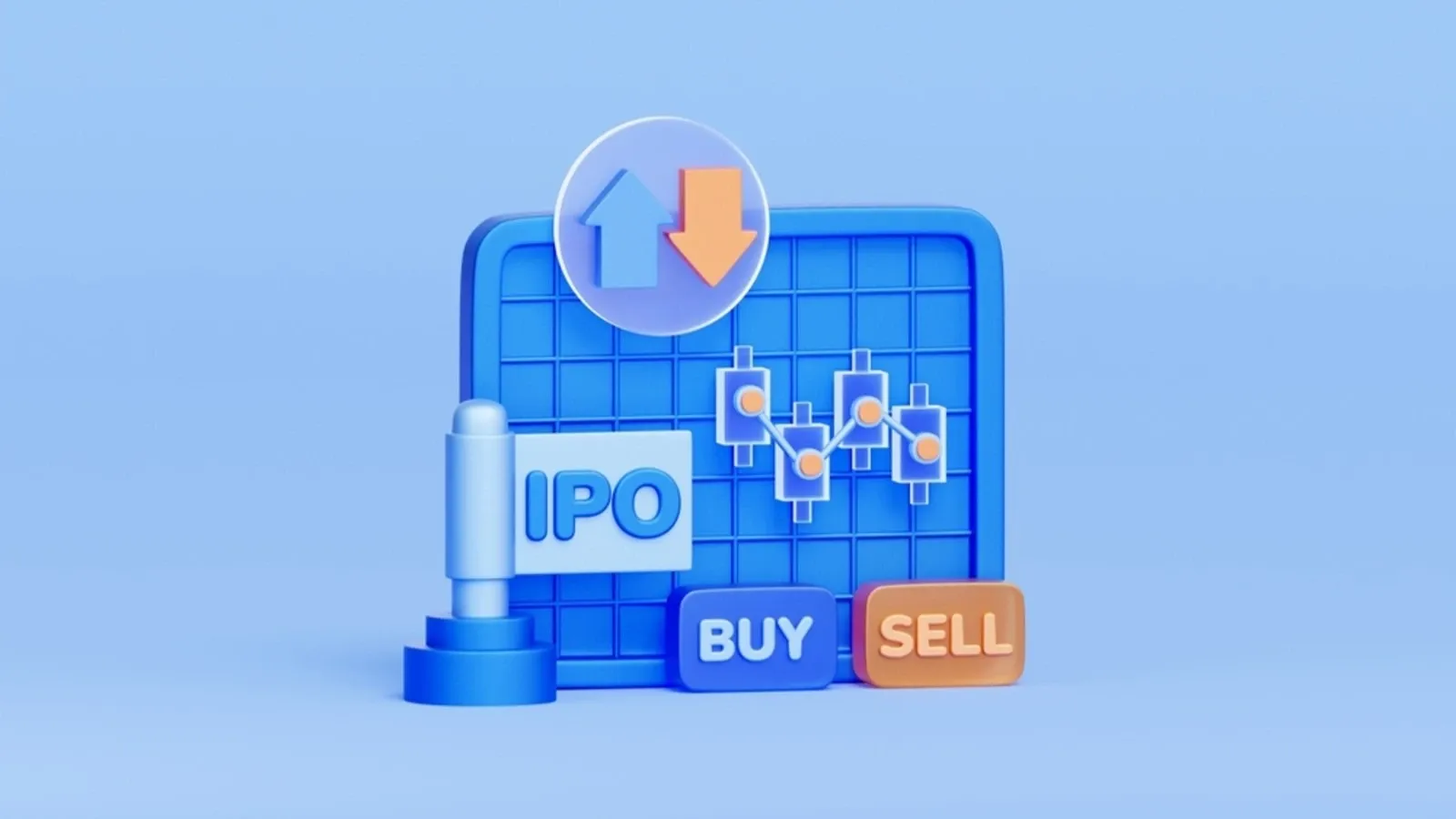
How Is An IPO (Initial Public Offering) Priced?

Written by Sachin Gupta
Published on October 14, 2022 | 5 min read


Key Takeaways
- IPO pricing considers financial performance, growth prospects, industry comparisons, and market conditions.
- Companies typically work with merchant bankers or book-running lead managers to determine an appropriate price range.
- In a book-built IPO, bidding patterns help determine the final issue price.
- An IPO's future performance depends on the company's fundamentals, valuation, market conditions, and execution.
An Initial Public Offering (IPO) is a process in which a private company offer its shares to the public for the first time. One of the most important parts of the IPO process is determining the price at which those shares will be offered to investors.
IPO pricing is not simply a number chosen by the company. It involves financial analysis, market conditions, investor demand, industry comparisons, and negotiations between the company and investment banks. The objective is to arrive at a price that is attractive enough for investors while helping the company raise the desired amount of capital.
Who Determines the IPO Price?
The company alone does not usually determine the IPO price. It works closely with investment banks, also known as book-running lead managers (BRLMs) or merchant bankers.
Together, they evaluate the company's business, financial statements, industry position, competitors, growth prospects, and prevailing market conditions. The company and its advisors then develop a valuation range and decide on the IPO's price band or offer price.
Investor feedback during the marketing and book-building process can also influence the final price.
Factors Influencing IPO Pricing
Company's Financial Performance
Revenue, profitability, cash flows, assets, debt, and earnings growth are among the first factors considered.
A company with strong and consistent earnings may command a higher valuation than a company with weak or unpredictable financial results. However, profitable companies are not the only ones that can launch IPOs; high-growth companies may also attract investors based on their future potential.
Business Growth Prospects
Investors are interested not only in what a company earns today but also in how much it could potentially earn in the future. Factors such as market size, customer growth, expansion plans, competitive advantages, technology, and future revenue opportunities can influence valuation.
Industry and Peer Valuations
Investment bankers often compare the company with similar publicly listed businesses.
Common valuation measures include the Price-to-Earnings (P/E) ratio, Price-to-Sales (P/S) ratio, and Enterprise Value-to-EBITDA (EV/EBITDA). If comparable companies trade at relatively high valuations, a company with similar characteristics may potentially receive a higher valuation.
However, differences in profitability, growth, debt, and business quality must also be considered.
Market Conditions
The broader stock market can have a significant impact on IPO pricing. During a strong bull market, investors may be more willing to pay higher valuations for new listings. During periods of volatility or weak market sentiment, companies may need to price their IPOs more conservatively to attract sufficient demand. Interest rates, economic conditions, liquidity, and investor attitudes can therefore affect IPO valuations.
Investor Demand
Investor demand is particularly important in a book-built IPO. Before the final price is established, institutional investors and other eligible investors may provide bids indicating how many shares they want and at what price. Strong demand at the upper end of the price band can support a higher final issue price, while weak demand may lead to a lower price.
Also Read: How are IPO Valued: A Quick Guide for Retail Investors
What is a Price Band?
In a book-built IPO, investors may be given a price band, consisting of a lower and upper price.
For example, suppose an IPO has a price band of ₹450–₹475 per share. Investors can place bids within that range. After the bidding period ends, the issuer and its advisors analyse the demand at different prices before determining the final issue price.
The final price is therefore influenced by actual market demand rather than being based solely on an initial valuation estimate.

IPO pricing is a careful process that balances a company’s financial performance, growth potential, industry valuation, market conditions, and investor demand. While merchant bankers and the company establish the initial price range, the book-building process helps determine the final issue price based on actual investor interest.
FAQs
Who decides the final IPO price?
The company and its investment bankers or merchant bankers work together to determine the IPO's price range and final offer price, taking investor demand and market conditions into account.
What is book building in an IPO?
Book building is a price-discovery process in which investors submit bids for shares at different prices within an indicated price band. The demand collected during the process helps determine the final issue price.
Can an IPO be overpriced?
Yes. An IPO can be considered expensive if its valuation is high relative to its financial condition, growth prospects, risks, or comparable listed companies. Investors should evaluate the valuation rather than relying only on the popularity of an IPO.
Why does an IPO sometimes list above its issue price?
A stock may list above its issue price when demand in the secondary market is strong, and investors are willing to pay more than the IPO offer price.
Can an IPO list below its issue price?
Yes. Weak investor sentiment, disappointing expectations, broader market declines, or an aggressive IPO valuation can result in the shares listing below their issue price.
About Author
Sachin Gupta
Senior Sub-Editor

is a seasoned financial writer with over eight years of experience across global markets, including Australia, the UK, and New Zealand. He specialises in simplifying complex financial concepts, making them accessible and engaging for a wide range of readers. When he’s not writing or traveling, he can often be found exploring the mountains, drawing inspiration from the calm and clarity of the outdoors.
Read more from Sachin












Upstox is a leading Indian financial services company that offers online trading and investment services in stocks, commodities, currencies, mutual funds, and more. Founded in 2009 and headquartered in Mumbai, Upstox is backed by prominent investors including Ratan Tata, Tiger Global, and Kalaari Capital. It operates under RKSV Securities and is registered with SEBI, NSE, BSE, and other regulatory bodies, ensuring secure and compliant trading experiences.
Related articles


IPO
The Ultimate Guide to Initial Public Offerings (IPO): Everything You Need to Know Before Investing11 min read | Written by Mariyam Sara