What is a Treasury Bill: A Complete Guide for Retail Investors

Written by Sachin Gupta
Published on November 11, 2025 | 11 min read
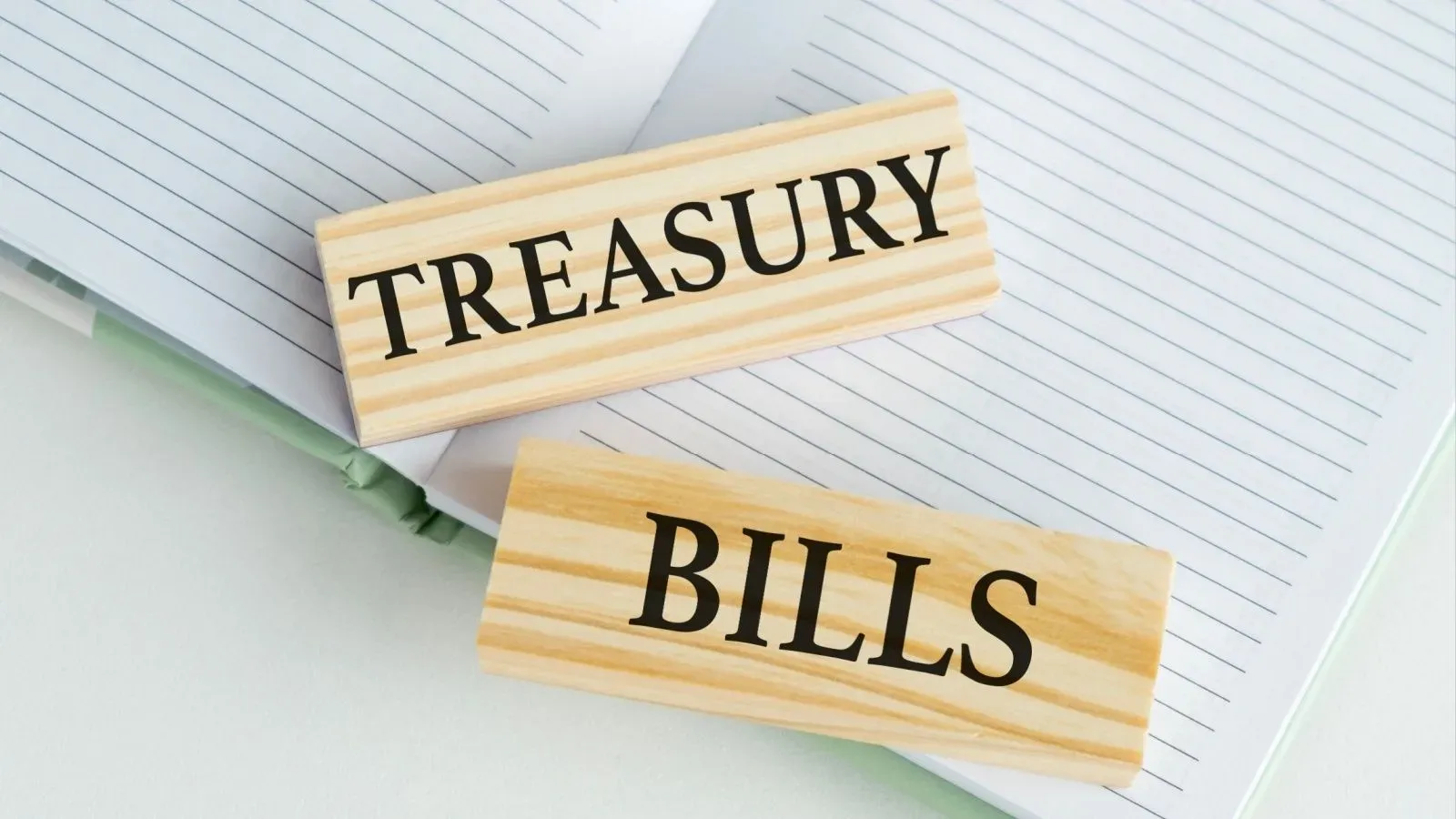

Key Takeaways
- Treasury Bills (T-Bills) are short-term government securities issued by the Government of India, with maturity periods of 91 days, 182 days, and 364 days.
- T-Bills are purchased at a discount and are redeemed at face value; the difference between the purchase price and face value represents the investor’s return.
- Investors can invest in T-Bills through platforms like RBI Retail Direct, with a minimum investment of ₹10,000.
- T-Bills are usually ideal for short-term investors seeking low credit risk, while FDs and bonds may be better suited to investors with different investment horizons.
Are you an investor looking for a low-risk investment option to invest money for a short period? You must have come across the asset class known as Treasury Bills or T-Bills.
At first, Treasury Bills can look complicated since they are part of the money market regulated by the Reserve Bank of India (RBI). Treasury Bills are issued by the Government of India to raise money for a short period. As a result, investors receive their money back along with the return earned from purchasing the bill at a price lower than their face value.
This may raise several questions in investors' minds, such as: What is a Treasury Bill, and how does it work? Can retail investors invest in them? And most importantly, how to buy Treasury bills in India?
What is a Treasury Bill?
A Treasury Bill is a type of debt security issued by the Government of India to raise funds for a period of less than one year. In a Treasury Bill, you lend money to the government for a short period. The government agrees to repay the face value of the bill at maturity.
Unlike a normal fixed deposit, the Treasury Bill does not pay any monthly or quarterly interest. It is issued at a discount to the face value of the bill.
For example, there is a Treasury Bill with a face value of ₹10,000. You may purchase the bill at ₹9,700. At maturity, you will get ₹10,000.
The gain on investment is:
₹10,000 − ₹9,700 = ₹300
The price and return will depend upon the auction and market conditions.
In India, the Treasury Bills are issued through auctions organised by the Reserve Bank of India (RBI) on behalf of the Government of India.
How Do Treasury Bills Work?
The simplest way to understand a Treasury Bill is through an example.
Let us assume that the government issues a Treasury Bill with a face value of ₹10,000. Since Treasury Bills are sold at a discount, you could buy one at, say, ₹9,750.
You hold the T-Bill until maturity. On maturity, the government will pay you ₹10,000. So your gain would be ₹250.
It is important to understand that the purchase price is not necessarily ₹9,750. It depends on the yield generated from the auction and market conditions.
For instance, the result of an RBI auction could include the cut-off price and yield of 91-day, 182-day and 364-day Treasury Bills. It is also not necessary that the longer maturity period necessarily means a higher return.
Types of Treasury Bills in India
Treasury Bills are differentiated on the basis of their maturity periods.
91 Day Treasury Bills
This Treasury Bill matures in about three months. These may be suitable for investors who wish to invest money for a short period using government security.
182 Day Treasury Bills
These Treasury Bills mature in about six months. They are suitable for investors seeking to invest money that they don't need immediately but also do not want to lock away for several years.
364 Day Treasury Bills
This Treasury Bill has a maturity period of about one year. It may be suitable for investors seeking a short-term government-backed investment with a longer maturity period compared to 91-day and 182-day T-Bills.
Treasury Bill auctions are announced by the RBI periodically. These auctions cover the three maturity periods mentioned above. The issue amount in each auction depends on the Government’s borrowing programme.
How to Buy Treasury Bills in India?
There are different ways for retail investors to purchase government securities. One such method is through the RBI Retail Direct platform. According to the RBI, retail investors can invest in government securities via the RBI Retail Direct platform. The minimum investment amount for investing in Treasury Bills through the platform is ₹10,000. One can follow the steps below to buy T-Bills.
Step 1: Create an RBI Retail Direct Account
One needs to open an RBI Retail Direct Account on the RBI Retail Direct platform if they meet the eligibility criteria. The account allows retail investors to access government securities, including Treasury Bills.
Step 2: Complete the Registration Process
One should provide the necessary personal and banking details and go through the verification process. All information should be provided accurately.
Step 3: Check Available Treasury Bill Auctions
Treasury Bills are available through the auction process. One can check the available Treasury Bills, their maturity periods, and auction details before choosing the T-Bill they want to buy. The RBI provides auction announcements and results for Treasury Bills.
Step 4: Choose the Investment Amount
The minimum investment amount for Treasury Bills through RBI Retail Direct is ₹10,000, as stated by the RBI. A higher amount can be invested in compliance with the subjective regulations and availability.
Step 5: Place Your Bid
Retail investors can take part in the auction through the non-competitive bidding facility. The concept of non-competitive bidding is rather simple; instead of predicting the auction price or yield, the investor agrees to receive the securities according to the auction result via the relevant mechanism. The RBI states that retail investors can participate in Treasury Bill auctions via non-competitive bidding.
Step 6: Wait for Allotment and Settlement
If the bid is accepted, the respective amount is debited via the auction and settlement procedure, and the Treasury Bills are credited to the account.
Why Does the Government Issue Treasury Bills?
The government has recurring expenditures and at times faces the challenge of bridging temporary discrepancies between its income and expenditure. Treasury Bills provide a way for the government to borrow money for a short time.
Consider the following illustration.
Let's assume the government is anticipating revenue in the future but requires funds before receiving that income. The government can borrow short-term funds by issuing Treasury Bills.
Investors buy these Treasury Bills, and the government gets the money. When the maturity period arrives, the government pays back the face value. Consequently, Treasury Bills are not only a financial product but also an integral component of the government's short-term borrowing process.
Benefits of Treasury Bills
Treasury Bills have some characteristics that make them appealing to some investors.
- Government Issuer: T-Bills are issued by the Government of India, which gives them a high credit rating.
- Short Maturity: Unlike long-term bonds, T-Bills mature within a year. This characteristic makes them suitable for short-term financial planning.
- Relatively Low Credit Risk: Due to the nature of government securities, the credit risk associated with them is relatively low.
- Auction Process: The Reserve Bank of India (RBI) provides information about Treasury Bill auctions, including notified amounts and auction results.
- Small Investment Amount: The RBI Retail Direct system allows you to invest in Treasury Bills at a minimum amount of ₹10,000.
- Suitable for Short-Term Funds: If you have funds that you will need in a few months, T-Bills may be worth considering instead of taking on the additional risks associated with long-term investments.
Risks of Investing in T-Bills
No investment is perfect, and there are also some risks associated with Treasury Bills.
- Returns May Be Lower Than Riskier Investments: Since Treasury Bills are low-risk investments, their returns may not be comparable to those of riskier equity investments over the long term.
- Fluctuating Interest Rates: The interest rates on Treasury Bills may vary from auction to auction. Consequently, the return available at the moment may not be available in the next auction.
- Selling Before Maturity Can Involve Price Risk: Selling the Treasury Bill before its maturity may expose you to price risk. This is because the price may either increase or decrease depending on interest rate fluctuations and market demand.
- Not Designed for Long-Term Wealth Creation: Treasury Bills are short-term investments and not necessarily suited for long-term wealth building.
T-Bills vs FD vs Bond: Key Differences
| Feature | Treasury Bills (T-Bills) | Fixed Deposit (FD) | Bonds |
|---|---|---|---|
| Meaning | Short-term security issued by the government | Money deposited with banks or financial institutions | Debt instrument issued by governments or corporations |
| Issuer | Government of India | Banks/financial institutions | Government, companies or other institutions |
| Investment period | Usually 91, 182 or 364 days | May range from a few months to a few years | May range from a few years to decades |
| Return | Generated from the difference in purchase price and face value | Fixed interest at the agreed rate | Earning interest payments or coupons |
| Risk level | Extremely low credit risk | Usually low, but depends on the bank and deposit insurance | Depends on the issuer, but government bonds are less risky than corporate bonds |
| Interest payment | No periodic interest payments; return included in discounted price | Interest payments may be made periodically or at maturity | Periodic interest payments, according to the bond |
| Liquidity | Can be sold before maturity through secondary markets, subject to market conditions | Premature withdrawal may be possible, subject to terms and penalties | Can be sold in the secondary markets, but market price will fluctuate |
| Minimum investment | ₹10,000 through RBI Retail Direct | Depends on the bank | Depends on the bond and platform |
| Best suited for | Short-term investment and parking surplus funds | Investors seeking predictable returns | Investors seeking regular income or longer-term investment |
| Price fluctuation | Relevant only if sold before maturity | There is no fluctuation in market price like securities | Market price may go up or down before maturity |
Taxability of T-Bills in India
T-bills in India do not have an interest payment mechanism but are sold at a discount and redeemed at face value at maturity (for example, a ₹100 face-value bill may be purchased for ₹98).
- Tax Classification: The profit earned on maturity (Face Value – Purchase Price) is categorized under Short-Term Capital Gains (STCG).
- Applicable Tax Rate: STCG on T-bills will be included in your gross income and taxed based on your Income Tax Slab Rate.
- Tax Deduction at Source (TDS): No TDS is deducted by the government or RBI on maturity of the T-bill.
Who Should Invest in Treasury Bills?
Treasury Bills may be appropriate for investors who:
- Are interested in making investments for a short period.
- Are interested in investing in government securities.
- Require lower credit risk.
- Have money that they may need within a year.
- Need to diversify their portfolio.
- Do not want to take higher risks in the equity market with short-term money.
They may not be appropriate for an investor seeking to build wealth aggressively in the long run. For instance, if your goal is to create wealth over the next 15 or 20 years, then putting all your money in short-term Treasury Bills may not be the best way to go about it.

Treasury Bill is a short-term debt instrument issued by the Government of India. You purchase it at a discount from its face value and get the face value back on maturity. The typical maturities of Treasury Bills in India are 91 days, 182 days, and 364 days.
For investors, the greatest benefit lies in the combination of short maturity and low credit risk. If you are wondering how to buy Treasury Bills in India, one of the simplest ways for retail investors is via the RBI Retail Direct portal.
Treasury Bills may be useful if you want to invest your money for a short period without taking the risks of the equity market. However, they should be viewed as only one component of your investment strategy and not as a solution for all your financial needs.
Before making an investment decision, consider the yield, maturity, liquidity and tax issues in relation to the alternatives available. The safest investment may not always be the best investment for each individual; what matters is the one that corresponds to his or her financial objective.
About Author
Sachin Gupta
Senior Sub-Editor

is a seasoned financial writer with over eight years of experience across global markets, including Australia, the UK, and New Zealand. He specialises in simplifying complex financial concepts, making them accessible and engaging for a wide range of readers. When he’s not writing or traveling, he can often be found exploring the mountains, drawing inspiration from the calm and clarity of the outdoors.
Read more from Sachin

















Upstox is a leading Indian financial services company that offers online trading and investment services in stocks, commodities, currencies, mutual funds, and more. Founded in 2009 and headquartered in Mumbai, Upstox is backed by prominent investors including Ratan Tata, Tiger Global, and Kalaari Capital. It operates under RKSV Securities and is registered with SEBI, NSE, BSE, and other regulatory bodies, ensuring secure and compliant trading experiences.
Related articles

Share Market
What Is a Market Correction? Meaning, Causes, and Strategy15 min read | Written by Bidita Sen

Share Market
Cyclical vs Defensive Stocks: Differences, Examples and Strategy15 min read | Written by Bidita Sen

Share Market
What is Efficiency Ratio: Meaning, Types, Formula and More12 min read | Written by Sachin Gupta

Share Market
What is a Solvency Ratio: Meaning, Types, Benefits, Limitations and More12 min read | Written by Sachin Gupta
Share Market
Profitability Ratios: Meaning, Formula, Benefits, Limitations and More11 min read | Written by Sachin Gupta

Share Market
A Guide to American Depository Receipts (ADR) for Indian Investors13 min read | Written by Subhasish Mandal