Risk Management in Intraday Trading

Written by Sachin Gupta
Published on November 28, 2017 | 6 min read

Key Takeaways
- Intraday trading involves high risk due to market volatility and sudden price movements, making effective risk management essential.
- Traders should use technical analysis, particularly support and resistance levels, to make informed entry and exit decisions.
- Setting realistic stop-loss and take-profit levels helps control losses and prevents emotional decision-making.
- Excessive leverage should be avoided, and trade exposure should be kept within a manageable portion of available capital.
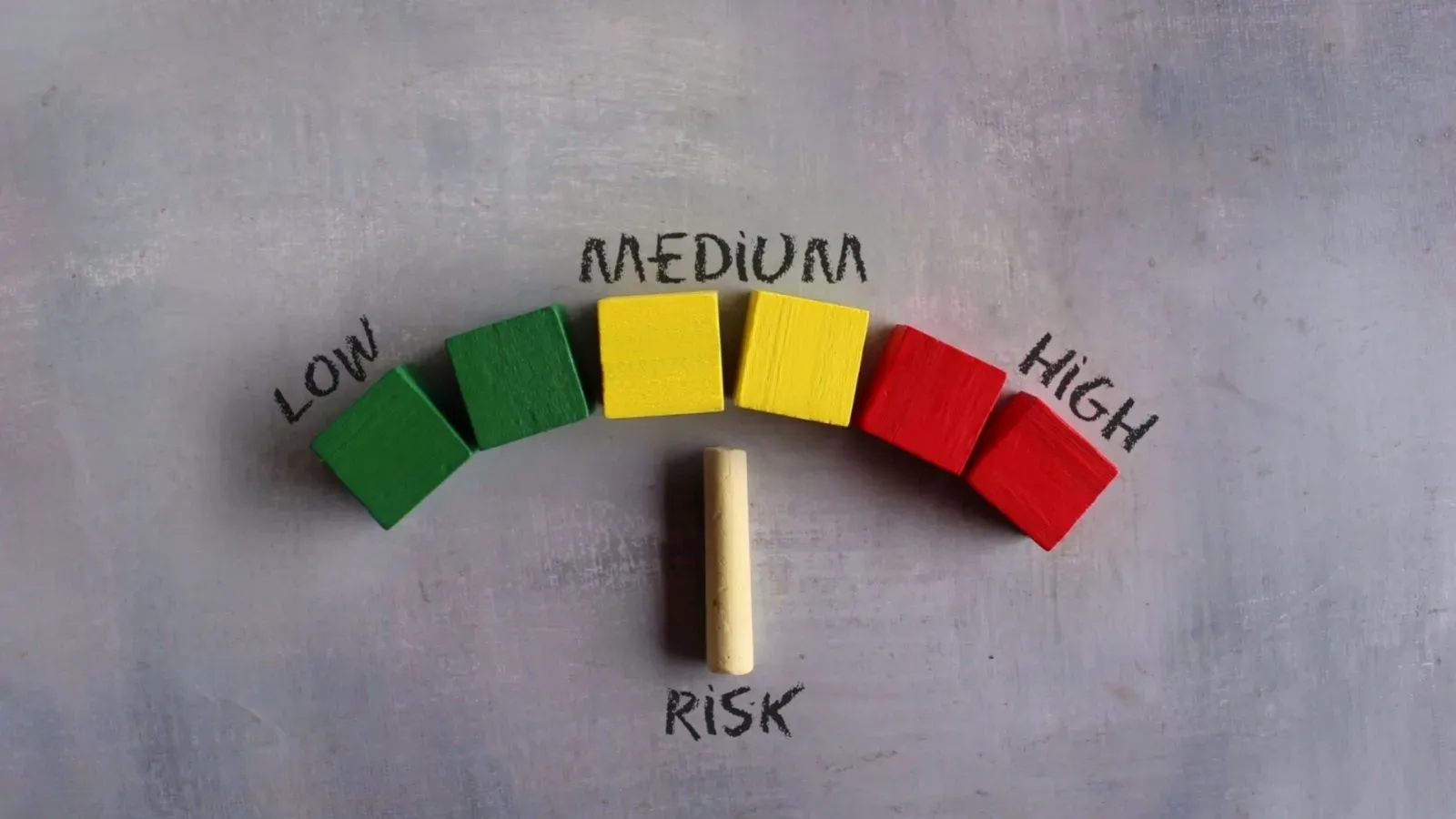
Intraday trading comes with a high degree of risk compared to long-term investments or even short-term trades. As opposed to long-term investments, any new market development could cause wild price swings in addition to the inherent volatility of the stock. To be profitable as a day trader in the brutal intraday market, one has to be adept at risk management.
What is Intraday Trading?
Intraday trading means buying and selling shares within the same trading day. In other words, all trades are completed before the market closes.
Brokers may provide margin or leverage, which allows traders to buy more shares with less of their own money. For example, with 4:1 leverage, a trader contributes 20% of the total amount while the broker provides the remaining 80%.
All intraday positions must be closed before the specified market closing time. If a trader does not close the position on time, the broker may either convert it into a delivery trade, subject to sufficient funds, or automatically sell the position at the prevailing market price to recover the amount provided.
Risk Management in Intraday Trading
Intraday trading involves high risks, so managing those risks is very important. While traders cannot control whether they make a profit, they can take steps to limit their losses. Having a clear intraday trading strategy helps stop emotional decisions when the market moves unexpectedly. Before starting a trade, a trader should decide which shares to buy, how much to invest, and when to exit. Good risk management and disciplined decision-making are essential for successful intraday trading.
Risk Management Techniques
Determine Support and Resistance
Technical analysis should be used to determine which stocks to buy. Stocks fluctuate within price ranges, with the lower point of a price range called a support and the ceiling, a resistance. These price ranges and price points can be determined by observation of historical price movements, using tools such as moving averages (average of a number of previous closing day prices) or the fibonacci retracement tool or by connecting price peaks and troughs on a chart to determine resistance and support.
A share usually tends to rise near its support price and if it's near its resistance price, usually tends to drop in value. But this is not always the case as new market developments can affect the fortunes of stocks greatly. Stocks can go up beyond resistances or slip under multiple supports to settle into new price ranges. There can even be manipulation of share prices by deep pocketed traders, especially if the traded share is not so liquid.
Choose Exit Points
Once you've bought a share, you must know when to sell and get out. A stop loss is a price at which you sell your shares to avoid further loss. This should be fixed at a price below the support at which further loss is likely. Similarly, one should also choose a price to sell at a profit, in market lingo, take profit. This is usually set near a resistance.
These price points are not cast in stone. Based on an assessment of prevailing market conditions and temperament (bullish or bearish trend), one can set stop loss and book profit prices. For example, in case of a volatile stock, the targets should be set wide apart whereas a more stable stock might warrant tight targets. But these prices should be realistic with a reasonable probability of realisation. Setting a stop loss or book profit price way off from the stock price with little probability of realisation is futile.
Tips for risk management
- Trade in highly liquid stocks, usually large cap stocks, as this will facilitate easy buying and selling. Large cap stocks might also be less volatile due to the high volume of trade.
- Always do your homework before trading and set stop loss/take profit prices, calculate expected return, amount to trade etc.
- The price at which you've bought the shares shouldn't be set as the stop loss price. Some do this to eliminate the risk of incurring a loss, but often, large institutional traders manipulate stock prices to reach stop loss prices set at buying prices before value increases again.
- Don't use a fixed distance stop loss and take profit price for every stock. For example, a stop loss that you always set ten points away from the buying price. Don't set performance targets. It only makes you anxious and forces you to make mistakes.
- Modify exposure based on probability of profiting from a trade. A 1-2% exposure is usually advised. Don't use up leverage.

Intraday trading offers opportunities for quick returns but involves significant risks due to market volatility, leverage, and sudden price movements. Successful intraday trading, therefore, depends less on predicting the market perfectly and more on managing risk effectively. A well-defined trading strategy, proper use of stop-loss and take-profit levels, controlled exposure, technical analysis, and disciplined decision-making can help minimise losses.
FAQs
What is intraday trading?
Intraday trading involves buying and selling shares within the same trading session, with all positions closed before the market closes.
Why is risk management important in intraday trading?
Risk management helps traders limit potential losses and avoid making emotional decisions during sudden market movements.
What are stop-loss and take-profit levels?
A stop-loss is a predetermined price at which a trader exits a position to limit losses, while a take-profit level is set to secure gains when the desired price is reached.
How can traders reduce risk while using leverage?
Traders should avoid excessive leverage and limit their trade exposure to a manageable portion of their available capital.
What are some important tips for successful intraday trading?
Traders should choose liquid stocks, research before trading, set realistic exit points, adapt to market conditions, avoid emotional decisions, and review past trades to learn from mistakes.
About Author
Sachin Gupta
Senior Sub-Editor

is a seasoned financial writer with over eight years of experience across global markets, including Australia, the UK, and New Zealand. He specialises in simplifying complex financial concepts, making them accessible and engaging for a wide range of readers. When he’s not writing or traveling, he can often be found exploring the mountains, drawing inspiration from the calm and clarity of the outdoors.
Read more from Sachin





















Upstox is a leading Indian financial services company that offers online trading and investment services in stocks, commodities, currencies, mutual funds, and more. Founded in 2009 and headquartered in Mumbai, Upstox is backed by prominent investors including Ratan Tata, Tiger Global, and Kalaari Capital. It operates under RKSV Securities and is registered with SEBI, NSE, BSE, and other regulatory bodies, ensuring secure and compliant trading experiences.
Related articles
Intraday Trading
Price, Volume, Volatility and Liquidity in Intraday Trading12 min read | Written by Bidita Sen
Intraday Trading
The 52-Week High and Low Playbook: How Indian Investors Decode Breakouts9 min read | Written by Bidita Sen

Intraday Trading
Scalp Trading, How Does Scalping trading Work?6 min read | Written by Subhasish Mandal

Intraday Trading
False Breakouts in Trading: Here’s How to Spot and Avoid Them11 min read | Written by Bidita Sen
Intraday Trading
How to Combine Multiple Indicators in Intraday Trading: A Complete Guide13 min read | Written by Sachin Gupta

Intraday Trading
How are Gains from Intraday Trading Taxed for ITR3 min read | Written by Mariyam Sara
Intraday Trading
Basics of Intraday Trading: A Guide for Investors5 min read | Written by Sachin Gupta