Generative AI vs Agentic AI Trading

Written by Subhasish Mandal
Published on November 17, 2026 | 5 min read


Key Takeaways:
-
Generative AI trading uses AI models to analyse market data, identify trends, and provide insights for trading decisions.
-
Agentic AI trading uses AI systems that independently perform multiple tasks, analyse live market data, make decisions, and execute trades.
-
The primary difference between Generative AI and Agentic AI is that Agentic AI can independently analyse markets and execute trades.
Artificial intelligence is evolving, and traders are actively using it to analyse financial markets, identify opportunities, and make trading decisions. Two emerging technologies gaining attention in the financial industry are generative AI and agentic AI.
Both can improve trading efficiency, but their capabilities and applications are different.
Generative AI focuses on analysing information, generating insights, and answering queries, whereas Agentic AI can independently plan tasks, make decisions, and execute trades based on predefined objectives.
This article explains how generative AI and agentic AI are used in trading, how they work, and how they differ.
What is Generative AI Trading?
Generative AI trading refers to the use of AI models to analyse financial data, understand market sentiment and trends, and identify support and resistance levels to generate trading insights.
It uses technologies such as large language models (LLMs), natural language processing (NLP), and machine learning to interpret complex market data and present it in an understandable format.
Traders can use a generative AI-powered tool to analyse an option chain. The AI model can interpret open interest, Put-Call Ratio (PCR), implied volatility, and max pain to generate a summary of market conditions.
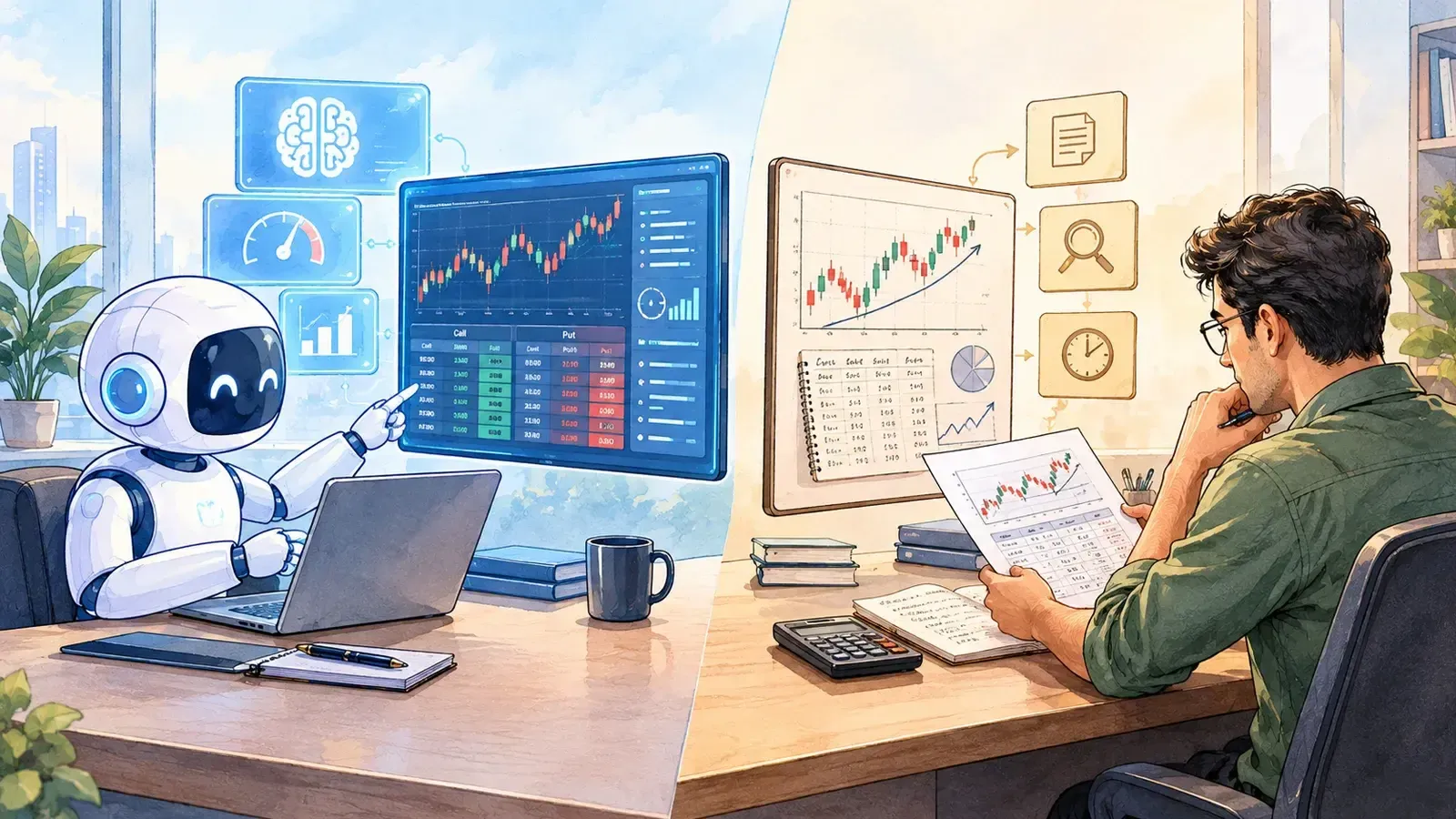
Also Read: AI option analysis vs manual option analysis
What is Agentic AI Trading?
Agentic AI trading refers to artificial intelligence systems that can independently perform multiple tasks, make decisions, and execute actions to achieve predefined trading objectives.
Unlike generative AI, which generates information and recommendations, agentic AI can interact with external tools, APIs, market data sources, and trading platforms.
Example:
An Agentic AI trading system can monitor the Nifty 50, analyse technical indicators, examine option data, identify potential trading opportunities, and execute orders through a broker API after meeting predefined conditions and permissions.
Difference Between Generative AI and Agentic AI Trading
Here are the main differences between generative AI and agentic AI trading:
| Basis of Difference | Generative AI | Agentic AI |
|---|---|---|
| Primary Purpose | Generates information and insights. | Performs tasks and achieves predefined objectives. |
| Functionality | Analyses data and answers queries. | Analyses, plans, decides, and executes actions. |
| Decision-Making | Provides recommendations for traders. | Makes decisions within predefined permissions and rules. |
| Trade Execution | Generally does not execute trades independently. | Can execute trades through broker API integrations. |
| Market Monitoring | Analyses market information when prompted or through configured workflows. | Can continuously monitor market conditions and respond to changes. |
| Automation | Primarily supports information generation and analysis. | Supports end-to-end automated trading workflows. |
| Human Involvement | Requires human involvement in subsequent trading decisions. | Can perform authorised tasks with varying levels of human supervision. |
| Example | Explaining Nifty option chain data. | Analysing Nifty, identifying a strategy, and placing an authorised order. |
How is Upstox’s Generative AI helpful for Option Analysis?
Upstox uses generative AI to simplify complex option chain data and help traders understand market conditions through an AI-powered option analysis feature. Its AI option analysis tool interprets real-time option data, including open interest, PCR, max pain, and volatility, and converts it into understandable insights. It also highlights potential support and resistance zones based on the option chain and open-interest changes.
These features make option chain analysis easier, particularly for traders who find it difficult to interpret multiple indicators manually.
However, insights generated by generative AI are analytical input, not guaranteed trading signals. Traders should validate them using technical analysis, market trends, and appropriate risk management.

Generative AI and agentic AI are changing the future of trading by improving market analysis, decision-making, and automation. Generative AI helps traders interpret financial information and understand market conditions, whereas agentic AI can independently coordinate multiple trading activities and execute trades.
As AI technology advances, combining generative AI with agentic AI could make trading systems smarter, more efficient, and more automated. However, neither technology guarantees profits, making human supervision and disciplined risk management essential.
FAQs
What are Generative AI and Agentic AI in trading?
Generative AI analyses market data and provides insights, whereas agentic AI can plan tasks, make decisions, monitor markets, and execute trades.
How is Generative AI used in option trading?
Generative AI analyses option chain data, open interest, PCR, implied volatility, and max pain to generate insights about market sentiment and potential trading levels.
Can Agentic AI execute trades automatically?
Yes, agentic AI can connect with broker APIs to place, modify, or cancel orders based on predefined trading strategies, risk limits, and permissions.
Which is better for trading: Generative AI or Agentic AI?
In trading, both serve different purposes. Generative AI is useful for market research and analysis, while agentic AI is better for automating trading workflows and executing trades.
About Author
Subhasish Mandal
Sub-Editor


A finance professional with strong expertise in stock market and personal finance writing, he excels at breaking down complex financial concepts into simple, actionable insights. Holding a Master’s degree in Commerce, he combines academic depth with practical knowledge of technical analysis and derivatives.
Read more from Subhasish









Upstox is a leading Indian financial services company that offers online trading and investment services in stocks, commodities, currencies, mutual funds, and more. Founded in 2009 and headquartered in Mumbai, Upstox is backed by prominent investors including Ratan Tata, Tiger Global, and Kalaari Capital. It operates under RKSV Securities and is registered with SEBI, NSE, BSE, and other regulatory bodies, ensuring secure and compliant trading experiences.
Related articles

Futures and Options
Options Trading Strategies: Why Expiry Days Can Wipe Out Profits10 min read | Written by Bidita Sen
Futures and Options
AI Option Chain Analysis vs Manual Option Analysis: A Quick Comparison5 min read | Written by Subhasish Mandal
Futures and Options
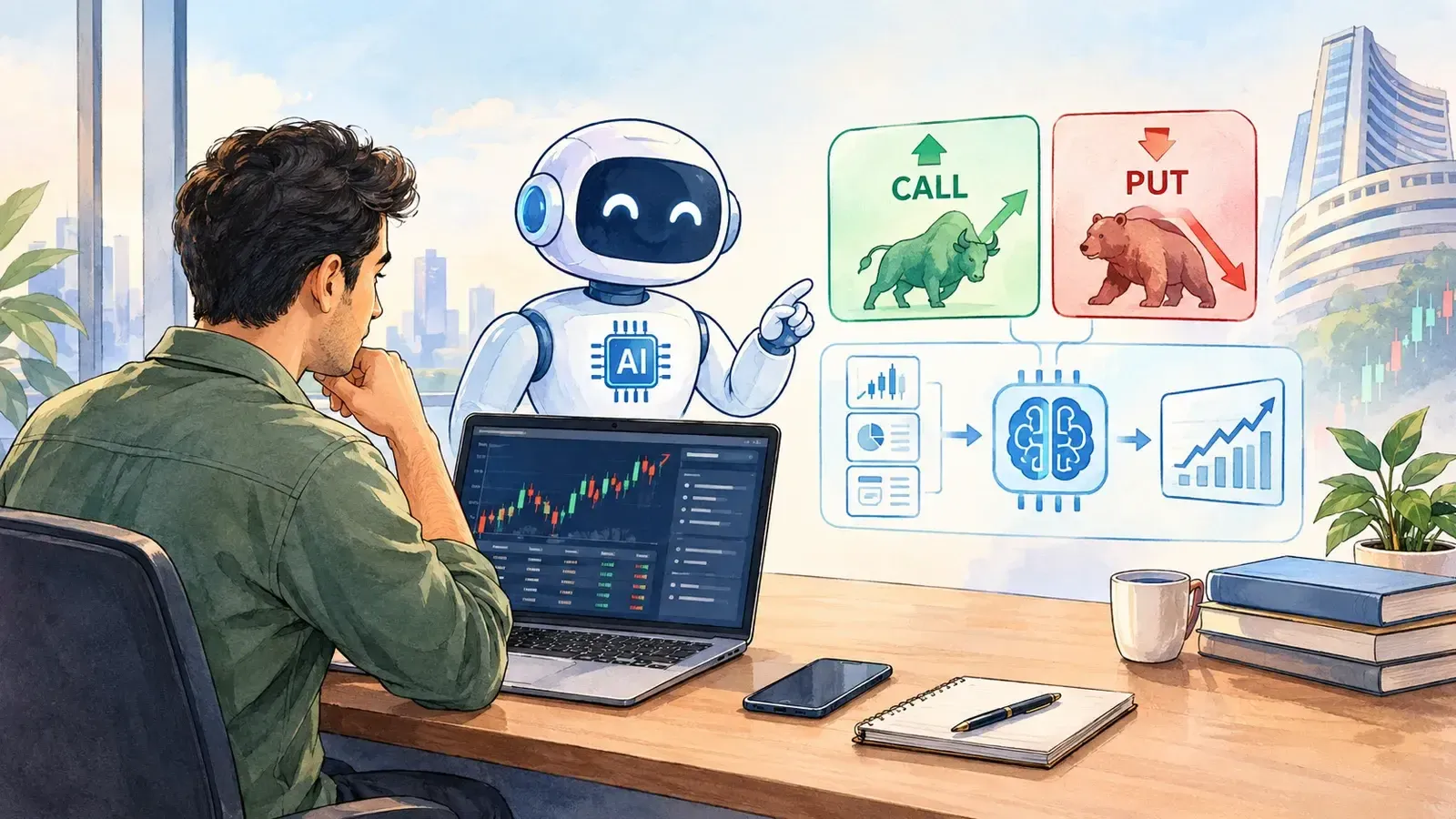
What Is AI Option Trading and How Does It Work?4 min read | Written by Subhasish Mandal
Futures and Options
What are ITM, OTM, ATM in Call and Put Options12 min read | Written by Subhasish Mandal

Futures and Options
What is Forward Market and How They Work? A Complete Guide15 min read | Written by Subhasish Mandal

Futures and Options
What is Option Buying? A Guide For Traders and Investors15 min read | Written by Subhasish Mandal