March 27, 2026
Savings Account - Types, Interest Rates, Steps, & How to Apply
In the world of banking, savings accounts constitute one of many products. Simply put, a savings account is a deposit account with a financial institution. Bank savings accounts provide small interest payments to those who hold their money. You can make deposits or withdraw cash at any time while earning a reasonable interest rate on your money.
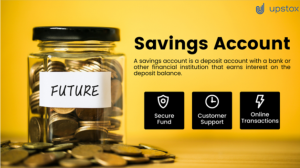
People generally prefer these accounts since they are convenient, secure, trustworthy, and easy to access.
The idea of savings accounts is to provide individuals with a secure place to store money they do not intend to use frequently. You can access your savings account whenever you need it, which is one of the most remarkable things about having money in a savings account.
Since savings accounts pay interest and do not restrict your money's availability, they are convenient for quick access to cash during an emergency.
Characteristics of a Savings Account
There is no doubt that savings accounts are the most convenient and accessible form of banking for most Indians. To better understand what savings accounts are, let's examine their significant characteristics:
-
Savings accounts provide a secure place to keep extra funds.
-
The added benefit of saving money is that it accrues interest.
-
You can earn 2%-7% annualized saving account interest rates depending on the type of account.
-
Senior citizens typically receive a 0.5% interest rate premium over the standard rate.
-
Depending on the account holder's preference, interest may be paid monthly, quarterly, semi-annually, or annually.
-
It is one of the best things about savings accounts that their owners have the freedom to withdraw and deposit money whenever they wish.
-
Debit cards can be used for online purchases or for accessing funds at any ATM.
-
You can access your savings account anywhere with online, mobile, phone, or text message banking.
-
There is typically no minimum deposit requirement for savings accounts, and any deposit can be made.
-
Depending on the account type, account holders may need to maintain a certain minimum average balance (MAB).
-
If you maintain a minimum quarterly balance at your bank, you will likely get a discount on your locker rental.
-
Your savings account can be accessed online, you can make deposits, and you can order checks directly from your savings account.
-
Bank deposits up to Rs. 5 lakhs are insured by the DICGC.
-
Your savings account can now be linked to your fixed deposit account.
-
Various savings accounts and debit cards are available with promotions and discounts.
-
Banks offer savings account customers varying types of insurance, including personal accident and death insurance.
-
Savings accounts can help you save on taxes because interest income from savings accounts up to Rs. 10,000 is not taxable.
Types of Savings Accounts
Banks offer several types of savings accounts, each offering a different set of benefits for specific clients. Here is a look at some of the various savings accounts available and for whom they might prove beneficial:
Regular Savings Account
-
Regular savings accounts are among the easiest to open.
-
It is similar to a safe deposit box but does not receive regular deposits.
-
This account may be subject to an annual fee, and the account holder will earn interest.
-
In most financial institutions, these accounts require a minimum balance every month.
-
All these accounts are opened under standard terms and conditions. They can only be activated after a thorough Know Your Customer process (KYC) has been completed.
Zero Balance or Basic Savings Account
-
A zero balance in these accounts is allowed, and there is no minimum average monthly balance requirement.
-
Since these accounts don't have minimum average balances (MABs), the bank restricts their use, limiting access to ATMs, debit cards, and chequebook facilities.
Salary Savings Account
-
Salaried individuals may be interested in salary accounts since they receive regular paychecks.
-
These accounts offer unique benefits such as zero balance accounts, free chequebooks, foreign debit cards, favourable interest rates on loans, and free insurance coverage for personal accidents.
-
Financial institutions create these accounts at the request of companies seeking a way to distribute funds.
-
Upon payment due date, the company's bank account is debited, and funds are transferred to the recipient.
-
The account will automatically change to a regular savings account if no payment is deposited for three months.
Instant Digital Savings Account
-
You can open one of these accounts using a smartphone app or Internet banking in just a few minutes.
-
However, the account may be placed on hold if the KYC is not completed within the allotted time frame.
-
Almost all instant digital savings accounts cap all deposits at Rs. 1 lakh.
Family Savings Account
-
With a single-family ID, members may open joint checking and savings accounts and access various banking services.
-
Furthermore, they may establish fixed, regular, and similar accounts.
-
Accounts may be associated with your spouse, children, parents, grandparents, grandkids, in-laws, etc.
Senior Citizens Savings Accounts
-
Senior citizen savings accounts are open to people over the age of 60.
-
Unlike regular savings accounts, these are tailored to older people and give them access to more services and reduced interest rates on credit.
-
In this account, pensions, retirement accounts, and existing savings plans for seniors will be consolidated.
Women's Savings Account
-
This account is available only to women. It has perks, including a debit card, lower minimum balance requirements, discounts on credit cards and loans, free chequebooks, fewer ATM fees, and free lockers.
-
These accounts offer users several perks, including lower loan interest rates, free Demat account maintenance, and discounted prices on certain products.
Minors' Savings Accounts
-
Minors' accounts are created by their parents or legal guardians.
-
Savings accounts for minors are intended to teach kids the importance of saving and how to use banks.
-
Documentation confirming the parent's or guardian's identity and a signed declaration is required to open one of these accounts.
-
Savings accounts do not require a minimum balance. Still, minors are limited in how much money they can deposit or withdraw.
-
A legal guardian can create and manage an account on behalf of a child until they turn ten.
-
Upon reaching age of 10, the minor is given full access to the account.
-
As soon as the minor reaches 18, the account will be changed into an adult savings account.
Eligibility Requirements for Opening a Savings Account
Savings accounts may be opened in India by anyone over eighteen. People who are generally eligible to open a savings account include those listed below.
-
Individual residents over 18 (themselves or jointly)
-
Foreign nationals who meet the requirements may also apply to members of the Hindu Undivided Family (HUF).
-
Anyone over the age of 60 may open senior savings accounts.
-
Applicants for Children's savings accounts must be under 18 years of age and accompanied by a parent or legal guardian.
-
Applicants for women-only savings accounts must be over 18 and female.
-
An applicant who wishes to open a savings account for high-net-worth individuals must maintain a high average monthly balance (AMB).
Documents Required for Opening a Savings Account
To open a savings account, you will need the following documentation.
-
Identity proof
-
Address proof
-
Two recent passport-size photos (or live video may be required based on the type of account)
To verify your identity, most banks require both original documents and self-attested copies. Some of the most commonly accepted identity and address documents are:
-
Passport
-
Voter ID card
-
PAN card
-
Aadhar Card
-
Permanent Driver's License
-
Utility Bill
-
Senior Citizen Card - Document proving their age.
The paperwork required for savings accounts varies by type. For accounts with a high minimum monthly average balance, for example, more proof of income may be required.
Benefits and Drawbacks of Savings Accounts
Benefits
-
Deposits and withdrawals of money from savings accounts are unlimited (depending on the account type).
-
Transfers are available online as well as offline.
-
Any ATM in India can be used to withdraw money.
-
The DICGC provides coverage for up to Rs. 5 lakh if your bank fails.
-
The advantages of additional insurance coverage, such as health insurance, responsibility for lost cards, and personal accident coverage, are also included.
-
You can receive personalized promotions and savings based on your debit card and account.
-
Bill payments can be scheduled on a recurring basis.
-
People can use a savings account to save for emergencies or to save for a long-term goal.
-
If you want to monitor your funds for different purposes, you can create numerous savings accounts at various financial institutions.
Drawbacks
-
Compared to riskier investment options, they offer lower returns. For this reason, saving accounts for long periods don't give you as much return as certificates of deposit, Treasury bills, and stocks and bonds.
-
The account user must maintain a minimum balance in the account at all times to earn higher returns from other types of investments.
-
Failure to maintain a monthly minimum amount or MAB may also result in penalties.
-
ATMs begin charging fees after a certain number of free withdrawals.
-
Accessing your money anytime can be a significant advantage. Still, it can also be a major drawback if you're tempted to spend it.
Necessary Steps for Opening a Savings Account
With the advent of the Internet, opening a savings account at a bank has never been easier than filling out an application online or visiting the bank in person.
Financial institutions may offer digital savings accounts on their websites, or you can open an age, gender, or other demographic-specific savings account in a physical branch.
Application Steps for Online Savings Accounts
-
Download the app or check out the bank's website.
-
Choose the account type that best suits your needs.
-
You must provide your full name, birth date, address, PAN, Aadhaar number, and other personal information.
-
Verify your identity by providing documentation or a video KYC.
-
After your identity has been verified, you can use your bank account.
Application Steps for Offline Savings Accounts
-
Make an appointment with a bank branch you want your account with.
-
Fill out the new savings account application.
-
Ensure that you attach copies of your identification documents and proof of residency.
-
You should fund your account with the minimum amount required.
-
Once your identity has been confirmed, your account will be activated.
Savings Accounts Providers
As part of the Reserve Bank's guidelines, banks must provide customers with savings accounts. Let's explore some of those banks.
Public Sector Banks
In addition to serving more than half the market, these financial institutions are all owned by the government. These institutions provide goods and services that serve the general public.
Private Sector Banks
Financial institutions in the private sector are those in which private parties own most shares. They are also subject to regulations established by the Reserve Bank of India (RBI).
Payments Banks
Unlike banks, these financial institutions are only permitted to accept deposits of up to Rs. 2 lakh per individual. They cannot provide credit or loans but take current and savings accounts.
Small Finance Banks
The small finance bank is licensed to accept deposits and make loans as part of its standard banking services. A significant segment of the population often overlooked by major public and private banks is financially included by these financial institutions.
Regional Rural Banks
Rural banks are invaluable in providing financial services to those living in rural areas. They are part of the larger Scheduled Commercial Banks of India owned by the government.
Finding the Best Savings Account for You
If you wish to open a savings account in India, you can select from several institutions. Because each financial institution offers perks that customers may or may not find helpful, no one can claim to provide the best savings account.
To make an informed decision, it is critical to carefully evaluate your options before making a final decision.
Consider the following factors when choosing the most suitable savings bank account:
** The Rate of Interest**
In response to RBI deregulation, banks now have the freedom to charge their interest rates on savings accounts. It would help to compare banks' interest rates and choose the best option.
Generally, savings account interest rates start at 2.5%. Still, some banks may offer high-interest savings account at a 7% interest rate if you keep a certain amount in them.
** Required Minimum Balance**
In some financial institutions, you may be required to keep a minimum amount in your savings account.
If you do not keep the minimum amount in your account at all times, you may be charged a fee by the bank. Then it would be best if you decided whether to open a savings account that demands a minimum deposit or one that does not.
** Inexpensive Monthly Account Fees**
Many costs are associated with maintaining a savings account, including transfers, chequebooks, ATM withdrawals, statements, yearly fees for ATM cards, and other incidentals.
If you want to get the most out of your account, choose one that balances the number of services you will use with the amount of money it will cost.
** The Location**
In today's world, it is no longer necessary to visit a local bank to handle all your banking needs because innovations like Online Banking and Mobile Banking have made it possible.
However, in any case, having a bank located close to your home or workplace may make you feel more comfortable. It is unlikely that you can visit a branch of a bank advertising competitive saving account interest rate if there isn't one in your neighbourhood.
** Service to customers**
Savings accounts are likely to be accessed frequently, so the bank you choose must have friendly and helpful staff. Read reviews and ratings online to determine which institutions offer the most efficient customer service.
** Functions of Debit Cards**
Different financial institutions offer a variety of perks associated with their debit cards. Choose one that provides you with the advantages you're looking for.
** Additional Functions**
In most banks, customers with savings accounts can access various services, including online and mobile banking, a free chequebook, and cash deposits and withdrawals at the door.
It is wise to learn more about the features available before choosing a savings account. With these options, you can manage your banking needs from the comfort of your home or business.
Wrapping Up
Putting money into a savings account and letting it accrue interest is one of the easiest ways to make the money work for you.
Unlike current accounts, savings banks earn interest on their accounts. Still, the saving account interest rate is lower than other assets and does not keep up with inflation.
It is worth noting that some banks reward customers for keeping a larger balance, also known as having a high-interest savings account. In contrast, others provide a sweep-in service that allows customers to earn interest on a more significant proportion.
FAQs
What Is the Meaning of The Average Monthly Balance requirement?
The average monthly balance (AMB) is the minimum monthly amount to keep in an account. Some institutions offer savings accounts that do not require the AMB.
Can I Access the Savings Account if I Travel to a Different City or State in India?
If travelling to a different Indian state or city, You can still access your savings account through Phone Banking or Internet Banking or even use an ATM.
Is Saving Account Interest Taxable?
As per Section 80TTA, you do not need to pay tax on savings interest under Rs. 10,000. Higher interest earnings will be subject to TDS.
Can I Open a Savings Account Without a Pan Card?
As part of the application process for saving accounts, applicants must furnish their identification number (PAN) to comply with regulations. It is impossible to process an application without a PAN card, and people without them must indicate why they do not have one in Form 60.
What Are Three Good Reasons to Have a Savings Account?
To understand why it is so significant to save money, consider these reasons:
-
Savings are the key to freedom.
-
Savings can help one achieve financial stability.
-
Savings enable you to mitigate risk.
Never miss a trading opportunity with Margin Trading Facility
Enjoy 2X leverage on over 900+ stocks



