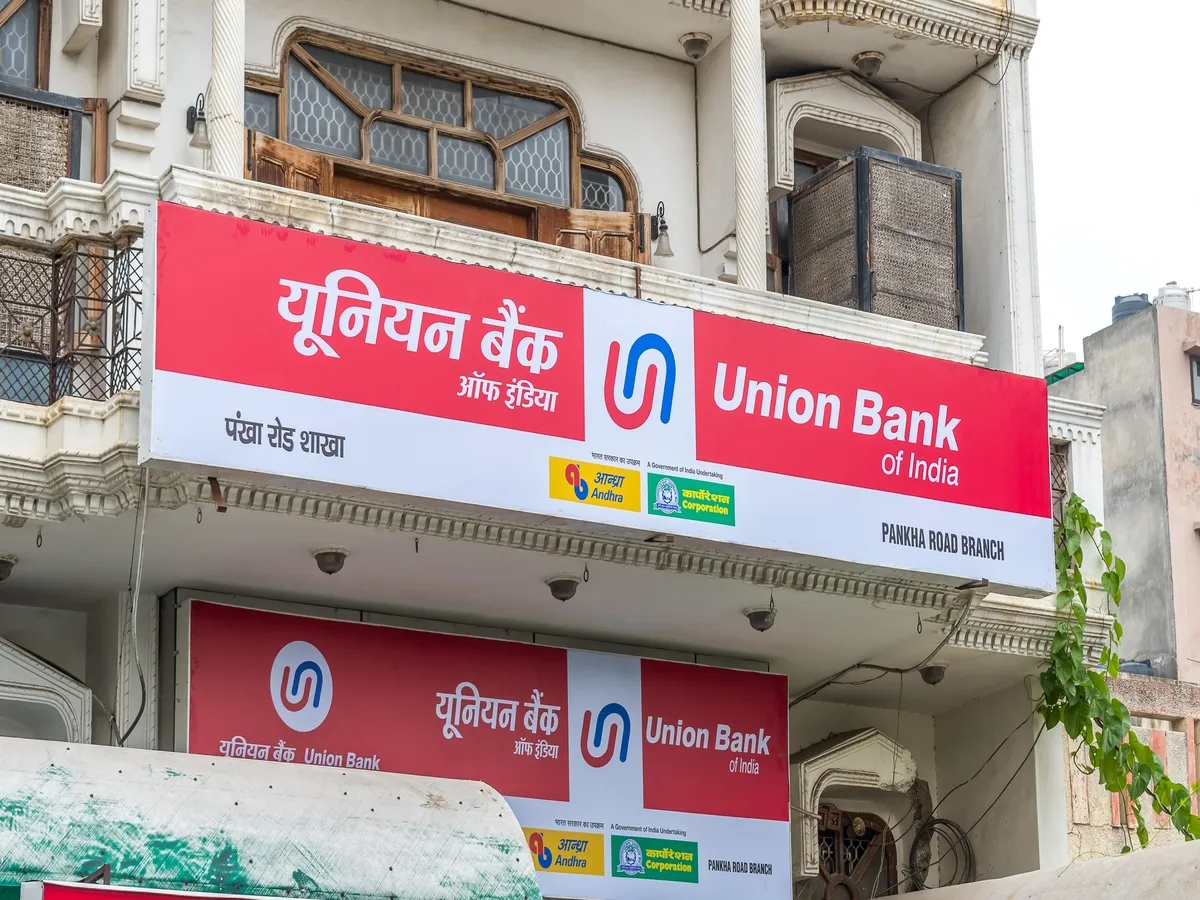
Union Bank of India is a leading public sector bank with a presence across India and abroad. The Mumbai-headquartered bank was founded on November 11, 1919, by Seth Sitaram Poddar. It has grown into a major PSU bank in the country with a customer base of more than 12 crore.
Following its merger with Corporation Bank and Andhra Bank, effective from April 1, 2020, the combined entity emerged as one of the largest public sector financial service providers. The bank operates through its 8,700 branches in India and four overseas branches in Hong Kong, Dubai, Antwerp and Sydney. Union Bank also operates representative offices in Shanghai, Beijing and Abu Dhabi. It provides financial services in the United Kingdom through its wholly-owned subsidiary, Union Bank of India (UK).
Union Bank of India has achieved many milestones in its journey of 104 years. In 2007, it set a new record by inaugurating 56 new branches in a single day. In 2012, the public sector lender installed its first talking ATM designed specifically for the benefit of the visually impaired. In 2013, the bank established a record by opening 111 branches on its foundation day, November 11.
The government holds a 76.99% stake in the bank (as of September 30, 2023). The bank launched its initial public offering (IPO) in 2006 and it is listed on NSE and BSE. The market capitalisation of the bank stood at nearly ₹89,000 crore as of December 13, 2023. Union Bank share price has surged more than 261% in the past three years.
Union Bank of India business operations
The bank's extensive network comprises over 8,700 domestic branches, 11,100 ATMs and 15,300 business correspondent points, catering to the needs of more than 12 crore customers.
Union Bank of India is the first public sector bank in the country to have successfully executed a 100% core banking solution and to achieve 100% computerisation across all its branches. The bank offers digital banking, retail banking, financial solutions and support for MSMEs.
Apart from retail banking, its corporate and NRI banking divisions cater to the specific needs of business enterprises and Non-Resident Indians (NRIs).
Its retail banking offerings include savings instruments, deposits, retail loans, credit cards, insurance products and demat facility.
Under NRI banking the bank offers a host of services like remittance, savings, loans, payment solutions for NRIs and investment solutions.
For corporate customers, the bank provides cash management services, tax solutions, trade finance, insurance for businesses and enterprise loans.
Union Bank of India Financial Highlights
- Revenue: Union Bank of India reported revenue of ₹1,28,399.51 crore in FY26 vs ₹1,28,162.22 crore in FY25. It showed an increase of 0.19% on a yearly basis.
- Operating Profit: Union Bank of India reported an operating profit of ₹24,284.50 crore in FY26 vs ₹23,423.88 crore in FY25. It showed an increase of 3.67% on a year-on-year basis.
- Net Profit: Union Bank of India reported a net profit of ₹18,780.62 crore in FY26 vs ₹17,921.17 crore in FY25. It showed an increase of 4.80% on a yearly basis.
Union Bank of India Quarterly Result Highlights
- Union Bank of India reported revenue of ₹32,660.24 crore in Jun 2026, compared with ₹32,674.53 crore in Mar 2026, representing a decrease of 0.04% on a quarter-on-quarter (QoQ) basis.
- Union Bank of India reported an operating profit of ₹7,066.86 crore in Jun 2026, compared with ₹6,925.54 crore in Mar 2026, representing an increase of 2.04% on a quarter-on-quarter (QoQ) basis.
- Union Bank of India reported a profit of ₹5,368.17 crore in Jun 2026, compared with ₹5,333.95 crore in Mar 2026, reflecting an increase of 0.64% on a QoQ basis.
- The earnings per share (EPS) of Union Bank of India stood at ₹25.45 during Jun 2026.
Data Source: BSE, Company announcements
Securities shown are illustrative, not recommendations. Past performance does not guarantee future results.