What is the NIFTY Energy Index?

Written by Mariyam Sara
Published on May 21, 2026 | 7 min read


Key Takeaways
-
The Nifty Energy index is a sectoral benchmark that tracks the performance of the top 40 companies in the Petroleum, Gas, and Power sectors listed on the NSE.
-
The constituent companies are selected based on the free float market capitalisation and the eligibility criteria set by the NSE Indices Ltd. The index is rebalanced semi-annually to ensure it accurately reflects the performance of the energy sector.
-
You can invest in the Nifty Energy index by directly buying the stocks included or by investing in energy sector index funds and ETFs.
-
Investing in the Nifty Energy index offers potential benefits
-
However, before investing in the Nifty Energy index, you must consider the associated risks, such as changes in government regulations, high volatility, currency fluctuations, and concentration of traditional energy companies.
The Nifty Energy index acts as a barometer for the petroleum, gas, and power sectors, helping investors gauge India’s economic growth. While energy stocks are often considered defensive investments because energy resources are essential, they are also highly sensitive to commodity prices and economic cycles.
Let’s explore what the Nifty Energy index is, how it works, along with its selection criteria and constituents.
What Is the Nifty Energy Index?
The Nifty Energy index is a sectoral index that tracks the performance of the top 40 companies in the Petroleum, Gas, and Power sectors listed on the NSE. These companies are selected based on their free float market capitalisation and other eligibility criteria defined by the NSE Indices Ltd. The index is commonly used as a benchmark for fund portfolios, for launching index funds and ETFs, along with other Energy-themed investments.
How Does the Nifty Energy Index Work?
The Nifty Energy index is a sectoral index that tracks the performance of top companies in the energy sector to help gauge sector performance. These companies are selected based on their free float market capitalisation method, where the index value reflects the total free float market value of all the stocks in the index relative to a particular base market capitalisation value.
Constituents of the Nifty Energy Index
The Nifty Energy index comprises the following top prominent 15 companies listed as per their weightage as of May 2026:
| Company | Weightage (as of May 2026) |
|---|---|
| Oil & Natural Gas Corporation Limited | 9.62 |
| Coal India Limited | 9.38 |
| Reliance Industries Limited | 8.73 |
| NTPC Limited | 6.54 |
| GAIL (India) Limited | 4.98 |
| Power Grid Corporation of India Limited | 4.67 |
| Suzlon Energy Limited | 4.48 |
| Bharat Heavy Electricals Limited | 3.86 |
| CG Power and Industrial Solutions Limited | 3.83 |
| GE Vernova T&D India Limited | 3.56 |
Stay updated with the changes in the Nifty Energy index constituents by monitoring the NSE website.
Selection Criteria for the Nifty Energy Index
The constituent companies for the Nifty Energy index are selected based on the following eligibility criteria set by the NSE Indices Ltd.
- To be included in the index, companies must be a part of the Nifty 500 at the time of review. If the number of the eligible stocks under the Nifty 500 is below 10, then the remaining number of stocks shall be selected from the stocks ranked within the top 800. These are based on average daily turnover and the average daily full market capitalisation in the previous six-month period, data used for rebalancing the Nifty 500 index.
- The companies should be a part of the Energy sector.
- The company's trading frequency should be at least 90% in the last six months.
- The company should have a minimum listing history of 1 month as of the cutoff date.
- The final selection of 40 companies should be done based on the free-float market capitalisation of the companies.
- The weightage of each stock in the index, calculated based on its free-float market capitalisation, should not exceed 33%, and the sum of the weightage of the top 3 stocks should not be more than 62% at the time of rebalancing.
Historical Performance of Nifty Energy Index
As per the NSE Indexogram, over the last 5 years, the Nifty Energy Index delivered a CAGR return of 19.59%, outperforming the Nifty 50’s 11.69%. With a Beta of 1.04, the index is more volatile relative to the Nifty 50. Meaning, if the Nifty 50 rises/falls by 10%, the Nifty Energy index could rise/fall by approximately 10.4%.
Historically, the Nifty Energy index has delivered slow yet steady growth with interim corrections in 2020 and 2023-24.
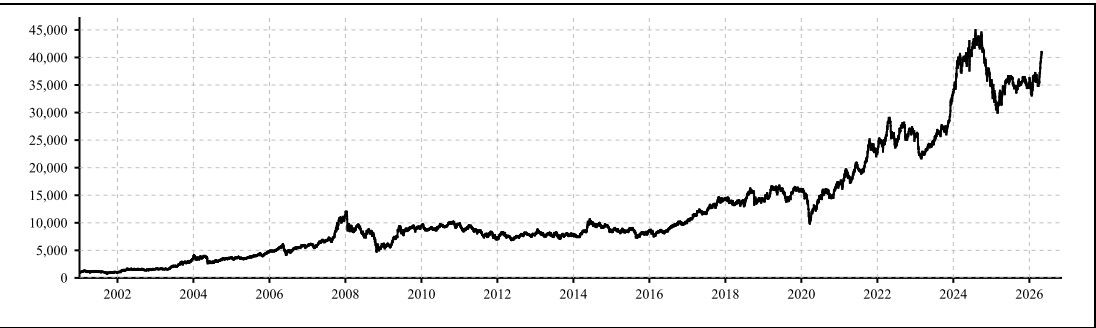
Source: NSE Indexogram
How to Invest in the Nifty Energy Index?
You can invest in the Nifty Energy index in the following ways.
Direct Investment
You can directly purchase the stocks included in the Nifty Energy index. But this could increase concentration risk since your investment is dependent on a single stock or a few stocks.
Index Funds
You can passively invest in the Nifty Energy index via energy-sector index funds that replicate the index. Opt for SIPs (Systematic Investment Plans) to invest a fixed amount regularly instead of making a lump sum investment.
ETFs
Like index funds, ETFs also replicate the Nifty Energy index. These ETFs are listed on the stock exchanges and can be traded during the trading sessions.
Benefits of Investing in the Nifty Energy Index
The Nifty Energy index delivered slow yet steady growth in the past and could offer capital appreciation to investors. The following are the benefits of investing in the Nifty Energy index.
Diversification
Investing in the Nifty Energy index diversifies your investment across various companies within the sector instead of a single company or a few companies, reducing the risk of investment.
Inflation Hedge
Inflation typically has a positive relationship with energy prices. When inflation increases, the prices of fuel, gas, and electricity rise, largely because India imports the majority of its energy requirements. While this can pressure the economy, it makes the Nifty Energy index a potential, although volatile, hedge against inflation for investors.
Passive Growth
The demand for energy products is closely linked to economic growth, urbanisation, and industrialisation. Growth in these areas can benefit the energy sector companies, potentially driving up the index.
Dividend Income
Many established companies in the energy sector distribute dividends regularly to their shareholders, offering a passive source of income.
Development of Clean Energy Landscape
As demand for renewable energy increases, significant government support and capital are being invested in high-growth renewables to meet net-zero carbon goals.
Low Entry Cost
The expense ratio of Nifty Energy index funds and ETFs is low since these are passively managed funds that simply follow the index, increasing your net return value.
Risks of Investing in the Nifty Energy Index
Though there are several benefits of investing in the Nifty Energy index, you must consider the following risks before investing in it.
Regulatory Risk
The energy sector is heavily regulated by the government, and changes in regulations, such as tax policies and subsidies, could negatively impact the profitability of these companies.
High Volatility
Since the index includes companies dealing with oil and gas exploration, refining, and distribution, global crude oil and natural gas price fluctuations could significantly impact these companies. The energy sector also tends to have a higher beta, making it more volatile than the broader market.
Traditional Energy Companies
The index has a significant exposure to traditional energy companies, which may face declining profitability and lower asset valuation as global economies move towards renewable and clean energy.
Concentration Risk
As the Nifty Energy index is a sectoral index, investing in it could lead to concentration risk where sector downturns would impact your investments.
Currency Fluctuations
A weak rupee would increase the cost of imports, impacting oil companies' profits, while a strong rupee would make imports less expensive.
Geopolitical Tension
Geopolitical tensions and decisions of OPEC could disrupt supply and increase fuel prices, thereby affecting oil companies and the broader energy sector.

The Nifty Energy index has delivered slow yet steady growth and could offer capital appreciation in the long term as global energy consumption increases. However, investors should thoroughly research the sectors and understand all the associated risks and the factors affecting the index before making investment decisions.
FAQs
What is the Nifty Energy Index?
The Nifty Energy index is a sectoral index that tracks the performance of the top 40 companies in the Petroleum, Gas, and Power sectors listed on the NSE.
How many stocks are there in the Nifty Energy Index?
There are 40 stocks in the Nifty Energy index.
How is the Nifty Energy Index calculated?
The Nifty energy index value is derived using the free float market capitalisation method, where the index value reflects the total free float market value of all the stocks in the index relative to a particular base market capitalisation value.
Who manages the Nifty Energy Index?
The NSE Indices Ltd manages and rebalances the Nifty Energy Index.
Can beginners invest in the Nifty Energy Index?
Beginners can invest in the Nifty Energy index provided that they understand the risks and the micro and macroeconomic factors that impact the sector.
How can I invest in the Nifty Energy Index?
You directly invest in the Nifty Energy index by purchasing the stocks included or via Nifty Energy Index funds and ETFs.
How often is the Nifty Energy Index rebalanced?
The Nifty Energy Index is rebalanced semi-annually to ensure it reflects the true performance of the energy sector.
About Author
Mariyam Sara
Sub-Editor

holds an MBA in Finance and is a true Finance Fanatic. She writes extensively on all things finance whether it’s stock trading, personal finance, or insurance, chances are she’s covered it. When she’s not writing, she’s busy pursuing NISM certifications, experimenting with new baking recipes.
Read more from Mariyam




















Upstox is a leading Indian financial services company that offers online trading and investment services in stocks, commodities, currencies, mutual funds, and more. Founded in 2009 and headquartered in Mumbai, Upstox is backed by prominent investors including Ratan Tata, Tiger Global, and Kalaari Capital. It operates under RKSV Securities and is registered with SEBI, NSE, BSE, and other regulatory bodies, ensuring secure and compliant trading experiences.
Related articles

Share Market
Cyclical vs Defensive Stocks: Differences, Examples and Strategy15 min read | Written by Bidita Sen

Share Market
What is Efficiency Ratio: Meaning, Types, Formula and More12 min read | Written by Sachin Gupta

Share Market
What is a Solvency Ratio: Meaning, Types, Benefits, Limitations and More12 min read | Written by Sachin Gupta
Share Market
Profitability Ratios: Meaning, Formula, Benefits, Limitations and More11 min read | Written by Sachin Gupta


Share Market
A Guide to American Depository Receipts (ADR) for Indian Investors13 min read | Written by Subhasish Mandal


Share Market
Nifty500 Ahimsa Index: Selection, Weighting & Ethical Framework17 min read | Written by Bidita Sen