India’s New GDP Series: Revised Base Year 2022-23

Written by Subhasish Mandal
Published on March 28, 2026 | 4 min read
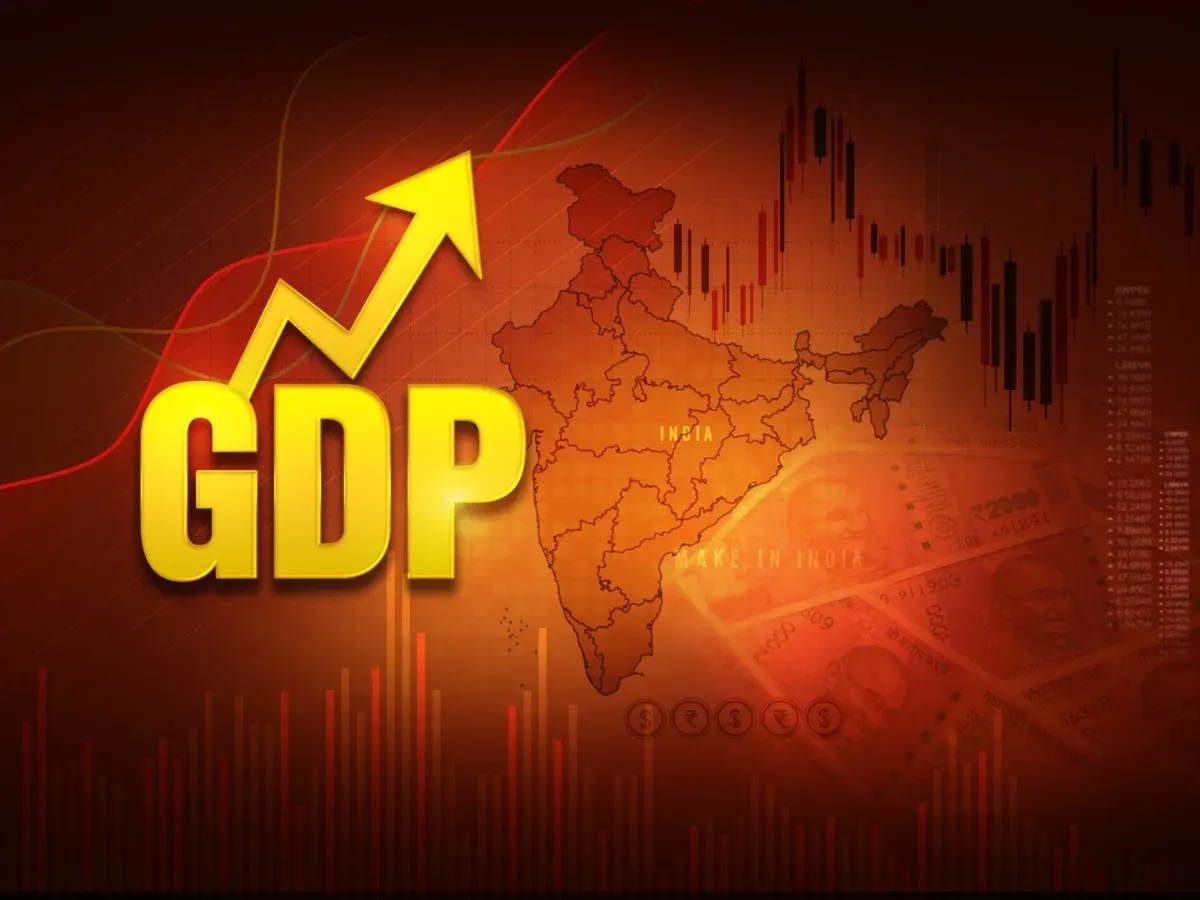

India has now officially adopted a new Gross Domestic Product) GDP measurement framework: replacing the previous 2011 - 12 base year with 2022 -23.
This revision updates the methodology to reflect structural changes such as digitalisation and evolving consumption patterns in the economy. It also improves the accuracy of GDP growth estimates, providing more reliable data for policy decisions and investor analysis.
This article explains why the GDP base year was revised, how it could affect investors, and the key methodological improvements in the new GDP series.
Key Takeaways
-
Revision of the GDP base year to 2022-23 makes estimates more accurate and reflects India’s evolving digital and formal economy.
-
Improved measurement reduces data distortion, helping investors to identify upcoming trends in various sectors.
-
Equities benefit from better earnings visibility, debt from improved fiscal measures, and currencies from global investor confidence.
Introduction to India’s New GDP Framework
The Ministry of Statistics and Programme Implementation (MoSPI) has released a new series of Annual and Quarterly National Accounts estimates with a revised base year of 2022-23, marking a major update in the measurement of GDP . MoSPI’s data is backed by the National Statistical Office (NSO). These estimates are used by the RBI for economic planning and monetary policy decisions.
Base-year revision is undertaken periodically and is considered good practice because the old base year series becomes outdated, and new developments in the economy need to be incorporated.
Usually, a stable year, in terms of economic growth, geopolitical climate, external shocks, etc., is taken as the new base year, which remains the base year for almost a decade.
Why is the GDP Base Year Revised to 2022-23?
The GDP base year is revised due to the following reasons:
Post-Pandemic Normal Year
The revised base year represents the most recent normal year following the COVID-19 pandemic, with comprehensive data available across all sectors of the economy.
Sectoral Coverage
The expansion of renewable energy and digital services, along with changes in consumption patterns and investment behaviour, will be reflected. The revised base year will better capture the contributions of emerging sectors, shifts in relative prices and advances in technology and productivity.
Improved Data Sources
Rapid digitisation has increased the availability of high-frequency data, strengthening the precision of national accounts. Real-time systems such as e-Vahan, the Public Financial Management System, and the GST network provide economic insights that enhance GDP estimates.
Strengthened GSDP Estimation
With the new base year, states will move towards direct estimation, reduce reliance on fixed ratios, and use improved state-level data, enhancing accuracy and comparability across states.
Why GDP Base Year Revision Matters to Investors?
The GDP base year revision is important to investors because it provides a more accurate and updated picture of the economy. It reflects new sectors like digital services, startups and formalisation.
This enhances the reliability of GDP data, enabling investors to make better investment decisions and reducing the risk of misinterpreting economic trends.
With improved methodology and high-frequency data, growth visibility aligns with the projected GDP, allowing investors to invest confidently in rapidly expanding sectors.
How does it impact equity investors?
With the new GDP series, equity investors can identify sectors and industries with growth potential to grow beyond manufacturing and traditional services. Updated macroeconomic data also boosts the confidence of institutional investors, who may choose to invest more in the stock market.
How does it impact the debt market and its investors?
In the debt market, revised GDP improves fiscal indicators like the debt-to-GDP ratio and provides more accurate signals on inflation and interest rates, supporting bond yields and improving policy expectations.
How does it impact the currency market?
For currency markets, a stronger and more reliable GDP boosts the confidence of global investors. It can attract foreign investment, which may bring stability to the Indian Rupee.
Overall, the revision of the GDP measurement framework will bring greater transparency regarding economic activities and help investors allocate capital more efficiently across asset classes.
Key Methodological Improvements in the New GDP Series
The revised GDP series introduces several methodological improvements to improve accuracy, consistency and sectoral representation:
Double Deflation Techniques
Double deflation improves the accuracy of GDP measurement by adjusting output and input prices separately. Double deflation is now applied in manufacturing and agriculture, while single extrapolation is used in other sectors. Single deflation has now been discontinued.
SUT Framework
The Supply and Use Tables (SUT) framework has been aligned with national accounts to reduce discrepancies between production-based and expenditure-based GDP estimates. This method matches total supply with total demand, improving internal consistency.
Updated Rates and Ratios
The parameters have been revised based on recent survey findings.
Improved Estimation of Private Final Consumption Expenditure (PFCE)
A mixed methodology has been adopted, combining data from the Household Consumer Expenditure Survey.
Segregation of Multi-Activity Corporations
Previously, the value added by a diversified enterprise was assigned to its principal activity. Now, value added is distributed across activities.
GDP Growth Estimates for FY26 Based on Revised Framework
The real GDP growth projection for FY26 is 7.6% higher than the 7.1% recorded in FY25. Nominal GDP is projected to grow by 8.6% in FY26. The revision also raised the FY27 GDP growth projection to 7% - 7.4%.
The manufacturing sector has recorded double-digit growth in FY24 and FY26, emerging as a key contributor to overall growth.

The revised GDP base year to 2022-23 makes economic estimates more aligned with present-day realities, reflecting digitalisation and structural changes in the economy.
For investors, tracking such macroeconomic updates is crucial for understanding the market trends, anticipating risk cycles, and making informed investment decisions.
About Author
Subhasish Mandal
Sub-Editor
Finance professional with strong expertise in stock market and personal finance writing, he excels at breaking down complex financial concepts into simple, actionable insights. Holding a Master’s degree in Commerce, he combines academic depth with practical knowledge of technical analysis and derivatives.
Read more from Subhasish




















Upstox is a leading Indian financial services company that offers online trading and investment services in stocks, commodities, currencies, mutual funds, and more. Founded in 2009 and headquartered in Mumbai, Upstox is backed by prominent investors including Ratan Tata, Tiger Global, and Kalaari Capital. It operates under RKSV Securities and is registered with SEBI, NSE, BSE, and other regulatory bodies, ensuring secure and compliant trading experiences.
Related articles

Personal Finance
LPG Shortage in India: Energy, Inflation and Equity Loop3 min read | Written by Subhasish Mandal

Personal Finance
India's New CPI Series: What Changed, Its Impact on the Economy and Inflation7 min read | Written by Mariyam Sara

Personal Finance
Securities Transaction Tax (STT): Features, Importance, and Impact on Traders3 min read | Written by Subhasish Mandal


Personal Finance
Ladki Bahin Yojana eKYC: Eligibility Criteria, Application Process and How to Complete the E-KYC Process Online?3 min read | Written by Mariyam Sara

Personal Finance
What is the National Pension System (NPS) Scheme?4 min read | Written by Subhasish Mandal

Personal Finance
Corporate Bonds vs Government Securities - Which Is Better for You?3 min read | Written by Pradnya Surana