What is DPO And How is it Different From IPO?
Written by Dev Sethia
Published on November 28, 2025 | 4 min read
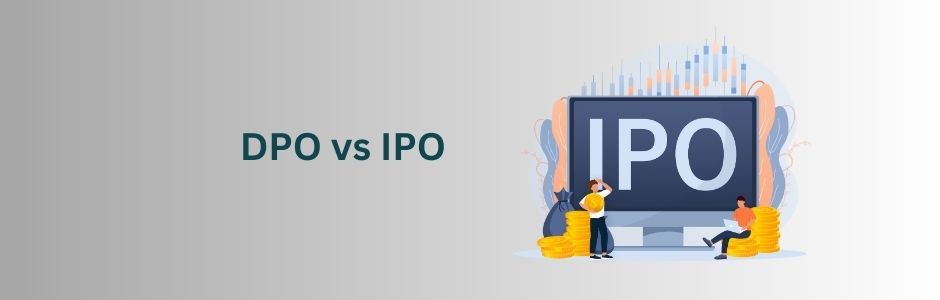

What is DPO And How is it Different From IPO?
As companies grow and develop, they typically face increased financial needs. When a company is looking for additional funding, debt and equity represent the two primary means of sourcing funds.
If a business has already taken on a significant amount of debt and does not wish to borrow more funds, then the best way to raise funds is by providing equity in the form of shares.
In this case, a company may choose between one of two major types of offerings, including the Direct Public Offering (DPO) and the Initial Public Offering (IPO).
While both DPOs and IPOs have the same fundamental goal of raising funds, they differ significantly in the way that they are structured, as well as the methods used, and the impact on the firm.
This paper will provide an overview of how DPOs and IPOs operate, the benefits and downsides of each type of offering, and the main differences between the two.
What is a Direct Public Offering?
A Direct Public Offering (DPO) is when a company raises funds from the public by going through a direct placement. Basically, companies will sell stock directly to investors instead of going through an investment bank, underwriter or broker-dealer.
Companies typically sell existing shares rather than creating new shares when using this method. Smaller companies often use DPO as a way to save on costs associated with fundraising because they do not have to pay hundreds of thousands of dollars to an intermediary for underwriting services.
How Does a DPO Work?
Some companies choose the DPO means instead of an IPO simply due to their lack of available funds for intermediaries, such as underwriters or investment banks.
Unlike an IPO, where the company sells its stock indirectly by going through intermediaries, a company that does a DPO sells shares directly to public investors, which allows them full control of all aspects related to their offering, including:
-
The price of shares
-
How many shares can be purchased at once by one investor?
-
The timing of the entire offering
With this much freedom, issuers can shape their offerings based on their individual goals and budgets, making DPOs a flexible alternative for raising capital.
Advantages and Disadvantages of DPO
| Advantages of DPO | Disadvantages of DPO |
|---|---|
| Provides liquidity to shareholders as they can openly sell their shares. | Companies can only raise a limited amount of capital within 12 months. |
| Lower cost due to the absence of intermediaries. | Prices may experience higher volatility compared to a traditional IPO. |
| Faster and less complicated capital-raising process. |
How Does an Initial Public Offering Work?
An Initial Public Offering (IPO) is when a company enters the Publicly Listed or "Public" Markets from its Private Market Listing status. Once again, the name IPO is used to describe the process of the newly listed company as well as the process of becoming publicly traded.
Many start-up businesses or established private businesses choose to go through the IPO process, as they typically require large amounts of money for company growth or are seeking to repay their debts or create liquidity.
An IPO process uses a regulated structure, where a registered broker-dealer or underwriter works with the company to prepare the necessary documents and prepare the stock for trading.
An investment banker may work with an investment bank or brokerage firm to ensure that the IPO goes well and that the shares are listed and traded without difficulties.
Advantages and Disadvantages of IPO
| Advantages of IPO | Disadvantages of IPO |
|---|---|
| A familiar and traditional method of raising substantial funds for expansion, research, or growth. | Mandatory disclosure of confidential information. |
| Increased publicity, visibility, and credibility for the company, aiding future expansion. | Risk of competitors misusing transparent disclosures. |
| Reduces the overall cost of capital compared to expensive bank loans. | Higher risks and regulatory scrutiny. |
| Helps widen and diversify the company’s equity base. | Greater managerial efforts are required to ensure smooth functioning post-listing. |
How Does Direct Listing Differ from an Initial Public Offering?
Focus & Purpose
Companies having a DPO are not looking for capital; they are instead looking to make it possible for shareholders to liquidate their investments through an initial public offering.
Cost
DPOs involve significantly lower costs because they bypass intermediaries. Companies do not need to pay underwriting fees or commissions, making DPOs cost-effective. IPOs, by contrast, involve substantial fees for underwriters and associated financial institutions.
Volatility
The more established a company is when it goes public, the less volatility they will experience after being listed because the vast majority of pricing will take place before the issuance of the shares.
Suitability
Successful DPOs need companies with good brand awareness and a straightforward, easily understood business model to be successful. Companies depend on how well-known they are in the marketplace and on the trust that investors have, as there are no underwriters to promote the offering. Companies that have very little market presence may find DPOs difficult to pursue.
Lock-Up
In an IPO, existing shareholders cannot sell their shares for a certain period of time; this prevents too many shares from being sold and helps prevent rapid price decreases. DPOs do not have a set lock-up period; existing shareholders sell their shares in the marketplace.
Timeline
An IPO takes a long time to complete (possibly over 12 months), from preparations and obtaining the necessary regulatory approvals to creating the presentation/roadshow and obtaining underwriters for the IPO. Due to the absence of underwriters and no obligations mentioned above, the process of a DPO can take less time and be quicker than an IPO.

While the Initial Public Offering and the Direct Public Offering are two ways by which a company can enter the public domain, they are varied in many important areas. These areas include purpose, price, process, volatility, and suitability.
Each method offers unique advantages and disadvantages, consequently, different businesses and financial situations have different requirements for utilising these methods.
The information presented in this guide will provide a thorough overview of how IPOs and DPOs operate, along with identifying the significant differences between these two methods, so that the stakeholders involved can make an informed decision.
About Author
Dev Sethia
Sub-Editor
a journalism post-graduate from ACJ-Bloomberg with over three years of experience covering financial and business stories. At Upstox, he writes on capital markets and personal finance, with a keen focus on the stock market, companies, and multimedia reporting. When he’s not writing, you’ll find him on the cricket pitch
Read more from Dev




















Upstox is a leading Indian financial services company that offers online trading and investment services in stocks, commodities, currencies, mutual funds, and more. Founded in 2009 and headquartered in Mumbai, Upstox is backed by prominent investors including Ratan Tata, Tiger Global, and Kalaari Capital. It operates under RKSV Securities and is registered with SEBI, NSE, BSE, and other regulatory bodies, ensuring secure and compliant trading experiences.
Related articles