Why Gold Falls in a Crisis: The Margin Call Paradox Explained

Written by Bidita Sen
Published on April 06, 2026 | 11 min read

Summary
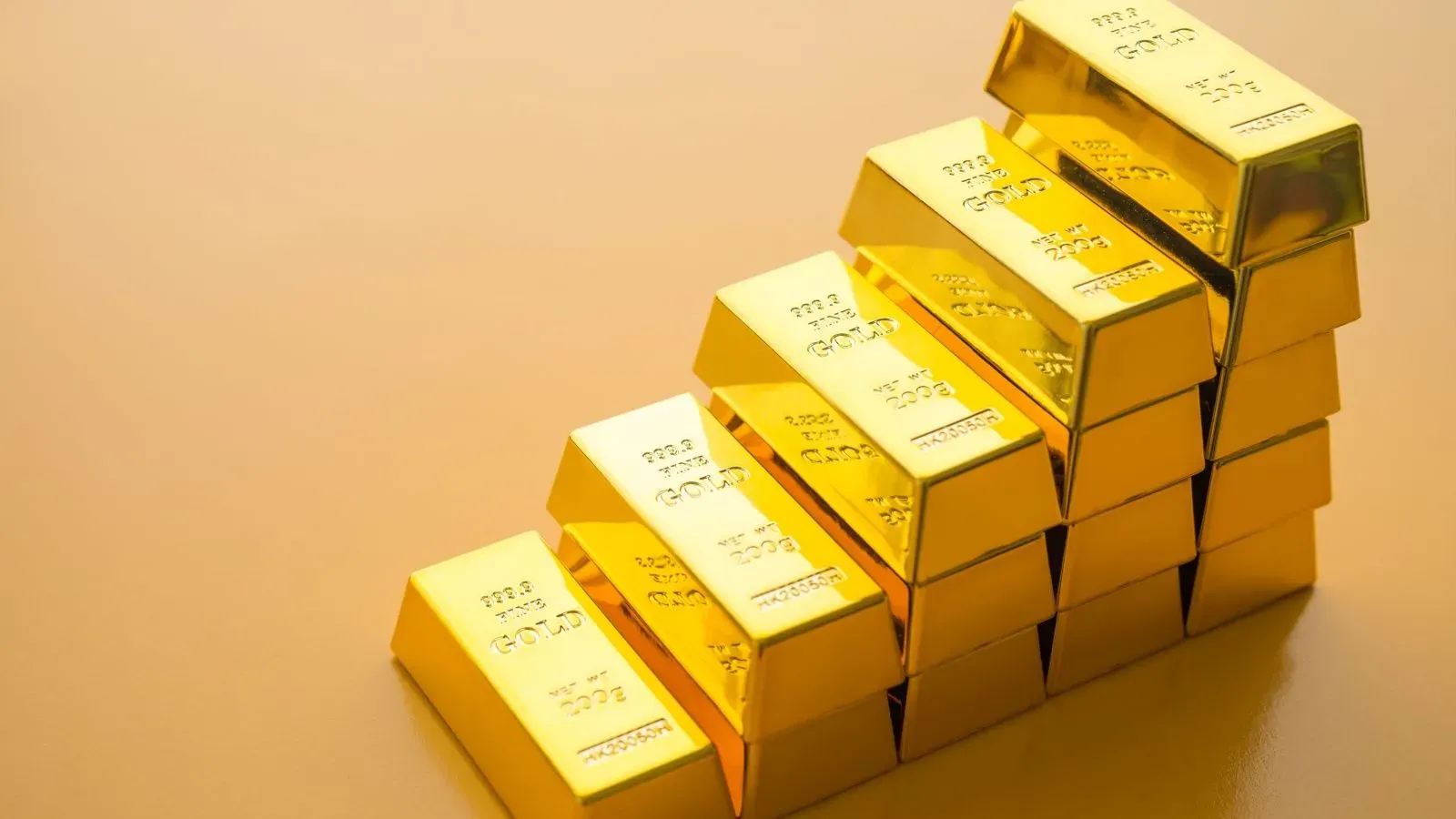
The ‘liquidity paradox’ busts gold’s safe-haven myth. The conventional dictum that gold hedges risk isn’t a constant as there are instances where the metal declined during acute liquidity crunches. This occurs because institutional players face urgent margin calls and must sell what they can, mainly their liquid winners, to cover losses. Consequently, gold acts as a market “ATM” during initial panic. However, this weakness being structural, once central bank interventions stabilise the system, gold’s traditional rally begins to stay hold.
Introduction
As often attributed to American economist and former Chairman of the US Federal Reserve, Alan Greenspan, liquidity is a coward that tends to disappear at the first sign of trouble. But gold, on the other hand, has always gained people’s trust and support for being the brave one in uncertain times, fighting market volatility with its edge of hedging risk. In times of financial stress, investors scout for assets that can preserve value — and gold fits the bill. Yet history shows that gold has, at times, behaved counterintuitively, declining alongside the very risk assets it is meant to offset. This is not gold’s failure as an asset, but a reflection of how modern financial markets function. Understanding this requires a closer look at liquidity dynamics, leverage, and margin calls.
Key Takeaways
- Gold is conventionally regarded as a crisis hedge in diversified portfolios.
- Historically, it tends to stay stable or gain value during severe equity drawdowns.
- Its fall during liquidity crunches is driven by margin calls and forced deleveraging.
- Gold’s high liquidity makes it a primary source of cash for institutions during crises.
- Short-term declines reflect systemic liquidity stress, not weakening fundamentals.
- Gold follows a “two-phase” pattern — initial decline followed by recovery.
What is a liquidity crunch
A liquidity crunch means scarcity of cash across financial markets that prompts businesses to make a dash for cash. Liquid assets hit the rock bottom and meeting short-term obligations becomes difficult. Also, when the system's plumbing gets clogged, often due to sudden geopolitical shocks or credit events, the demand for the US Dollar spikes, making it the only asset that truly matters in the immediate term. The 2008-09 recession is a powerful historical instance to show the detrimental consequences of liquidity shortage. Investors prioritise immediate access to money over long-term asset quality, as price discovery weakens. Not because fundamentally mispriced, assets catch a fast bid in such environments, at least for a short run. This shift in behaviour is chiefly responsible for the decline of even strong assets.
Liquidity Crisis And Gold
The connection between the liquidity crisis and gold varies in the short- and long-term. A liquidity crisis is also an economic crisis with grave consequences like recessions, as were the cases of the Great Depression or the Great Recessions in 1930 or 2008, respectively. In the short-term, investors would rather not pour money into gold or other assets, but sell all that to get cash. Cash is king during crises. But the equation reverses in the long run and gold becomes the eternal emperor.
But the situation can be very beneficial for gold in the long run. The bankruptcy of Lehman Brothers that triggered the global financial crisis proved positive for gold prices in the long-run. The yellow metal scrambled for direction during the Lehman crisis, and when it finally rallied in the second half of 2007, the global economy started to send out signals of an impending turmoil.
The Paradox: Why Gold Declines During Crises
During a liquidity crunch, gold is governed by forced deleveraging. Deleveraging occurs when leveraged positions in equities, bonds, or derivatives begin to lose value and brokers issue margin calls that require investors to either add capital or liquidate positions immediately. In such circumstances, gold features among the first assets to be sold. The yellow metal has qualities like strength of liquidity, deep market participation, and profitable positioning, which very few assets can boast of. Institutional players, including hedge funds and FIIs, rarely sell their “losers” first because those markets may already be frozen or illiquid. Instead, they sell their “winners” like gold to cover losses elsewhere. As highlighted by leading asset managers, these declines are “a liquidity story, not a broken thesis.”
Gold Falls Before It Rises During Crises: The History of It
The 2008 Global Financial Crisis remains the definitive case study for this phenomenon. Did gold immediately skyrocket following the collapse of Lehman Brothers in September 2008? The answer is a resounding no. Instead, it plunged nearly 25% from its peak of approximately $1,000 to a low of around $700-$712 per ounce in just a few months. This occurred as massive hedge funds were desperately selling their assets, liquidating gold holdings to obtain necessary greenbacks and satisfy margin calls on their collapsing subprime and equity positions. A similar pattern emerged during the March 2020 COVID crisis. During the virus-induced market crash, gold fell approximately 12-15% within days, while the NIFTY 50 dropped over 35% from its January highs. Both assets declined together, reflecting a system-wide liquidity squeeze rather than asset-specific weakness.
These episodes confirm that gold’s short-term behaviour is driven by liquidity stress, not deteriorating fundamentals.
In early 2026, the West Asian conflict offered a modern iteration of this paradox. After reaching all-time highs above $5,595/ounce, gold faced a sharp correction of 21% to slip to the $4,400 range as the energy shock disrupted reserve flows and triggered systematic deleveraging. Commodity and currency research analysts are of the opinion that the 100-150% surge in energy prices due to the West Asia conflict has lifted dollar demand, triggering a sell-off in bullion. A stronger dollar creates pressure on gold as it supports yield-bearing assets such as US Treasuries. Both retail and institutional investors are reportedly booking profits, as a further rise in the dollar could keep pressure on bullion prices.
Investors Target Their Strongest Assets First
Tough times trigger tough stances, and in stressed times, investors begin by selling their best-performing assets that can quickly generate liquidity without significant friction. Gold meets this requirement because it is often in profit during uncertain periods. This leads to a counterintuitive outcome where gold declines precisely because it is strong and saleable. When one part of an institutional portfolio bleeds, investors switch focus to gold to book profits and protect the rest of their holdings. This theory is regarded as “selling what you can, not what you want.” Gold does not generate interest like other common assets. So, it is less attractive at times when returns on other safe assets such as US government bonds rise, because investors can earn a steady income from bonds. The case is just the opposite when bond yields fall or uncertainty spikes, forcing investors to move into gold to preserve their wealth.
Stronger US Dollar, Rising Real Yields And Gold’s Short-term Decline
Liquidity crises are accompanied by a surge in demand for US dollars as global investors seek to meet obligations and stabilise portfolios. This demand strengthens the dollar (DXY), which in turn puts downward pressure on gold prices since gold is denominated in dollars. At the same time, real yields may rise briefly as markets reprice risk. As a result, the opportunity cost of holding non-yielding assets such as gold increases. To top it all, there are energy shocks or geopolitical conflicts in regions like the Strait of Hormuz, which can choke reserve flows from oil-producing nations. Prices soften owing to lack of incremental demand triggered by a pause by sovereign buyers on their gold accumulation to manage their domestic liquidity.
Extreme Stress Situation: Diversification Breaks Down
During a liquidity crunch, traditional diversification temporarily stops working, which means assets that prospered independently begin to fall together. They are the victim of a dominant force — liquidity extraction rather than valuation. Gold starts behaving like a risk asset instead of a defensive one in such phases. This correlation convergence underscores the system-wide stress; gold’s intrinsic value is never questioned. The historical inverse relationship between stocks and gold reverses, though briefly, only as liquidity-strapped institutions sell everything that isn't nailed down.
Gold’s Two-phase Pattern During a Lean Period
Gold undergoes a two-stage process during crises.
Phase 1: It is the period marked by liquidity hunt and dominated by panic. Deleveraging triggers margin calls and gold falls as it is sold for cash.
Phase 2: Then comes the policy response. Central banks save the day with liquidity injections or rate cuts. This ends the “dash for cash” but fosters currency debasement fears. Gold regains its strength to stage a powerful recovery.
Gold’s Short-term Decline As A Signal of Deeper Systemic Stress
Myth: Gold’s decline indicates weakness in the metal. Reality check: If gold slips during a liquidity crunch, read it as the fire alarm of the financial system. Sharp intraday swings often signal hidden leverage. Examples are the “maturity walls” that private credit faces in 2025-2027 and funding constraints that are not yet visible in equity indices. In such cases, gold acts not only as a store of value but also as a barometer of global liquidity conditions.
Gold’s Deep Integration into Financial Markets
The yellow metal doesn’t act in silos, it has its roots deeper into the global financial system. Central banks hold it as collateral in transactions to trade extensively through ETFs and derivatives.
This integration attributes qualities like being highly liquid and easily transferable to gold. Gold, inadvertently, also becomes a part of the broader liquidity extraction process during crises. Thus, its strength makes it vulnerable in the short term.
Established Regulatory Oversight of Gold Investment in India
In India, gold investment vehicles such as ETFs function within a regulated framework overseen by the Securities and Exchange Board of India and the Reserve Bank of India. This regulatory structure gives it transparency, pricing integrity, and protects investors, particularly during volatile market conditions.

Final Thoughts
Gold’s behaviour during liquidity crunches can appear counterintuitive, but one must understand the market mechanics to decipher the pattern it follows. Simply put, in phase one of a crisis, the need for cash overrides everything else. Investors sell what they can, not necessarily what they want to. Gold being highly liquid becomes a primary source of funds, almost to investors’ dismay. This explains why gold often declines alongside equities during the peak of a liquidity shock. This doesn’t question gold’s intrinsic value as a safe-haven, it’s a reflection of how modern financial systems operate under stress. As liquidity returns through central bank intervention, gold reasserts its position on lower real yields and expanding money supply.
FAQs
Why does gold sometimes fall during a financial crisis?
Gold can decline during crises due to forced selling. Investors facing margin calls liquidate highly liquid assets like gold to raise cash quickly, even if its long-term fundamentals remain strong.
What is the ‘liquidity paradox’ in gold?
The liquidity paradox refers to the phenomenon where gold—considered a safe haven—falls during the initial phase of a crisis because investors prioritise cash over asset quality.
Does gold always recover after falling in a crisis?
Historically, yes. After the initial liquidity-driven sell-off, gold typically rebounds as central banks inject liquidity and concerns about inflation and currency debasement rise.
How do margin calls impact gold prices?
Margin calls force investors to sell assets to cover losses. Since gold is highly liquid and often profitable, it becomes one of the first assets sold, putting downward pressure on prices.
Why is gold considered a “source of cash” during crises?
Gold’s deep market liquidity and global acceptance make it easy to sell quickly without significant price impact, making it a preferred asset for raising immediate funds.
How does a strong US dollar affect gold during a crisis?
A rising US dollar increases the opportunity cost of holding gold and typically leads to short-term price declines, as gold is priced in dollars and competes with yield-bearing assets.
Should investors worry if gold falls during market stress?
Not necessarily. A decline in gold during crises often signals systemic liquidity stress rather than weakness in gold itself, and may precede a strong recovery phase.
About Author
Bidita Sen
Senior Editor
Bidita Sen has spent over a decade first understanding the complex language of finance, then translating it into something humans can actually read. After a career spent chasing market trends, she now prefers chasing ghosts. When she's not working, you’ll find her reading or re-watching the Paranormal Activity series. Because, real-life math is much scarier than a haunted house.
Read more from Bidita


















Upstox is a leading Indian financial services company that offers online trading and investment services in stocks, commodities, currencies, mutual funds, and more. Founded in 2009 and headquartered in Mumbai, Upstox is backed by prominent investors including Ratan Tata, Tiger Global, and Kalaari Capital. It operates under RKSV Securities and is registered with SEBI, NSE, BSE, and other regulatory bodies, ensuring secure and compliant trading experiences.
Related articles

Commodity Trading
Do Interest Rates and the Dollar Still Drive Gold? Understanding the Changing Macro Playbook12 min read | Written by Bidita Sen

Commodity Trading
Why Silver Crashes Harder Than Gold: The Industrial Engine Exposed11 min read | Written by Bidita Sen
Commodity Trading
Is Silver on Sale or a Falling Knife? Decoding the 2026 Gold-silver Ratio8 min read | Written by Bidita Sen
Commodity Trading
Best Way to Invest in Gold in India in 2026: Digital Gold vs Gold ETF vs Physical Gold Explained14 min read | Written by Bidita Sen

Commodity Trading
What Is DME and Can It Replace LPG in Indian Kitchens?7 min read | Written by Pradnya Surana

Commodity Trading
Impact of Crude Oil Price Changes on the Indian Middle Class3 min read | Written by Subhasish Mandal

Commodity Trading
Mentha Oil Price in India, Factors Impacting and Benefits2 min read | Written by Subhasish Mandal