How Gold Imports Influence India’s Current Account Deficit (CAD) and Rupee

Written by Bidita Sen
Published on May 25, 2026 | 14 min read

Key Takeaways
- Customs duties on gold imports hiked to 15% to limit physical gold shipments and preserve foreign reserves.
- High gold imports expand India's current account deficit, weakening the rupee against global currencies.
- A way to mitigate systemic economic pressures on domestic trade balances is swapping physical bullion for digital alternatives.
- Gold demand has historically remained inelastic, driven by deeply embedded cultural investment habits.
Do you know that your household gold locker directly influences India's macroeconomic balance. Your family heirlooms have national significance.
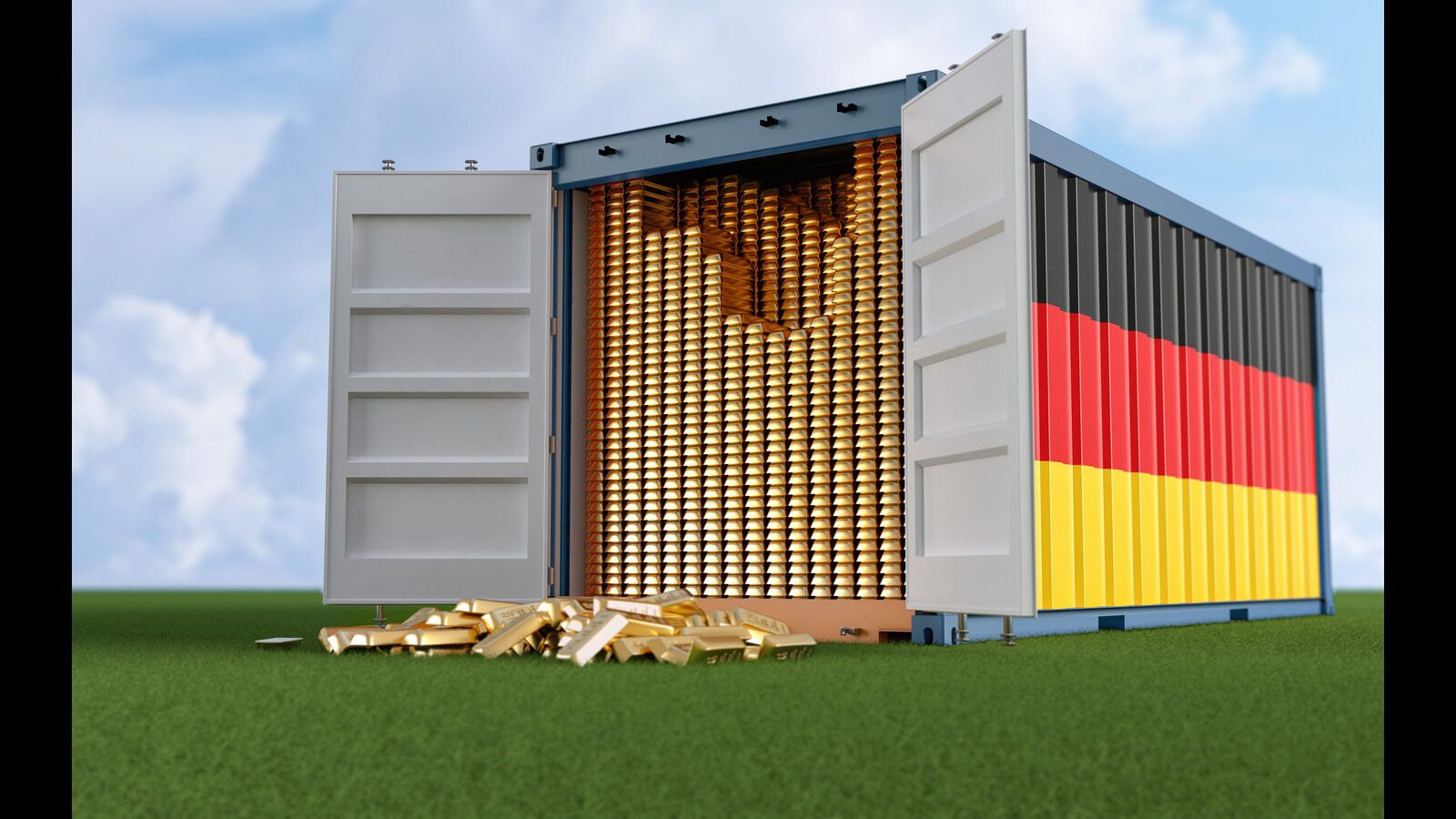
The physical gold that you buy from local jewellers is part of the bullion that they have imported from Switzerland or Dubai. In fact, as of May 2026, Switzerland is the largest source of gold imports for India, with about 40 per cent share, followed by the UAE (over 16 per cent) and South Africa (about 10 per cent).
Gold is a cultural affinity that is inadvertently costing the government heavily by draining foreign exchange reserves. It is also responsible for expanding the national current account deficit, and devaluing the Indian rupee.
How Gold Imports Create Currency Pressure, Trade Balance & Current Account Deficit
The Double-Entry Leakage: Gold is a unique consumer import and runs the chances of a double-entry leakage. Imported industrial machinery or oil serve as capital goods with an active role in future economic output, but imported gold sits largely unproductive in domestic vaults, creating a direct leakage of productive capital in the domestic circular flow of income.
According to NITI Aayog’s quarterly report for FY2025-26, India is the world's second-largest consumer of gold jewellery after China. So, the imports are largely driven by the jewellery industry. Gold’s reputation as a safe-haven asset during periods of geopolitical uncertainty is responsible for its demand spike in times of global economic upheavals.
The yellow metal has consistently remained India’s second-largest import item after crude oil, with imports worth nearly $72 billion in FY26, according to Commerce Ministry data. As of May 2026, gold accounts for nearly 9% of India's total import bill, depending on price volatility, and second only to crude oil among major imported commodities.
The Trade Deficit Engine: According to ICRA data, the merchandise trade deficit widened sequentially to $28.4 billion in April 2026 from $20.7 billion in March 2026, 60% of which is because of higher gold and net crude oil imports.
Again, the trade deficit increased to $93.6 billion in Q3FY26 from $79.3 billion a year earlier, as data released by the Reserve Bank of India showed.
Rupee Depreciation & Central Bank Intervention: Bullion imports induce currency pressure. Domestic banks sell Indian rupees (INR) and purchase US dollars (USD) to buy international gold, priced in USD. The resultant capital outflow depreciates the rupee. The RBI sells USD from its foreign exchange reserves to stabilise the currency, directly impacting national sovereign liquidity.
The Current Account Deficit (CAD) Transmission: Trade deficit influences the current account deficit (CAD). If the former widens, there is direct transmission into the latter. As per RBI data, India’s CAD widened to $13.2 billion, or 1.3% of GDP, in the third quarter of FY2025–26 (October–December). The deficit stood at $11.3 billion, or 1.1% of GDP in the corresponding quarter of FY 2024–25.
Bullion imports are the primary swing factor.
Historic Bullion Surges
Gold price rallies whenever global trust in fiat currencies, sovereign debt, and central banking systems deteriorates. Bullion gives a real-time mathematical measure of currency debasement and systemic risk. It surges during periods of aggressive monetary expansion, deeply negative real interest rates, and heightened geopolitical friction.
The COVID-19 pandemic and the 2024–2026 commodity cycle created shocks and global supply-chain bottlenecks.
As an emergency response to the COVID-19 pandemic starting in March 2020 and continuing through 2021, global central banks lowered borrowing costs to zero and flooded the financial system with liquidity to prevent economic collapse, and bought government debt. This aggressive balance sheet expansion (QE) measure combined with global supply deficits created persistent structural inflation. Nominal yields failed to keep up with price increases, forcing global real yields to plummet deep into negative territory. The opportunity cost of holding non-yielding physical gold was stifled, sparking structural asset reallocation.
A significant geopolitical pivot happened after Russia launched its full-scale invasion of Ukraine in February 2022. G7 nations criticised it and froze approximately $300 billion of Russian central bank assets. This incident exposed a key vulnerability in storing sovereign reserves in foreign fiat currencies. Emerging market central banks, such as the People's Bank of China and the Reserve Bank of India, escalated structural gold accumulation in their domestic vaults to insulate national reserves from geopolitical risk.
The Iran war (jointly launched by the United States and Israel as Operation Epic Fury) that began in February 2026 rippled through the globe with a major global energy and financial crisis. The closure of the Strait of Hormuz and naval blockades fuelled market volatility. This compounded with persistent monetary debasement and a steep rise in demand for institutional safe-haven assets pushed spot gold prices, which shot past $4,300 per ounce by early 2026.
The global price surge and India’s dependency primarily on imported gold impacted the domestic trade balances.
The 2008 Global Financial Crisis (GFC) had been building through the US housing-market collapse and subprime mortgage losses. Lehman Brothers’ bankruptcy in September 2008 marked the acute phase of the crisis, freezing short-term credit markets and intensifying stress across the US and European banking systems. In response, the US Federal Reserve launched Quantitative Easing through large-scale asset purchases funded by newly created central-bank reserves. Gold, after falling to around $700–$800/oz in late 2008 during the dash for cash, rallied to over $1,900/oz by September 2011, supported by safe-haven demand, ultra-low rates, QE and concerns over currency weakness.
US President Richard Nixon suspended the US dollar's convertibility into gold in 1971. The post-WWII Bretton Woods system was thus gradually dismantled, transitioning the global financial architecture towards a fiat currency standard. Floating currencies added to global inflationary pressures as the decoupling weakened the dollar’s gold anchor and eroded paper currency purchasing power. This marked the beginning of a decade of severe stagflation. To add to the woes, successive OPEC oil shocks pushed real interest rates into negative territory in several economies. Investors increasingly turned from fiat currency to physical gold, driving prices from $35 per ounce to a historic peak of around $850 per ounce in early 1980.
Gold Import Policy Controls
The Regulatory Seesaw (The Tariff-Smuggling Trade-off): The stop-go nature of the government’s fiscal intervention reflects the policy balancing act. Import tariffs are hiked to compress the reported trade deficit, which leads to a wide disparity between domestic and international prices. This is a catch-22 situation because if the import tariff is reduced, a lower domestic premium will suppress the black market, but trigger a rapid surge in legal imports that destabilises the national balance of payments.
The Ministry of Finance uses tariff hikes as immediate, non-monetary capital controls to preserve precious foreign exchange reserves when global shocks, such as the 2026 Iran war, threaten capital flight and currency instability.
The Emergency 2026 Hike: On May 13, 2026, the central government adopted a hard policy move and raised import duties on precious metals like gold and silver from 6% to 15%, reversing the 2024 duty cuts. According to the new rates, from May 13, gold started attracting 10% Basic Customs Duty (BCD) and 5% Agriculture Infrastructure and Development Cess (AIDC), up from 5% and 1%, respectively, earlier.
This sudden move came after an 82% year-on-year surge in April gold imports to $5.62 billion, which threatened to severely destabilise the external sector balance.
Bullion dealers and large jewellery conglomerates significantly front-loaded these purchases to meet seasonal festival demand, and hedge against global price inflation, anticipating further Middle East supply disruptions. This front-loading pushed the trade deficit to a multi-month high, with no signs of relenting.
The emergency 900 basis point duty hike targeted speculative importers and priced out marginal, cash-paying physical buyers. The policy shielded the Indian Rupee from breaching critical psychological levels against the US Dollar and successfully moderated capital outflows.
Free Trade Loopholes (CEPA Arbitrage): Market players have been bypassing standard customs duty rates.
Under the India-UAE Comprehensive Economic Partnership Agreement (CEPA), a Tariff Rate Quota (TRQ) mechanism was put in place for the import of gold bullion at a concessional rate of duty (a 1% concession over the prevailing customs duty). The pact came into force on May 1, 2022. This pact reportedly allowed selected private entities to import refined gold bullion from Dubai at the concessional duty rate. Importers heavily routed bullion through this channel to secure a structural advantage over regular customs rates.
To plug the TRQ loophole and the subsequent domestic market disruption, the Directorate General of Foreign Trade (DGFT), along with the Ministry of Finance, introduced sweeping reforms to the mechanism. Under the revised norms, only jewellers registered with the Bureau of Indian Standards (BIS) for hallmarking and holding valid GST registration are eligible to apply for TRQ allocations.
The TRQ allocations are now allocated through an online competitive bidding process managed by the DGFT on the MSTC portal.
The Shadow Economy Loop: High import tariffs structurally damage the formal economy by creating steep price premiums that fuel illicit smuggling. Raising the basic customs duty to 15% combined with a 3% GST creates a massive 18% tax spread over international market rates. This wide margin makes physical smuggling highly profitable, as informal trade cartels get lucrative spreads. Smuggled gold cannot be cleared through official banking channels. It is paid for through informal offshore currency networks. More capital flows into the shadow economy as legitimate foreign exchange liquidity is pooled away from the official banking system, reducing sovereign direct tax collections.
India’s Gold Imports Multi-Year Trend
The scale of India’s bullion import dependence becomes clearer through a multi-year breakdown of gold imports, highlighting how global prices, domestic demand cycles, policy changes, and macroeconomic conditions have shaped the country’s import bill in recent years.
| Financial Year | Import Value | Import Volume | Macroeconomic Narrative & Price Drivers |
|---|---|---|---|
| FY 2025–26 | $71.98 billion | 721.03 tonnes | Record import value was driven mainly by elevated international gold prices, even as physical import volume fell 4.76%. |
| FY 2024–25 | $58.00 billion | 757.09 tonnes | Imports rose amid strong domestic demand following the July 2024 import duty cut, alongside sustained investment and jewellery buying interest. |
| FY 2023–24 | $45.54 billion | 795.20 tonnes | Import value rose on firm prices, geopolitical uncertainty, and resilient jewellery and investment demand. |
| FY 2022–23 | $35.00 billion | 678.30 tonnes | Higher import duties and elevated prices weighed on physical demand, leading to lower import volume. |
(Source:https://tradestat.commerce.gov.in/eidb/commodity_wise_import; Commerce Ministry/DGCIS trade data, as reported in recent public summaries. Data shown from FY 2022–23 onward, where both import value and physical volume are available on a comparable basis.)
The sharp divergence in FY 2025–26 is particularly notable. Despite India importing a lower physical volume of gold at 721.03 tonnes, compared to 757.09 tonnes in FY 2024–25, the country’s total import bill surged by 24% to a record $71.98 billion. The trend highlights how elevated global gold prices, rather than a rise in domestic consumption volumes, became the primary driver of India’s bullion import expenditure.
Structural Solutions: Financialisation and the Digital Shift
The long-term solution to India's gold-induced trade deficit is not import bans. It will come from financialisation — a transition from physical to paper assets.
Gold monetisation and local recycling can also bring desired results. At 2026 market prices, India's 25,000 tonnes of gold reserves, held in domestic households and religious institutions, represent over $2.4 trillion in idle capital sitting completely outside the productive financial system.
If even 5% to 10% of this supply can be redeemed through a reformed Gold Monetisation Scheme (GMS), dead physical assets can be converted into active banking system deposits. This will expand credit creation instantly and boost domestic gross capital formation without increasing external borrowing.
Several thousand tonnes of highly concentrated gold deposits are locked with religious institutions and trusts. A structured institutional pathway, such as competitive tax-free interest yields on medium-to-long term deposits, guaranteeing the return of gold in equivalent physical purity, can release this specific segment.
Local jewellers rely heavily on imported bullion from Switzerland and Dubai to satisfy India's inelastic retail demand. Recycled gold can directly substitute fresh imports. This can be done by scaling up domestic scrap collection networks, modernising local refining infrastructure, and offering tax immunities on ancestral gold deposits. This structural shift can create a dollar-for-dollar reduction in the national trade deficit, directly defending the capital account.
SEBI's paper gold framework allows a smooth digital shift. SEBI-regulated Gold Exchange Traded Funds (ETFs) and mutual funds allow investors to benefit from price appreciation without requiring the physical import of gold bars.
Also read: What are Electronic Gold Receipts (EGR) and how do they work?

Parting Thoughts
India has a structural obsession with gold, which can be linked to historical inflation. But, this is creating a persistent challenge to modern macroeconomic planning.
This demand needs a strategic channel designed by sophisticated tools rather than simple tariff hikes. Long-term external stability relies on the aggressive financialisation of domestic savings and not mere customs duty hikes that serve as a temporary emergency brake to protect the rupee and narrow the trade deficit.
The government can preserve Indian citizens’ wealth by shifting retail investor preferences from physical bullion to SEBI-regulated paper gold and digital alternatives. This will also protect its foreign exchange reserves from systemic capital leakage.
FAQs
How do gold imports affect the Indian rupee?
Gold imports are paid for largely in US dollars. Indian banks and importers therefore sell rupees to buy dollars for international bullion purchases. This increases demand for the US dollar, puts pressure on the rupee, and can contribute to currency depreciation during periods of heavy imports.
Why does the government increase customs duty on gold?
The government raises customs duty on gold mainly to reduce excessive imports and protect foreign exchange reserves. Higher duties make imported gold more expensive, which can slow physical demand and help contain the trade deficit and current account deficit during periods of external economic stress.
Why does India import so much gold despite having large domestic reserves?
India’s domestic gold production is extremely limited compared to consumer demand. Most of the country’s gold demand comes from jewellery, weddings, festivals, investment buying, and rural savings habits. Since local mining cannot meet this demand, India relies heavily on imports from countries such as Switzerland and the UAE.
What is the connection between gold imports and the current account deficit (CAD)?
Gold is a non-productive import from a macroeconomic perspective because it does not directly generate export earnings or industrial output. When gold imports rise sharply, India’s import bill increases significantly, widening the trade deficit. This directly contributes to a higher current account deficit.
Can digital gold and Gold ETFs reduce India’s import burden?
Yes. Financial products such as Gold ETFs and gold mutual funds allow investors to gain exposure to gold prices without purchasing physical bullion. Greater adoption of such paper-gold instruments can reduce dependence on imported physical gold over time.
Why is gold considered a safe-haven asset during global crises?
Gold historically retains value during periods of inflation, geopolitical tensions, banking instability, currency weakness, and financial-market volatility. Investors often shift money into gold during crises because it is viewed as a relatively stable store of value compared to fiat currencies and riskier financial assets.
About Author
Bidita Sen
Senior Editor
Bidita Sen has spent over a decade first understanding the complex language of finance, then translating it into something humans can actually read. After a career spent chasing market trends, she now prefers chasing ghosts. When she's not working, you’ll find her reading or re-watching the Paranormal Activity series. Because, real-life math is much scarier than a haunted house.
Read more from Bidita




















Upstox is a leading Indian financial services company that offers online trading and investment services in stocks, commodities, currencies, mutual funds, and more. Founded in 2009 and headquartered in Mumbai, Upstox is backed by prominent investors including Ratan Tata, Tiger Global, and Kalaari Capital. It operates under RKSV Securities and is registered with SEBI, NSE, BSE, and other regulatory bodies, ensuring secure and compliant trading experiences.
Related articles
Commodity Trading
What is Aluminium Trading on MCX and How Does it Work?12 min read | Written by Subhasish Mandal
Commodity Trading
Silver ETF Investment in India: A Detailed Guide For Investors13 min read | Written by Subhasish Mandal
Commodity Trading
What are Copper Futures on MCX and How Do They Work?12 min read | Written by Subhasish Mandal
Commodity Trading
What is Silver Trading on MCX: A Comprehensive Guide12 min read | Written by Subhasish Mandal

Commodity Trading
Natural Gas Futures Trading on MCX: A Guide for Beginners11 min read | Written by Subhasish Mandal



Commodity Trading
How Are Crude Oil Prices Determined? A Simple Guide For Beginners13 min read | Written by Bidita Sen