What are Redeemable Debentures? Features, Advantages and Disadvantages

Written by Subhasish Mandal
Published on October 06, 2025 | 2 min read
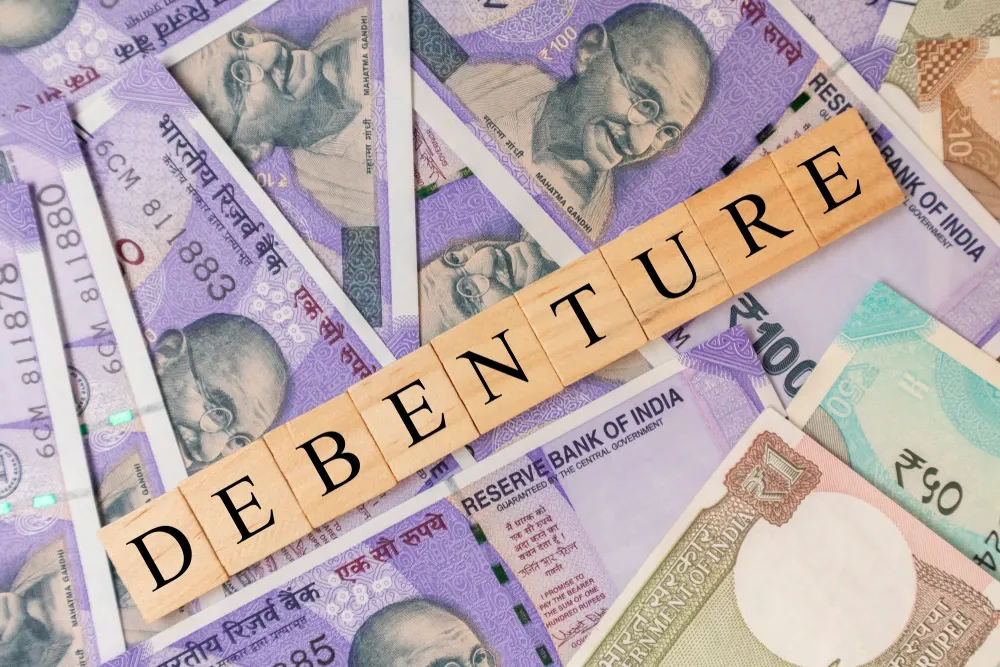

Companies often need capital to fulfil various financial requirements. Management analyses the fundraising route, which can be either via debt or diluting equity. Debentures are debt instruments issued by the company to borrow funds from investors at a fixed interest rate and a structured repayment plan.
Debentures are classified into two different types: Redeemable debentures and Irredeemable debentures. Here we will explore redeemable debentures and how they differ from non-redeemable debentures.
Redeemable Debentures
Redeemable debentures are fixed-income debt instruments that come with periodic interest payments and a predetermined maturity date. The company issues the redeemable debentures to the investors and mentions all the terms and conditions in the debenture certificate. The interest rates, timings of interest payments, and maturity dates, etc.
Example: XYZ Limited issues redeemable debentures of ₹1000 each at an interest rate of 8.5% per annum for the period of five years.
Here, an investor buys 1 debenture of ₹1000. The company pays ₹85 (8.5% of ₹1000) per year as interest. At the end of 5 years, ZYZ Limited repays the principal amount of ₹1000 to the investor.
The principal amount is redeemed at a fixed period, which is why these are called redeemable debentures.
While non-redeemable debentures, also called irredeemable debentures, do not have a fixed maturity date, the principal amount is not repaid when the company is a going concern. However, the interest payments are periodic, and the rate is higher due to the higher risk compared to redeemable debentures.
-
Redeemable debentures can be either convertible or non-convertible. The convertible debentures allow the investors to convert the debenture into equity shares and become shareholders.
-
While the non-convertible are those on which the fixed interest and loan amount must be repaid on a decided maturity date. A non-convertible debenture holder remains a creditor to the company.
Features of Redeemable Debentures
Some of the essential features of the redeemable debentures are:
Fixed Maturity Date
Redeemable debentures issued by the company to investors have a fixed maturity date. On the maturity date, the issuer (company) redeems the debenture by repaying the principal amount of the investment to the debenture holder.
Fixed Interest Rate
Redeemable debentures are issued at a fixed interest rate, which is announced at the time of issuing a debenture. The interest rate is lower compared to other debt instruments. Interest can be paid on maturity or periodically, depending on the terms. If paid periodically, then the frequency can be monthly, quarterly, or semi-annually.
Flexibility
Debentures can be converted to equity shares if they are convertible. It provides investors with the flexibility to become shareholders of the company from a creditor.
Collateral
Redeemable debentures can be secured or unsecured.
-
In secured debentures, the debt investment would be backed by certain assets of the issuing company. At the time of default in interest payments or the principal amount, the collateral can be liquidated to pay the money.
-
In the case of unsecured debentures, the debt investments are not backed by any collateral. If the company defaults on interest payments or the principal amount, the investor might not get any legal protection. But the credit rating of the company will be downgraded, impacting the company’s brand image and financial reputation.
Advantages of Redeemable Debentures
Redeemable debentures are beneficial for both investors and companies. Here are the advantages:
Steady income
Investors get the benefit of the regular, steady income from interest received from debentures periodically. The assurance of repayment of the principal amount on a maturity date makes an attractive investment option.
Low Risk
Debentures are low-risk investments. The company gives priority to repaying the debt, which makes it a safer investment option compared to equity.
Convenient
The company found it convenient to issue debentures compared to diluting equity stakes. The process is much easier, and low documentation makes it an affordable fundraising route.
Convertible Option
The convertible redeemable debentures give investors an option to become shareholders. Such debenture holders can convert the debenture into equity before maturity and get the ownership stakes.
Disadvantages of Redeemable Debentures
Here are a few disadvantages of redeemable debentures:

Low Returns
The returns on redeemable debentures are low, nearly 7% to 10% per annum, similar to other debt investment options. Due to a fixed interest rate, investors do not get the benefit of the company’s growth.

Default Risk
Debentures are debt that carries a default risk, irrespective of whether they are secured or unsecured. If the company struggles financially, it may face challenges in paying the interest, resulting in default.

Redeemable debentures are an important source of financing for companies, offering investors a fixed return and assured repayment of the principal amount on maturity. They provide financial stability to the issuers while ensuring safety and decent returns to the investors. The flexibility in interest payments and redemption terms makes it a reliable investment option.
About Author
Subhasish Mandal
Sub-Editor
Finance professional with strong expertise in stock market and personal finance writing, he excels at breaking down complex financial concepts into simple, actionable insights. Holding a Master’s degree in Commerce, he combines academic depth with practical knowledge of technical analysis and derivatives.
Read more from Subhasish



















Upstox is a leading Indian financial services company that offers online trading and investment services in stocks, commodities, currencies, mutual funds, and more. Founded in 2009 and headquartered in Mumbai, Upstox is backed by prominent investors including Ratan Tata, Tiger Global, and Kalaari Capital. It operates under RKSV Securities and is registered with SEBI, NSE, BSE, and other regulatory bodies, ensuring secure and compliant trading experiences.
Related articles

Share Market
How the RBI Defends the Indian Rupee through Strategic Forex Intervention13 min read | Written by Bidita Sen

Share Market
Impact of Rupee Depreciation on the Stock Market3 min read | Written by Subhasish Mandal

Share Market
India's LPG Crisis Is the Wake-Up Call. Renewables Are the Answer6 min read | Written by Pradnya Surana

Share Market
What is the Difference Between Small Gain & Capital Gain?4 min read | Written by Dev Sethia

Share Market
Types of Stocks: Large Cap, Mid Cap, Small Cap Explained5 min read | Written by Pradnya Surana