What is Nifty Private Bank?

Written by Mariyam Sara
Published on May 19, 2026 | 6 min read


Key Takeaways
-
The Nifty Private Bank index is a sectoral index that tracks the performance of the top 10 privately-owned banks listed on the NSE.
-
The constituent private banks are selected based on their free float market capitalisation and other eligibility criteria set by the NSE Indices Ltd.
-
You can invest in the Nifty Private Bank index either by investing directly in the index's constituent stocks or through index funds and ETFs.
-
Investing in the Nifty Private Bank index offers various benefits such as diversification, high liquidity, and exposure to top private banks in India.
-
The Nifty Private Bank index carries certain risks, including changes in interest rates, poor asset quality, regulatory shifts, and high market volatility.
The Nifty Private Bank index tracks the performance of India’s private banking sector and is widely used as a benchmark by investors and fund managers to compare private banking stocks. The index also provides insights into the country’s credit demand and how shifts in policies impact the sector.
Let’s explore what the Nifty Private Bank index is, its constituents, stock selection criteria, and its historical performance.
What Is the Nifty Private Bank Index?
The Nifty Private Bank index is a sectoral benchmark index that tracks the performance of the top 10 private banks listed on the NSE. The index value is calculated by using the free float market capitalisation method, where the index value reflects the total free float market value of all the stocks in the index relative to the base market capitalisation value.
Constituents of Nifty Private Bank Index
The following are the lists of banks included in the Nifty Private Bank index as per their weightage as of May 2026.
| Private Bank’s Name | Weight (%) |
|---|---|
| Axis Bank Ltd. | 20.44 |
| ICICI Bank Ltd. | 20.13 |
| HDFC Bank Ltd. | 20.12 |
| Kotak Mahindra Bank Ltd. | 20.08 |
| Federal Bank Ltd. | 5.43 |
| IndusInd Bank Ltd. | 4.64 |
| IDFC First Bank Ltd. | 3.55 |
| Yes Bank Ltd. | 2.69 |
| RBL Bank Ltd. | 1.56 |
| Bandhan Bank Ltd. | 1.37 |
Stay updated with the changes in the Nifty Private Bank index constituents and their weightage by monitoring the NSE website.
Historical Performance of Nifty Private Bank Index
As per the NSE data, the Nifty Private Bank Index delivered a 5-year CAGR of 9.03% with a 5-year average Beta of 1.08 in relation to Nifty 50, making it slightly more volatile than the broader market.
Since its inception, the Nifty Private Bank index has delivered steady growth, despite a major correction during 2020–2021. Since its recovery, the index has experienced high volatility.
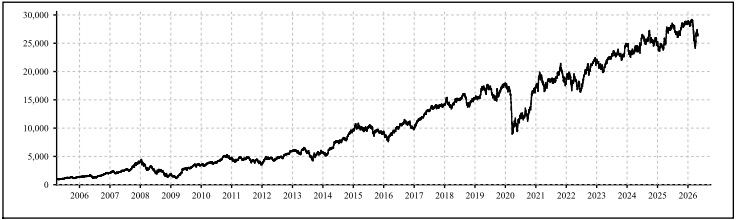
Source: NSE Indexogram
How Can You Invest in the Nifty Private Bank Index?
You can invest in the Nifty Private Bank index in the following ways.
Direct Investment
You can directly buy the individual stocks included in the Nifty Private Bank index. However, this would require fundamental research and analysis and could lead to overreliance on a few stocks, increasing concentration risk.
Exchange Traded Funds (ETFs)
ETFs are pooled investment funds that replicate the Nifty Private Bank index and are listed on the stock exchanges, allowing investors to easily trade them. You need Demat and Trading Accounts to purchase and trade ETFs.
Index Funds
Index funds track the Nifty Private Bank index to offer similar returns and offer SIPs (Systematic Investment Plans), allowing investors to pay a fixed amount regularly instead of one lump sum amount.
Selection Criteria for Nifty Private Bank Index
The constituent banks are selected based on their free float market capitalisation and the following eligibility criteria set by the NSE Indices Ltd.
- Banks should be a part of the Nifty 500 at the time of review. In case the number of eligible stocks representing the private banking sector within Nifty 500 falls below 10, then the deficit number of stocks must be selected from the universe of stocks ranked within the top 800 based on both average daily turnover and average daily full market capitalisation based on the previous six-month period data used for index rebalancing of Nifty 500.
- Banks having 50% or more of their outstanding share capital held by the central or state government directly, or by central or state government-controlled banks, will be excluded from stock selection.
- The bank's trading frequency should be at least 90% in the last six months.
- The bank should have a minimum listing history of 1 month as of the cutoff date.
- Final selection of 10 banks to be done based on free float market capitalisation. Banks available for trading in NSE’s Futures & Options segment at the time of final selection will be given preference.
- Weightage of each stock in the index is calculated based on its free-float market capitalisation, such that no single stock shall be more than 23%, and the weightage of the top 3 stocks cumulatively shall not be more than 62% at the time of rebalancing.
Benefits of Investing in the Nifty Private Bank Index
The following are the benefits of investing in the Nifty Private Bank Index.
Economic Indicator
The performance of the banks is linked to the prevailing economic conditions. Hence, the sector reacts more strongly to economic growth than the broader market. As the Indian economy booms, the Nifty Private Bank index would rise.
Diversification
The Nifty Private Bank Index diversifies your investment across the largest and most liquid private banks, reducing the risk of concentration.
High Liquidity
In the Nifty Private Bank index, banks are selected based on their liquidity and trading frequency, allowing you to enter and exit positions smoothly.
Low Gross NPAs
Private banks usually have lower Gross NPAs (Non-performing Assets) compared to the broader banking sector. Since NPAs directly eat into the banks’ profits, a lower NPA signals strong financial health.
Risks of Investing in the Nifty Private Bank Index
The following are the risks associated with investing in the Nifty Private Bank index.
Change in Interest Rates
Changes in interest rates significantly impact bank profitability, as banks rely on the difference between the interest paid on deposits and the interest earned on loans. Consequently, when the RBI changes the repo rate, it directly affects a bank's asset-liability balance, which can either shrink or expand profit margins.
Sectoral Concentration
Since the Nifty Private Bank index invests in a particular sector, it can lead to sectoral concentration, where if the sector faces a downturn, the entire index will decline, impacting your investments.
Regulatory Changes
The banking sector is strictly regulated by the RBI, and any policy shifts regarding the Cash Reserve Ratio (CRR), Statutory Liquidity Ratio (SLR), lending regulations, or capital adequacy could significantly impact the bank’s operation and profitability.
High Volatility
The private banking sector has a high beta of 1.08 in relation to the Nifty 50, meaning its stock prices are more volatile than the broader market. During unfavorable economic conditions or broad market sell-offs, the sector would be hit harder than the overall market.

The Nifty Private Bank index is a sectoral benchmark index that tracks the performance of the top 10 private banks listed on the NSE. The banks are selected on the basis of the eligibility criteria, etc. You can invest in the Nifty Private Bank index by directly purchasing the individual stocks in the index or via index funds and ETFs.
Before investing, investors must understand all the risks associated with and the factors that influence the private banking sector to make informed investment decisions.
FAQs
What is the Nifty Private Bank Index?
The Nifty Private Bank index is a sectoral benchmark index that tracks the performance of the top 10 private banks listed on the NSE.
How many stocks are there in the Nifty Private Bank Index?
There are 10 stocks in the Nifty Private Bank index.
How is the Nifty Private Bank Index calculated?
The Nifty Private Bank index is calculated using the free float market capitalisation method, where the index value reflects the total free float market value of all the stocks in the index relative to the base market capitalisation value.
Who manages the Nifty Private Bank Index?
The NSE Indices Ltd manages and rebalances the Nifty Private Bank Index.
How can I invest in the Nifty Private Bank Index?
You can invest in the Nifty Private Bank index by directly investing in the stocks via index funds and ETFs.
How often is the Nifty Private Bank Index rebalanced?
The Nifty Private Bank index is rebalanced semi-annually to ensure the index accurately reflects the performance of the sector.
About Author
Mariyam Sara
Sub-Editor

holds an MBA in Finance and is a true Finance Fanatic. She writes extensively on all things finance whether it’s stock trading, personal finance, or insurance, chances are she’s covered it. When she’s not writing, she’s busy pursuing NISM certifications, experimenting with new baking recipes.
Read more from Mariyam





















Upstox is a leading Indian financial services company that offers online trading and investment services in stocks, commodities, currencies, mutual funds, and more. Founded in 2009 and headquartered in Mumbai, Upstox is backed by prominent investors including Ratan Tata, Tiger Global, and Kalaari Capital. It operates under RKSV Securities and is registered with SEBI, NSE, BSE, and other regulatory bodies, ensuring secure and compliant trading experiences.
Related articles

Share Market
What Is a Market Correction? Meaning, Causes, and Strategy15 min read | Written by Bidita Sen

Share Market
Cyclical vs Defensive Stocks: Differences, Examples and Strategy15 min read | Written by Bidita Sen

Share Market
What is Efficiency Ratio: Meaning, Types, Formula and More12 min read | Written by Sachin Gupta

Share Market
What is a Solvency Ratio: Meaning, Types, Benefits, Limitations and More12 min read | Written by Sachin Gupta
Share Market
Profitability Ratios: Meaning, Formula, Benefits, Limitations and More11 min read | Written by Sachin Gupta

Share Market
A Guide to American Depository Receipts (ADR) for Indian Investors13 min read | Written by Subhasish Mandal