What Is a Momentum Indicator? Definition and Common Indicators

Written by Mariyam Sara
Published on December 22, 2025 | 2 min read
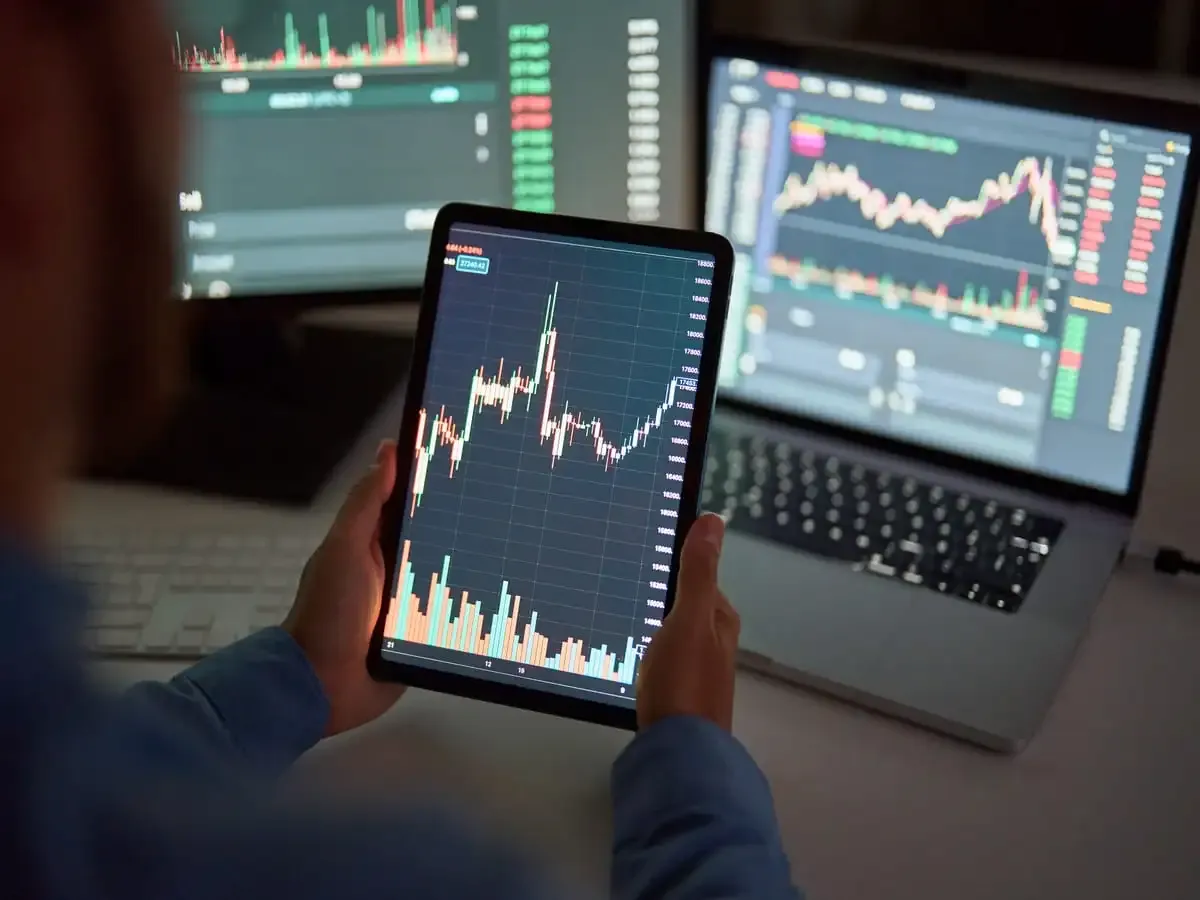

In Technical Analysis, traders study the prices of securities and their movement on a chart over a period of time. When analysing price charts, there’s one tool that every smart trader uses: the Momentum indicator.
The momentum indicator is a tool that helps traders understand the rate at which the prices of a security change. It shows the movement of price and its strength, helping traders identify potential price reversal points.
What Are Momentum Indicators?
Momentum indicators are technical analysis tools that show the strength or weakness of a price movement. The prices of securities are constantly changing due to the everyday push and pull between the bulls and the bears, i.e., the buyers and sellers. This indicator helps to confirm which price movements to consider while trading and which to ignore.
Momentum indicators such as the Relative Strength Index (RSI), Moving Average Convergence Divergence (MACD) and Bollinger Bands are commonly used by traders.
How Do Momentum Indicators Work?
Momentum indicators show the rate and strength of a price movement, regardless of its direction. They are effective in confirming the trend strength in trending markets and help identify reversal points.
Indicators usually fluctuate around a centerline (i.e, 0 or 100). When the reading is above the line, it suggests a positive uptrend momentum, while below indicates a negative, downward momentum.
Momentum indicators help identify oversold or overbought securities. For example, if the reading is above 70 in the RSI indicator, the security might be oversold and overvalued, whereas a reading below 30 signifies it is oversold or undervalued. If the price hits a new high or low, but the indicators fail to do so, it suggests a potential price reversal.
Momentum Indicators You Can Use
Momentum indicators help identify strong price trends and take calculated trading decisions. The following are popular momentum indicators commonly used by traders.
Moving Average Convergence Divergence (MACD)
Moving Average Convergence Divergence (MACD) is one of the most popular momentum indicators. It uses two moving averages to capture the price fluctuations of a security. MACD indicates momentum as it fluctuates between moving averages as they converge, overlap and move away from each other.
Traders or analysts can select the time period they want to utilise the momentum indicator for. The indicator usually uses the 12-day and 26-day exponential moving averages (EMAs) by subtracting the 26-day from the 12-day. This results in a MACD line that is typically graphed with a 9-day EMA and acts as a signal line to identify price movement turns.
Relative Strength Index (RSI)
The Relative Strength Index (RSI) is an oscillator that measures the price changes and speed of those price changes. RSI indicators fluctuate between 0 to 100. It helps traders and analysts identify signals if they observe divergence, failed swing and when the indicators cross the center line.
If the RSI value is above 50, it signals a positive uptrend, but if the indicator is above 70, it may signal that the security is overbought and overvalued. On the contrary, if the RSI is below 50, it signals a negative downtrend momentum and above 30 signals that the security is oversold or undervalued.
Bollinger Bands
Bollinger bands are volatility indicators that also work as momentum indicators that measure volatility by using a 20-period moving average with lower and upper limits set at +/- 2 standard deviations. The Bollinger bands indicators help identify potential reversals, strong trends and price breakouts by estimating the price intensity compared to the mean.
Limitations of Using Momentum Indicators
Momentum indicators may be a great tool to identify trend strength, but there are some limitations to using momentum indicators.
False Signals
Momentum indicators often generate false buy or sell signals during sideways or choppy markets. This can lead to potential losses for the traders.
Lagging Nature
Indicators such as MACD act as lagging indicators, which results in delayed entry and exit points and missed opportunities for traders.
Sensitive to Volatility
In the case of highly volatile stocks such as penny stocks, indicators may quickly reach oversold or overbought levels, signalling unreliable and false reversals.
Fundamental Factors
Company-specific news or external events can lead to rapid and drastic changes in prices of a security, rendering momentum indicators signals completely irrelevant.

Moment indicators can identify string trends and spot your entry and exit points for profitable trades. But they should be used with caution and along with fundamental indicators so you can make informed trading and investment decisions.
About Author
Mariyam Sara
Sub-Editor
holds an MBA in Finance and is a true Finance Fanatic. She writes extensively on all things finance whether it’s stock trading, personal finance, or insurance, chances are she’s covered it. When she’s not writing, she’s busy pursuing NISM certifications, experimenting with new baking recipes.
Read more from Mariyam



















Upstox is a leading Indian financial services company that offers online trading and investment services in stocks, commodities, currencies, mutual funds, and more. Founded in 2009 and headquartered in Mumbai, Upstox is backed by prominent investors including Ratan Tata, Tiger Global, and Kalaari Capital. It operates under RKSV Securities and is registered with SEBI, NSE, BSE, and other regulatory bodies, ensuring secure and compliant trading experiences.
Related articles

Share Market
India's LPG Crisis Is the Wake-Up Call. Renewables Are the Answer6 min read | Written by Pradnya Surana


Share Market
What is the Difference Between Small Gain & Capital Gain?4 min read | Written by Dev Sethia

Share Market
Types of Stocks: Large Cap, Mid Cap, Small Cap Explained5 min read | Written by Pradnya Surana



Share Market
How Dividends Help You Earn Passive Income From the Stock Market3 min read | Written by Pradnya Surana