Stock Market Trading: Types Of Trading and Its History

Written by Pradnya Surana
Published on October 01, 2025 | 3 min read

What is Stock Market Trading?
Like any trading which involves buying and selling, stock market trading is buying and selling shares of a company with the aim of generating profits. To earn profit, stock traders purchase stocks at lower prices and sell them at higher prices.
Trading and investing, the two different approaches, their distinction is true even in the stock market. In trading, traders hold shares bought for shorter periods, say from a few seconds to few months, while investors hold stocks for longer duration, for months or years.
History of Stock Market Trading
Early Beginnings
Stock trading started in the 17th century. In 1602, the Dutch East India Company became the first publicly traded company. Investors could buy and sell shares of the Dutch East India Company and this beginning paved the way for modern stock trading.
A stock exchange is a platform through which buying and selling of shares takes place. The Amsterdam Stock Exchange (known today as Euronext Amsterdam) was established in 1602 to facilitate trading of Dutch East India Company’s shares. It is the world's first official stock exchange
Development of Major Exchanges
Eventually, the London Stock Exchange was founded in 1801. In America, the Buttonwood Agreement signed in 1792 by 24 stockbrokers led to the creation of the New York Stock Exchange (NYSE) in 1817.
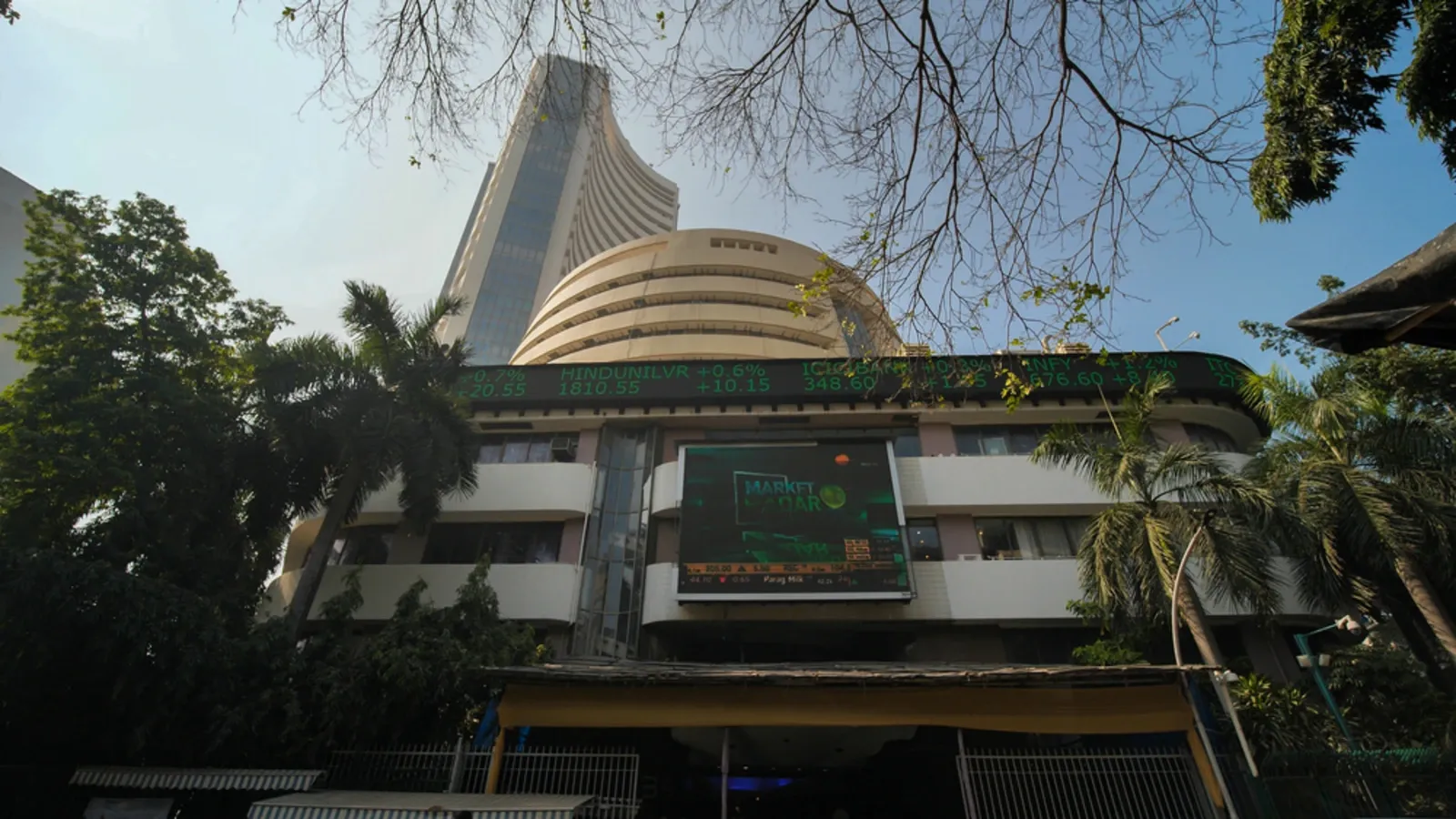
The Bombay Stock Exchange (BSE) which was established in 1875, became Asia's first stock exchange. Even today, it remains one of India's premier trading platforms. The National Stock Exchange (NSE) of India was then founded in 1992. With NSE, electronic trading was introduced, which soon revolutionised Indian markets.
Evolution of Trading Modes
In the early decades, stock trading took place through open outcry systems. Here traders gathered on exchange floors and trading took place by shouting bids and offers. Come modern age, the 1970s and 1980s saw the onset of electronic trading systems and it gradually replaced floor trading.
By the 1990s, online trading platforms were fully operational and they allowed individual investors to trade from their computers. The 2000s brought high-frequency trading and algorithmic trading, where computer programmes execute trades at lightning speeds. Today, with the ever-evolving technology, trading can be executed by just a few taps on the smart phone.
Types of Stock Market Trading
Intraday Trading (Day Trading)
Intraday trading, as the name suggests, is buying and selling stocks within the same trading day. Stock prices keep changing continuously. Here, the aim is to profit on small stock price movements throughout the day. This trading style requires constant market monitoring, quick decision-making and understanding of technical analysis (charts and ratios). Day trading demands full-time attention to markets and given the market volatility, managing high-stress situations.
Swing Trading
Swing trading involves holding positions for a few days to weeks, thereby profiting from short to medium-term price movements. Swing traders analyse both technical and fundamental factors (overall company’s performance, economy and markets) to identify possible price swings. This style requires less time commitment than day trading, as traders can review markets once or twice daily.
Positional Trading
Positional trading is holding stocks for weeks to months, based on medium-term trends and fundamental analysis. Position traders focus on broader market movements and company performance. They ignore short term price fluctuations. This approach requires patience and the ability to withstand temporary losses.
Positional trading can also benefit from established trends (upward or downward price movement) without the stress of daily market volatility.
Scalping
Scalping is an ultra-short-term trading strategy where traders hold positions for seconds to minutes, making numerous small profits throughout the day. Scalpers exploit tiny price gaps caused by market dynamics. This highly intensive strategy requires excellent concentration, fast execution platforms and low brokerage costs.
Algorithmic Trading
Algorithmic trading uses computer programmes to execute trades automatically based on certain fixed rules and mathematical models. These algorithms can process vast amounts of data and execute trades within seconds. Algorithmic trading is largely implemented by institutional investors and hedge funds. Individual traders also use simpler algorithmic strategies through trading platforms offering automated trading features.
Options Trading
Options trading involves buying and selling contracts that give the right, but no compulsion, to buy or sell stocks at predetermined prices. Options trading is based on speculation meant and hedging or generating income through premium collection. Options trading offers leverage. This leverage allows traders to hold larger positions with smaller capital.
However, options trading carries significant risk and requires thorough understanding of complex strategies.

Conclusion
Stock market trading has evolved dramatically, especially in the last few decades. From open outcry floors to electronic platforms and to algorithmic systems, the technology is making it sophisticated by the day. Today's traders can choose from various trading styles matching their preferences.
About Author
Pradnya Surana
Sub-Editor
is an engineering and management graduate with 12 years of experience in India’s leading banks. With a natural flair for writing and a passion for all things finance, she reinvented herself as a financial writer. Her work reflects her ability to view the industry from both sides of the table, the financial service provider and the consumer. Experience in fast paced consumer facing roles adds depth, clarity and relevance to her writing.
Read more from Pradnya












Upstox is a leading Indian financial services company that offers online trading and investment services in stocks, commodities, currencies, mutual funds, and more. Founded in 2009 and headquartered in Mumbai, Upstox is backed by prominent investors including Ratan Tata, Tiger Global, and Kalaari Capital. It operates under RKSV Securities and is registered with SEBI, NSE, BSE, and other regulatory bodies, ensuring secure and compliant trading experiences.
Related articles

Share Market
How the RBI Defends the Indian Rupee through Strategic Forex Intervention13 min read | Written by Bidita Sen

Share Market
Impact of Rupee Depreciation on the Stock Market3 min read | Written by Subhasish Mandal

Share Market
India's LPG Crisis Is the Wake-Up Call. Renewables Are the Answer6 min read | Written by Pradnya Surana
Share Market
What is the Difference Between Small Gain & Capital Gain?4 min read | Written by Dev Sethia

Share Market
Types of Stocks: Large Cap, Mid Cap, Small Cap Explained5 min read | Written by Pradnya Surana