Purchasing Power Parity: What It Is and How to Calculate It

Written by Pradnya Surana
Published on December 02, 2025 | 4 min read
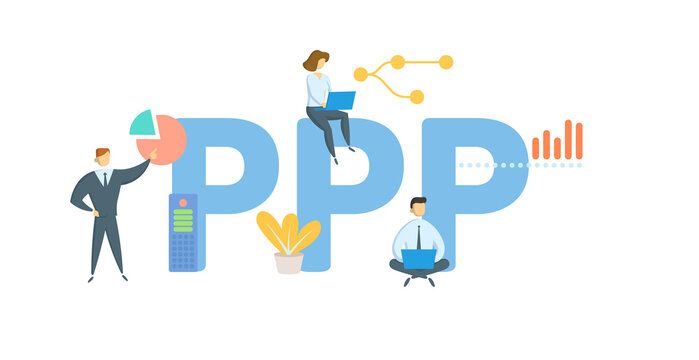

Understanding Purchasing Power Parity and Its Importance
Have you ever wondered why a cup of coffee at Starbucks costs £3 in London but ₹300 in India? One can understand this pricing difference by understanding how it decides currency values.
What Is Purchasing Power Parity?
PPP is an economic theory that compares the buying power of different currencies. According to this theory, exchange rates should eventually adjust so that identical goods cost the same in various countries. In other words, your money should buy you the same amount of goods or services, whether you are in Manchester or Mumbai.
The Theory Behind PPP
The basic idea is simple, if a basket of goods costs £100 in the UK and ₹90,000 in India, then according to PPP theory, the exchange rate should be £1 = ₹90. This is because the currencies should reflect the relative purchasing power in each country.
PPP comes from the ‘Law of One Price’. This law says that if there were no transport costs, taxes or trade barriers, the same product should sell for the same price everywhere after converting currencies.
If prices differ significantly, people could profit by buying goods in the cheaper country and selling them in the more expensive one – a process called arbitrage.
The Theory Behind PPP
There are two forms of PPP
Absolute PPP
Absolute PPP states that the price levels in two countries should be equal when expressed in the same currency. It gives a direct relationship between price levels and exchange rates. It is a simple and neat idea, but in reality, transport costs, tariffs and local market differences make it imperfect.
Relative PPP
Relative PPP focuses on changes over time, not exact equality. It states that the inflation rate varies across different countries and is reflected in exchange rates. Inflation is the rate at which prices for goods and services increase over time. If the prices increase, it means you buy less for more, hence the value of that currency is diminishing. For example, if prices rise faster in Mexico than in the UK, the Mexican peso is likely to weaken against the pound in the long run.
Relative PPP is considered more accurate because it reflects real-world economic behaviour.
How to Calculate PPP
The PPP equation is straightforward:
PPP Exchange Rate = Cost of Goods in Currency 1 ÷ Cost of Goods in Currency 2
A Practical Example
Let's say a loaf of bread with identical ingredients costs £2.50 in the UK and ₹200 in India. Using the PPP formula,
PPP Exchange Rate = £2.50 ÷ ₹200 = £0.0125 per rupee
Or vice-versa, ₹200 ÷ £2.50 = ₹80 per pound
This indicates that, based on bread prices alone, the PPP exchange rate should be ₹80 to £1.
The Big Mac Index
The Economist magazine created a famous real-world application called the Big Mac Index. McDonald's Big Macs are sold worldwide and their ingredients are more or less the same everywhere. Due to this, they make an excellent comparison tool. If a Big Mac costs £3.50 in London and ₹250 in Mumbai, the PPP exchange rate would be,
PPP Exchange Rate = ₹250 / £3.50 = approximately ₹71.43 per pound
Now, if the actual market exchange rate is ₹100 per pound, according to the PPP theory, this indicates that compared to the pound, the rupee’s value is lower. There are other geopolitical and macroeconomic factors contributing to this devaluation.
Limitations of PPP
Whilst PPP is useful, but not foolproof. Several factors can cause real exchange rates to differ from PPP predictions:

Transport costs and tariffs
It make it expensive to move goods between countries

Non-tradable services
Services like say, haircuts, can't be easily bought and sold across borders

Quality differences
This mean products are not always fully identical

Government intervention
It is through price controls or subsidies affects local prices

Even with its limitations, PPP is important and relevant because it compares the living standards between countries. It makes international economic comparisons more meaningful. Due to PPP, economists can understand if currencies are overvalued or undervalued. They can predict long-term trends in the exchange rate.
Hence, understanding PPP gives you a clearer picture of what money is actually worth in different places. For anyone interested in international economics, trade and global business, PPP’s knowledge is essential.
About Author
Pradnya Surana
Sub-Editor
is an engineering and management graduate with 12 years of experience in India’s leading banks. With a natural flair for writing and a passion for all things finance, she reinvented herself as a financial writer. Her work reflects her ability to view the industry from both sides of the table, the financial service provider and the consumer. Experience in fast paced consumer facing roles adds depth, clarity and relevance to her writing.
Read more from Pradnya

















Upstox is a leading Indian financial services company that offers online trading and investment services in stocks, commodities, currencies, mutual funds, and more. Founded in 2009 and headquartered in Mumbai, Upstox is backed by prominent investors including Ratan Tata, Tiger Global, and Kalaari Capital. It operates under RKSV Securities and is registered with SEBI, NSE, BSE, and other regulatory bodies, ensuring secure and compliant trading experiences.
Related articles

Share Market
India's LPG Crisis Is the Wake-Up Call. Renewables Are the Answer6 min read | Written by Pradnya Surana
Share Market
What is the Difference Between Small Gain & Capital Gain?4 min read | Written by Dev Sethia

Share Market
Types of Stocks: Large Cap, Mid Cap, Small Cap Explained5 min read | Written by Pradnya Surana


Share Market
How Dividends Help You Earn Passive Income From the Stock Market3 min read | Written by Pradnya Surana