Securities Transaction Tax (STT): Features, Importance, and Impact on Traders

Written by Subhasish Mandal
Published on February 03, 2026 | 3 min read
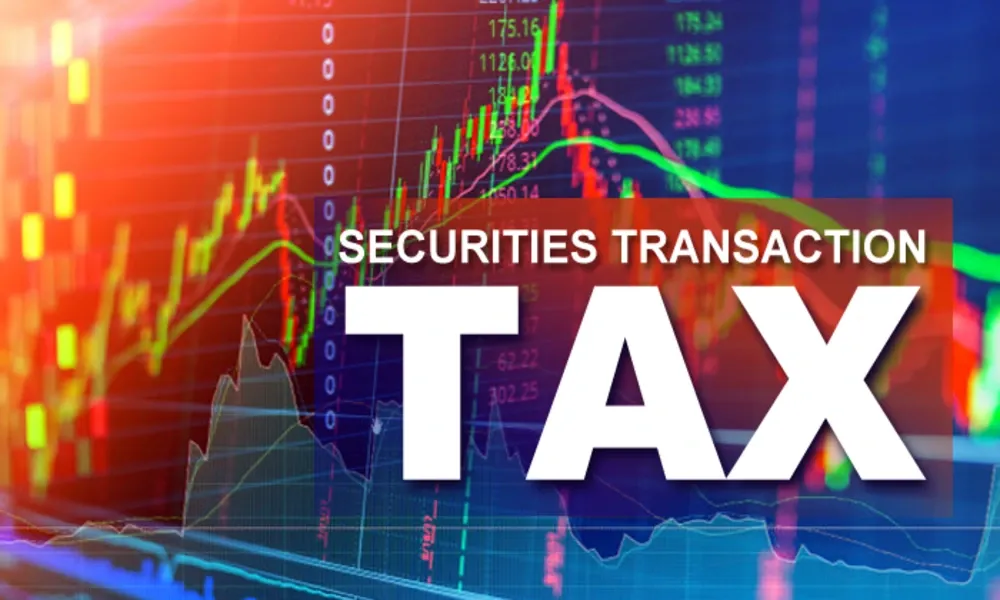

The Securities Transaction Tax (STT) is a direct tax, charged at the time of buying and selling securities. It is applied to equity delivery, equity intraday, futures and options, ETFs, and equity-oriented mutual funds. STT is directly levied on the transaction value (turnover), irrespective of profit or loss. Therefore, it increases the cost of buying and selling securities.
The Securities Transaction Tax Act governs the STT and specifies which securities transactions should be taxable. The government periodically determines and revises STT rates depending on the type of transaction, and either the buyer or the seller is responsible for paying the tax.
Budget 2026: Securities Transaction Tax (STT) Update
In Budget 2026, STT rates in futures and options were revised to curb speculative activities. The new STT rates in futures trading are proposed to be increased from 0.02% to 0.05%. In the options trade, STT rates are proposed to increase from 0.1% to 0.15% in the option premium.
These STT changes will be effective from 1st April 2026.
When Was STT Introduced?
STT was introduced in India on 1st October 2004, under the Finance Act 2004. The purpose of this tax is to simplify the taxation of securities, curb tax evasion, and replace the long-term capital gains tax (LTCG).
How Does STT Work?
The STT is a turnover-based tax. It charges per transaction, irrespective of the profitability. The calculation of STT is based on the type of transaction and the value of the securities traded.
- STT Calculation Formula: STT = Turnover Value x Applicable STT Rate
- Here, Turnover value = Price x Quantity.
- For F&O, the quantity is the number of shares in a lot size.
Example: If you buy shares worth ₹1,00,000 and later sell them for ₹1,08,000.
- STT will be charged on ₹1,00,000 at the buy.
- At the time of selling, STT is again charged on ₹1,08,000.
Total STT is calculated in full turnover, not on the profit.
Features of Securities Transaction Tax (STT)
When a share transaction is completed, STT is levied. It is quick, transparent and effective. Below are the key features of STT.
Collected at Source:
This tax is deducted at the time of buying and selling of securities and transferred directly to the government.
Applicability
STT applicable to stocks, futures, options and equity-oriented mutual funds.
Excludes Private Market Trades
STT is only applicable to the trades executed in the recognised stock exchange. The private and off-market trades are excluded from STT.
Variable Rates
The government periodically revises the STT according to the instrument traded.
Importance of Securities Transaction Tax (STT)
STT streamlines the tax collections from the share market. It protects against tax evasion from the underreported capital gains. Below are the importance of STT.
Regulatory Tool
The STT acts as a regulatory tool for monitoring and overseeing trading activities in the securities market. STT helps authorities to track transactions and identify manipulation or suspicious activity.
Revenue Generation
The tax collected from securities transactions contributes to the overall tax revenue. It can be used to fund the various public welfare initiatives, infrastructure development and other capital expenditure.
Impact of STT on Traders and Investors
The STT impacts the traders and investors in the following ways:

Impacts Profitability
STT is an additional cost levied on the buying and selling of securities. When the transaction value is high, STT automatically increases the cost. Therefore, it impacts the overall profitability.

Reduce Trading Volumes
The additional cost of STT may discourage small traders from participating in futures and options trading, hence reducing the trading volume.

Decrease the NAV of Mutual Funds
The impact of STT on mutual fund investors is low, but it decreases the Net Asset Value (NAV) because STT is considered an expense.

The Securities Transaction Tax (STT) is a mandatory tax for both buyers and sellers of securities, depending on the type of transaction. It is levied on the turnover value and is irrespective of profit or loss.
The stock exchange collects the STT at the time of the buy and sell transactions and transfers it to the government revenue account. The main idea behind charging STT is to generate a revenue source from trading activities.
About Author
Subhasish Mandal
Sub-Editor
Finance professional with strong expertise in stock market and personal finance writing, he excels at breaking down complex financial concepts into simple, actionable insights. Holding a Master’s degree in Commerce, he combines academic depth with practical knowledge of technical analysis and derivatives.
Read more from Subhasish




















Upstox is a leading Indian financial services company that offers online trading and investment services in stocks, commodities, currencies, mutual funds, and more. Founded in 2009 and headquartered in Mumbai, Upstox is backed by prominent investors including Ratan Tata, Tiger Global, and Kalaari Capital. It operates under RKSV Securities and is registered with SEBI, NSE, BSE, and other regulatory bodies, ensuring secure and compliant trading experiences.
Related articles
Personal Finance
India’s New GDP Series With Revised Base Year 2022-23: How it Impact Investors?4 min read | Written by Subhasish Mandal

Personal Finance
LPG Shortage in India: Energy, Inflation and Equity Loop3 min read | Written by Subhasish Mandal

Personal Finance
India's New CPI Series: What Changed, Its Impact on the Economy and Inflation7 min read | Written by Mariyam Sara


Personal Finance
Ladki Bahin Yojana eKYC: Eligibility Criteria, Application Process and How to Complete the E-KYC Process Online?3 min read | Written by Mariyam Sara

Personal Finance
What is the National Pension System (NPS) Scheme?4 min read | Written by Subhasish Mandal

Personal Finance
Corporate Bonds vs Government Securities - Which Is Better for You?3 min read | Written by Pradnya Surana