Difference Between NCD, Bonds & Debentures

Written by Pradnya Surana
Published on December 29, 2025 | 3 min read


Many of us get confused when we hear terms like NCDs, bonds and debentures. Well, all of them are loans. While all of these are debt instruments and share some similarities, each of them has a unique characteristic that sets it apart from the others. Understanding these differences helps you choose the debt instruments suitable for your financial goal, and make investment decisions accordingly.
What Are Bonds?
Bonds are debt instruments issued by governments, government entities, or large corporations to raise funds from investors. When you buy a bond, you lend money to the issuer for a specified period. In return, you receive regular interest payments called coupon payments and get your principal amount back at maturity. Government bonds, such as treasury bonds or gilt securities, are considered the safest investments as they carry a sovereign guarantee. Corporate bonds are issued by companies and carry slightly higher risk due to the possibility of default. But corporate bonds offer better returns than government bonds. Bonds usually have longer tenures ranging from 5 to 30 years. Though you cannot prematurely close the bond, you can trade it on the stock exchange.
What Are Debentures?
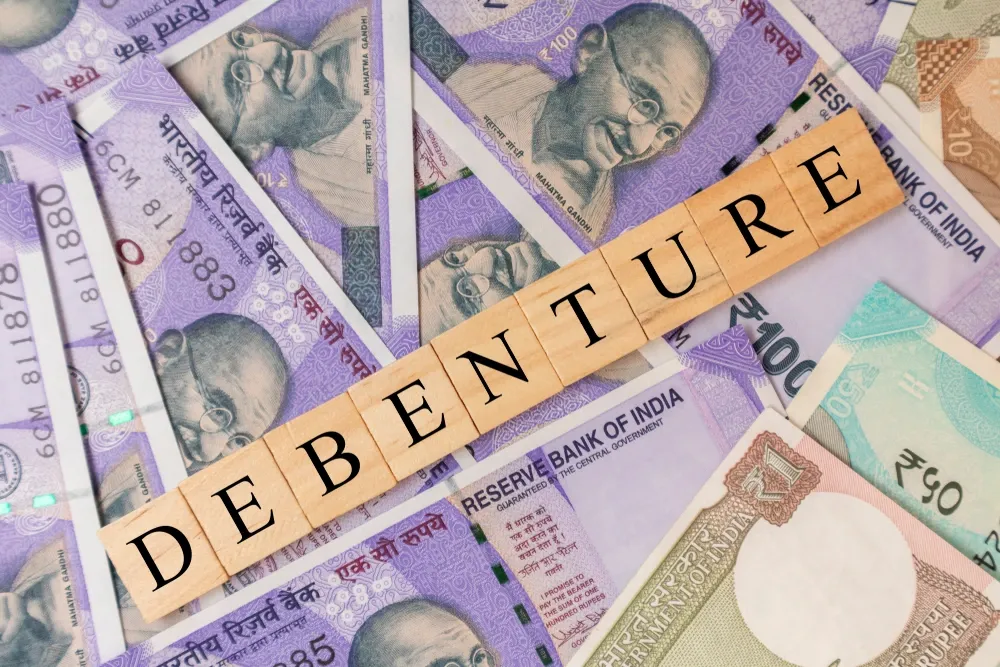
Debentures are debt instruments issued exclusively by companies to raise capital for business expansion, working capital needs or other corporate purposes. By design, they are unsecured loans that investors provide to companies. Investors buy debentures solely based on the company’s reputation. Debentures can be convertible or non-convertible. Convertible debentures can be converted into equity shares of the company after a specified period, thereby giving investors a share of ownership in the company. On the other hand, non-convertible debentures (NCDs) cannot be converted into shares and remain pure debt instruments throughout their tenure.
What Are NCDs?
Non-Convertible Debentures (NCDs) are a specific type of debenture that cannot be converted into equity shares under any circumstances. They are issued by companies for a fixed tenure, ranging around 1-10 years. NCDs offer fixed interest rates and provide regular income to investors through periodic interest payments. NCDs come with credit ratings from which the issuing company's ability to repay can be gauged. They can be secured or unsecured. Though most retail NCDs are secured against the company's assets, thereby providing additional safety to investors.
| Feature | Bonds | Debentures | NCDs |
|---|---|---|---|
| Issuer | Government, PSUs, Corporations | Companies only | Companies only |
| Security | High (especially govt bonds) | Secured or unsecured | Secured or unsecured |
| Convertibility | Never convertible | Can be convertible or non-convertible | Always non-convertible |
| Typical Tenure | 10–30 years | 3–15 years | 1–10 years |
| Interest Rate | 6–8% p.a. | 7–10% p.a. | 8–12% p.a. |
| Liquidity | High | Moderate | Low to moderate |
| Minimum Investment | ₹10,000–₹1,00,000 | ₹10,000–₹50,000 | ₹10,000–₹20,000 |
| Trading | Active secondary market | Moderate trading | Limited trading |

Although bonds, debentures and NCDs are all debt investments, they differ in issuers, risk levels, convertibility options and overall security. Understanding these differences helps you build a balanced portfolio that matches your risk appetite and financial goals.
About Author
Pradnya Surana
Sub-Editor
is an engineering and management graduate with 12 years of experience in India’s leading banks. With a natural flair for writing and a passion for all things finance, she reinvented herself as a financial writer. Her work reflects her ability to view the industry from both sides of the table, the financial service provider and the consumer. Experience in fast paced consumer facing roles adds depth, clarity and relevance to her writing.
Read more from Pradnya



















Upstox is a leading Indian financial services company that offers online trading and investment services in stocks, commodities, currencies, mutual funds, and more. Founded in 2009 and headquartered in Mumbai, Upstox is backed by prominent investors including Ratan Tata, Tiger Global, and Kalaari Capital. It operates under RKSV Securities and is registered with SEBI, NSE, BSE, and other regulatory bodies, ensuring secure and compliant trading experiences.
Related articles

Personal Finance
India’s New GDP Series With Revised Base Year 2022-23: How it Impact Investors?4 min read | Written by Subhasish Mandal

Personal Finance
LPG Shortage in India: Energy, Inflation and Equity Loop3 min read | Written by Subhasish Mandal

Personal Finance
What Changed in India's New CPI Series and How It Impacts the Economy and Inflation7 min read | Written by Mariyam Sara
Personal Finance
Securities Transaction Tax (STT): Features, Importance, and Impact on Traders3 min read | Written by Subhasish Mandal



Personal Finance
Ladki Bahin Yojana eKYC: Eligibility Criteria, Application Process and How to Complete the E-KYC Process Online?3 min read | Written by Mariyam Sara