Difference Between Trading Account and Demat Account

Written by Pradnya Surana
Published on December 01, 2025 | 5 min read


So you have decided to start investing in the stock market. You open a browser, search for how to buy shares and immediately few terms like trading account, Demat account, broker, depository, etc are all around you. In the process, you also wonder, aren’t a Demat account and a trading account the same?
Many of us are confused about the difference between a trading account and a Demat account. In fact, it's often used interchangeably. But yes, they both are different types of accounts and you need both to trade and invest in the stock market.
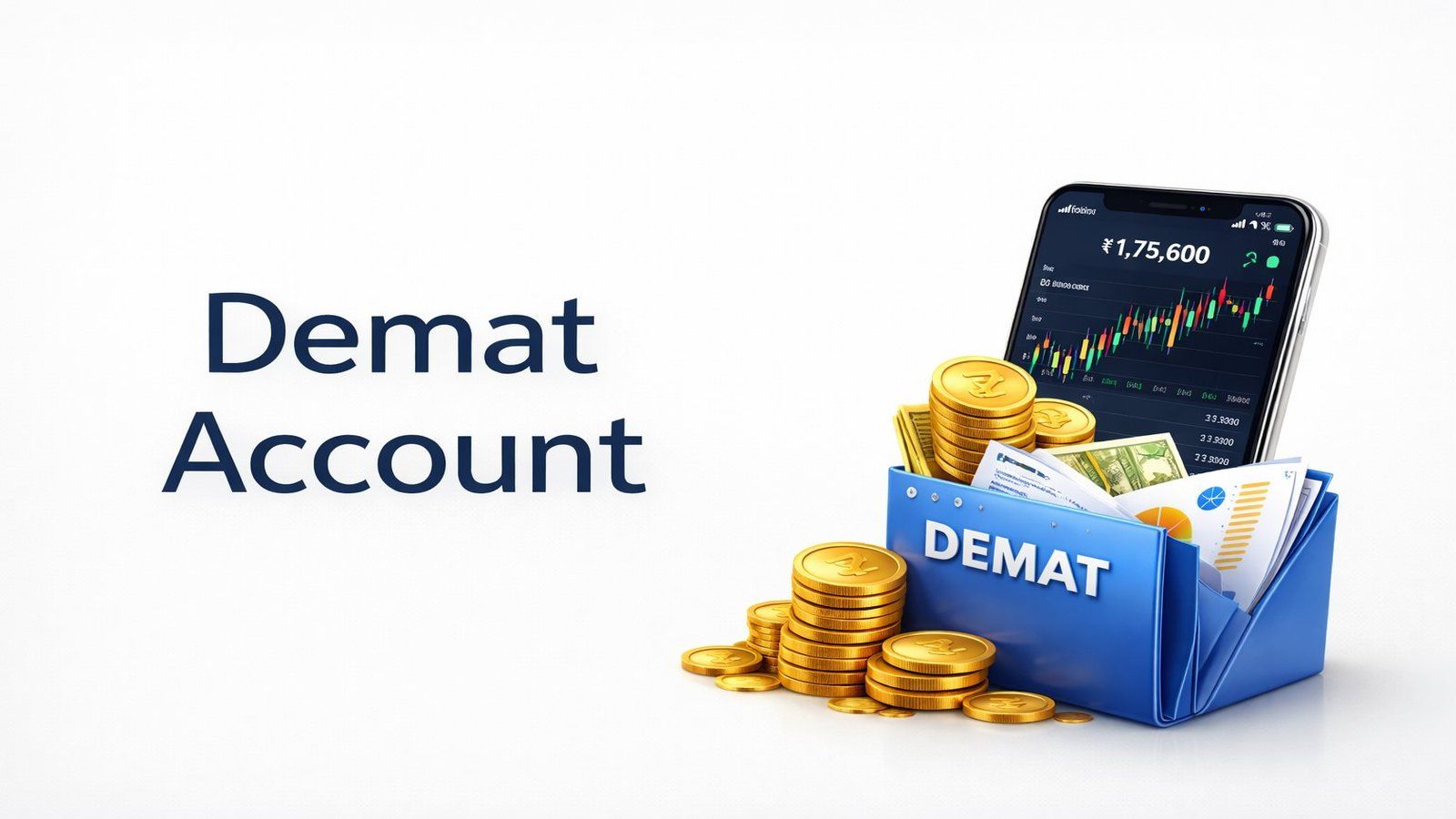
What is a Demat account?
Demat stands for ‘Dematerialised’. Before the 1990s, share certificates were physical paper documents.
A Demat holds shares in electronic form. When you buy shares, they are credited to your Demat account. When you sell, they are debited from it.
Your Demat account holds,
- Shares and stocks
- Exchange-traded funds (ETFs)
- Bonds and debentures
- Mutual fund units (though most people hold these directly)
- Government securities
It's a digital locker where all your investments are safely stored in electronic form.
What is a trading account?
A trading account, as the name suggests, is a platform through which you buy/sell shares.
The trading account,
- Connects you to the stock exchanges (NSE and BSE)
- Let's you place orders to buy or sell securities
- Shows you real-time market prices and your order status
- Executes your trades during market hours
It's an interface of the stock market.
How they work together
Let's understand this with a real example,
You want to buy 50 shares of TCS, currently trading at ₹3,500 per share.
- You log into your trading account and place a buy order for 50 TCS shares.
- Your broker checks if you have ₹1,75,000 (plus charges) in your linked bank account.
- Once the order is executed on the stock exchange, the money is debited from your bank account.
- Within 1-2 days (settlement period), the 50 TCS shares get credited to your Demat account.
Now, let's say you want to sell those shares after a month
- You log into your trading account and place a sell order.
- The shares are debited from your Demat account.
- Once the order executes, the money gets credited to your bank account within 1-2 days.
You need both accounts working together to complete any transaction.
Can I have just one without the other?
Technically yes, but practically no.
You can open just a Demat account without a trading account if someone else (like your father) is buying shares and transferring them to you as a gift. The shares will be held in your Demat account, but you can't trade them yourself.
You cannot have just a trading account without a Demat account because there's nowhere to store the shares you buy.
In reality, when you open an account with a broker, you typically open both simultaneously. Most brokers offer a combined package.
Who provides these accounts?
Demat accounts are provided by depository participants (DPs). These are institutions authorised by the two depositories in India, namely
- NSDL (National Securities Depository Limited)
- CDSL (Central Depository Services Limited)
Banks, brokers and financial institutions act as DPs.
Trading accounts are provided by stockbrokers who are registered with SEBI (Securities and Exchange Board of India). These account providers are members of stock exchanges.
The same entity often provides both accounts, which is why it seems like you are opening just one account, even though you are practically opening two.
How are the trading account and Demat account numbered?
Your trading account ID and Demat account number will be different. The trading account number is a unique 6 to 8-digit identifier provided by your broker.
Eg - Trading ID - XYZ12345
A Demat account number is given by the Depository Participant (DP). In India, the two depositories are,
NSDL (National Securities Depository Limited) or CDSL (Central Depository Services Limited)
Eg. Demat account - IN30123456789012 (16-digit DP ID and Client ID combined)
What about your bank account?
Your bank account is linked to both your trading and Demat accounts.
When you buy shares
- Money moves from a bank account to a broker and then to the stock exchange
- Shares move from the seller's Demat to your Demat
When you sell shares
- Shares move from your Demat to the buyer's Demat
- Money moves from the stock exchange to the broker, then to your bank account
Most brokers require you to link a bank account during registration. This is mandatory for fund transfers.

You need both a trading account and a Demat account to invest in the stock market, but they serve different purposes.
Most modern brokers make it much easier by offering both in one package with a single login. With this, you don't have to worry about managing each of them separately. But understanding the difference helps you better comprehend your statements, charges and how the entire system works.
About Author
Pradnya Surana
Sub-Editor
is an engineering and management graduate with 12 years of experience in India’s leading banks. With a natural flair for writing and a passion for all things finance, she reinvented herself as a financial writer. Her work reflects her ability to view the industry from both sides of the table, the financial service provider and the consumer. Experience in fast paced consumer facing roles adds depth, clarity and relevance to her writing.
Read more from Pradnya



















Upstox is a leading Indian financial services company that offers online trading and investment services in stocks, commodities, currencies, mutual funds, and more. Founded in 2009 and headquartered in Mumbai, Upstox is backed by prominent investors including Ratan Tata, Tiger Global, and Kalaari Capital. It operates under RKSV Securities and is registered with SEBI, NSE, BSE, and other regulatory bodies, ensuring secure and compliant trading experiences.
Related articles



Demat account
What is a brokerage account? | Complete information5 min read | Written by Upstox Desk

Demat account
Demat Account Opening Procedure & Steps for Beginners5 min read | Written by Upstox Desk

Demat account
What Is The Minimum Amount Required For Opening A Demat Account8 min read | Written by Upstox Desk