Best Way to Invest in Gold in India in 2026: Digital Gold vs Gold ETF vs Physical Gold Explained

Written by Bidita Sen
Published on March 27, 2026 | 14 min read


Summary
Gold remains a popular investment during price dips, but the way you invest will define your returns, and on occasions, can affect them significantly. The costs, taxation, liquidity, and safety vary for physical gold, digital gold, and Gold ETFs. While physical gold carries high hidden charges and digital gold offers convenience with some limitations, Gold ETFs are the most efficient option for investors seeking low-cost, liquid, and regulated exposure, especially when aiming to buy the dip strategically.
Key Takeaways
- Gold ETFs are an efficient way to invest in gold due to high liquidity, low costs, and SEBI regulation.
- Digital gold is best suited for small, flexible investments, but higher spreads make it less attractive for large allocations.
- Physical gold carries the highest hidden costs (making charges, GST, resale deductions). It doesn’t make the cut for tactical investing.
- Tax efficiency favours Gold ETFs, as they qualify for long-term capital gains earlier than physical and digital gold.
- Buying the dip works best with low-friction instruments, where entry and exit costs do not erode returns.
- The choice of investment vehicle impacts returns as much as gold prices themselves, especially in volatile markets.
Introduction
The prestige, worth, and value that gold still commands in India is incomparable. Other valuable metals like platinum or stones like diamond have long been trying to unseat gold from numero uno in the country, but gold is glittering away merrily, overshadowing all its peers. Gold’s place of honour as a family heirloom, as a sign of generational wealth, or an investment set aside as a financial cushion for hard times has stayed intact since time immemorial. Not to mention the metal’s inherent connection with India’s culture, and its high regard as auspicious. Gold connects with Indians on both financial as well as emotional levels. Investors, not just in India but across the globe, resort to gold to diversify their portfolios, as a buffer against inflation or economic downturns.
Besides physical gold, new-age financial platforms promote alternative investment options like digital gold and gold exchange traded funds. Their advantages vary in terms of safety, liquidity, storage, and returns.
When gold prices crash, the common instinct among Indians is to accumulate. In 2026, the question doing the rounds on investors’ tables is not when to buy, but how to buy. The recent regulatory shifts and an overhauled tax regime define investors’ decisions as the vehicle determines whether they actually capture the dip or lose it to friction. Gold investment has seen a steady psychological shift. At a discount, gold is a re-entry window for the smart investor.
The article delves deep into gold as an investment option with a definitive breakdown for the strategic investor.
1. Physical Gold: The High-friction, Still-on-demand Traditionalist
Physical gold — jewellery, coins, and bars — has held its ground as the psychological anchor for Indian households. However, when it comes to the tactical "buy the dip" strategy, the metal hardly makes the cut among the three.
Many families also consider gold jewellery as a form of wealth preservation that can be passed across generations.
The Reality Check Making Charges: Physical gold comes with jewellery fabrication charges ranging from 3% to 25% depending on design complexity and the jeweller. These “sunk costs” vanish the moment you leave the store.
The Double GST: As of 2026, purchasing gold jewellery involves a double GST — 3% on the gold value and a separate 5% on the making charges (a service fee). The final price is calculated adding 3% tax to the metal price and 5% tax to the making fee, ensuring both are taxed.
Liquidity Gap: When you go to sell physical gold, jewellers do a purity test. Unless you are buying BIS-hallmarked coins, purity remains a variable risk. Furthermore, the cost of bank lockers has risen globally in 2026, adding a recurring "carrying cost" to the investment. Jewellers also apply "buy-back" deductions, which erode another 2–3% of the value.
The Verdict: Physical gold may be apt for consumption or generational legacy, but it doesn’t serve as a tactical tool for a price crash because of high entry and exit costs.
2. Digital Gold: Convenient but Don’t Forget the Regulatory Caveat
Digital gold is a product of the digital revolution. It is an innovative way of investing in 24-karat gold. You can purchase, sell, and hold it online. Investors can make fractional purchases (as low as ₹1) via apps of brokerage platforms, backed by vaulted gold from providers like MMTC-PAMP or Augmont. MMTC-PAMP is India’s premier gold and silver refinery, operating as a joint venture between MMTC Ltd. (a government undertaking) and MKS PAMP SA of Switzerland. It provides digital gold services. Investors can purchase an indefinite amount of 24K gold online, and they will be the legal owner of the gold, but its storage and safety will be handled by the provider. Digital gold fits the spirit and characteristics of Gen Z investors, who want the convenience of purchase through phones but with the assurance of purity and verification. Moreover, digital gold gives investors the option to convert it into physical gold in the form of coins or bars.
The Nuance: The Spread Trap: Digital gold has a “buy-sell spread” of 3% to 6%, which is the price difference between buying and selling, essentially a transaction fee. This spread comes with a mandatory 3% GST on purchases. This implies that investors will certainly face a 5%–8% loss immediately, requiring significant price appreciation by ~6% to break even.
Regulatory Status: On November 8, 2025, the Securities and Exchange Board of India (SEBI) issued a public caution stating that digital gold is not a recognized security. “Such digital gold products are different from SEBI-regulated gold products as they are neither notified as securities nor regulated as commodity derivatives. They operate entirely outside the purview of SEBI. Such digital gold products may entail significant risks for investors and may expose investors to counterparty and operational risks,” stated the circular. It operates outside the Reserve Bank of India’s direct investor protection umbrella, too.
Upfront Cost: It attracts a flat 3% GST on every purchase.
The Verdict: Digital gold is a convenient investment option for micro-savings and beginners, but it is not ideal for high-value tactical entries due to the high spread.
3. Gold ETFs: The Professional’s Choice
SEBI allows investments in gold and gold-related instruments through various gold products that it regulates. These include exchange traded commodity derivative contracts, Gold Exchange Traded Funds (ETFs) offered by mutual funds, and Electronic Gold Receipts (EGRs) tradeable on stock exchanges. Investments in the SEBI-regulated gold products can be made through SEBI- registered intermediaries and are governed by the regulatory framework prescribed by SEBI. Gold ETFs track gold prices, and each unit enjoys the hallmark support of physical gold held by professional custodians.
Key Features of Gold ETFs
- These are traded like stocks on exchanges, such as the Bombay Stock Exchange (BSE) or the National Stock Exchange (NSE), with real-time pricing.
- Gold ETFs offer high liquidity during market hours.
- SEBI regulation makes them highly transparent, with no making charges or storage issues.
- These are held in Demat form, making them secure and trackable.
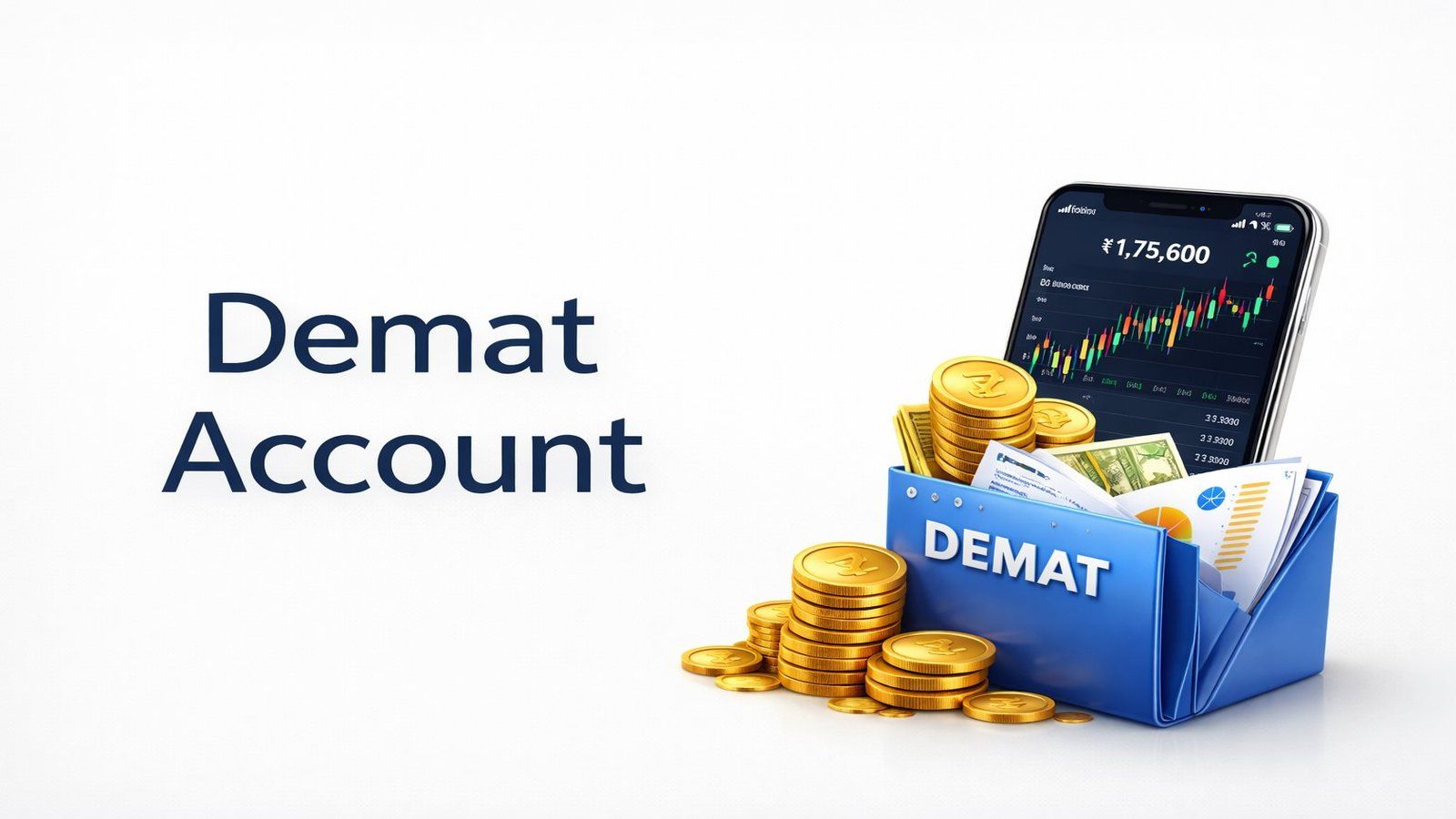
Requirements Investors will need a Demat account to store Gold ETFs electronically, just like shares. Besides, a trading account will manage the buy/sell orders on the stock exchanges. A brokerage account with a registered broker is your access route to these accounts. These units can be traded on the stock exchange through the broker’s platform, like stocks, only during market hours. The ETF's price reflects the real-time physical gold price in India.
The Strategic Edge
- Zero GST: The purchase is in the form of security and not physical metal, and so it attracts 0% GST. Investors get an immediate 3% head-start over physical/digital buyers.
- Instant Liquidity: You can exit your position in seconds during market hours.
Key SEBI Gold ETF News & Reforms Effective April 1, 2026
SEBI has implemented a structural shift in how mutual funds value gold and silver. In January 2026, SEBI notified the SEBI (Mutual Funds) Regulations, 2026, replacing the existing regulatory framework governing MFs in India to enhance clarity and transparency across all aspects of MF operations and supervision. Under the new regulations, MFs, including gold and silver ETFs, must now use domestic polled spot prices published by the recognised Indian stock exchanges, like the BSE or the NSE, in place of the traditional practice of MFs basing their valuations on the London Bullion Market Association (LBMA) benchmark morning price. This reform eliminates the “valuation lag” caused by currency conversions and international time zones. Following the shift, the NAV of Gold ETF held by investors will reflect real-time Indian market demand, supply, and import duties with unprecedented accuracy and uniformity across different asset management companies.
Gold ETFs are classified under MF structures backed by physical gold.
The Verdict: Gold ETFs are best suited for price-efficient, liquid exposure and the most efficient tool for buying the dip. Each Gold ETF unit is usually representative of a specific weight of high-purity gold.
4. Safety & Risk Architecture: Regulation vs. Trust
Though both digital gold and gold ETFs claim to be backed by physical gold, the level of institutional safety differs significantly in 2026. For Gold ETFs, SEBI mandates a tri-party protection model involving the AMC, an independent SEBI-registered custodian, either banks or non-bank entities approved by SEBI who hold the physical gold bars securely, and a statutory auditor who must conduct physical verification of the gold bars twice a year (half-yearly). Audit reports verifying the existence and quantity of physical gold must be submitted to the MF trustees, which are later included in the half-yearly reports submitted to SEBI.
In contrast, digital gold relies on a sort of contractual trust between the investors and the private provider. Though the holdings are insured and held in vaults, there is no specialised regulatory mediator like SEBI's SCORES portal for digital gold disputes. In the rare event of a platform's insolvency, investors face significant counterparty risk and must rely on the company's internal insolvency proceedings, which can take time and result in losses. The legal recovery process is governed by civil law, whereas ETF assets come with a robust, established grievance redressal mechanism, and are ring-fenced under strict mutual fund trust regulations.
5. The 2026 Tax Audit: What You Actually Keep
Following the Finance Act 2024/25, the taxation for gold has been simplified into two buckets:
| Asset Category | Asset Type | Short-Term (STCG) | Long-Term (LTCG) | Holding Period for LTCG |
|---|---|---|---|---|
| Listed Assets | Gold ETFs and gold mutual funds | Taxed at individual slab rates if held for 12 months or less | 12.5% without indexation | > 12 months is considered long-term |
| Unlisted Assets | Physical/digital gold, gold jewellery, gold FoFs | Taxed at individual slab rates if held for 24 months or less | 12.5% without indexation | > 24 months is considered long-term |
Note: Tax rules may evolve. It is always advised to check the latest Finance Act updates.
A casual investor may not notice or understand the tax efficiency of Gold ETFs, which qualify as listed financial assets as these are listed on recognised stock exchanges. This is an advantage, as Gold ETFs can attain the lower 12.5% tax bracket one year faster than physical or digital gold. For a tactical investor, this 12-month liquidity window is a game-changer for post-tax returns. If you buy the dip in March 2026, you can exit with tax efficiency as early as April 2027. Physical gold buyers, however, are locked in until 2028 to achieve the same rate. This arbitrage makes ETFs the undisputed leader for medium-term portfolio rebalancing.
Which One Should You Choose?
The decision rests on the investment horizon, the quantum of capital and an investor’s comfort level with financial tools.
Strategic dip buyers should not shift their focus from gold ETFs as they offer the highest liquidity, the lowest entry cost (due to the 0% GST advantage), and significantly faster tax benefits. If the aim is to trade the volatility or hedge a large equity portfolio, ETFs are the best fit in 2026 with their low tracking error and their level of transparency.
Digital gold still wears the king’s crown for micro-savers because of their accessibility. Its advantage lies in its disciplined approach for SIPs mainly of ₹100–₹500. The convenience of a mobile-first interface outweighs the 3% spread. It allows you to build a gold habit without worrying about brokerages or Demat account maintenance for small amounts.
For cultural or consumption purposes, physical gold is irreplaceable. In case of purchases for an upcoming wedding or for religious gifting, buying BIS-hallmarked coins or jewellery is the gold standard of practice. However, one must understand that the cost of holding and the making charge friction make your investment start at ~15% deficit compared to paper-gold.
Liquidity: Critical for ‘Buy the Dip’ Strategy
| Investment Type | Liquidity | Practical Reality |
|---|---|---|
| Physical Gold | Low | Requires buyer, price negotiation |
| Digital Gold | Moderate | Platform-based exit |
| Gold ETFs | High | Real-time market trading |
Cost Comparison: ₹10,000 Investment Scenario
| Parameter | Physical Gold | Digital Gold | Gold ETF |
|---|---|---|---|
| Initial cost | ₹10,500–₹12,000 | ₹10,200–₹10,600 | ₹10,000–₹10,050 |
| Annual cost | Storage risk | Spread cost | ~0.5–1% |
| Exit efficiency | Low | Moderate | High |

Final Word: Strategy Over Sentiment
Volatile markets always reward structure over sentiment, every single time. The opportunity in a price crash can be squandered by choosing a high-friction asset. So, understanding the objective is most important. If you aim to buy the dip intelligently and exercise the ability to pivot your capital when markets recover, Gold ETFs offer the cleanest, most regulated, and most tax-efficient entry point in the current Indian landscape. As we look toward the remainder of 2026, the convergence of SEBI’s transparency reforms and the new tax regime has made paper gold steadier, allowing it to sail smoothly while holding the “real value” flag high.
FAQs
1. Which is better: digital gold or Gold ETF? Gold ETFs are better for serious investing due to regulation and liquidity. Digital gold is better for convenience.
2. Can I sell digital gold anytime? Yes, but pricing depends on platform spreads.
3. Is gold ETF safer than digital gold? Yes, because it is regulated by SEBI and held in demat form.
4. What is the minimum amount required to invest in gold ETFs? You can invest in gold ETFs with the price of one unit, which typically ranges between ₹50–₹100, depending on the ETF.
5. Is digital gold safe in India? Digital gold is stored in insured vaults, but it is not regulated by the SEBI or the RBI. Safety depends on the credibility of the provider.
6. Do gold ETFs track real gold prices accurately? Yes, gold ETFs closely track domestic gold prices, although there may be minor differences due to expense ratios and tracking error.
7. Can I convert digital gold into physical gold? Yes, most platforms allow conversion into coins or bars, but additional making and delivery charges apply.
8. Do I need a Demat account to invest in gold ETFs? Yes, gold ETFs can only be bought and sold through a demat and trading account.
9. Which is more cost-effective: digital gold or gold ETFs? Gold ETFs are generally more cost-efficient due to lower spreads and transparent pricing, while digital gold may have higher buy-sell spreads.
10. Is gold a good investment during market crashes? Gold is considered a safe-haven asset and often performs well during uncertainty, although it may see short-term volatility during liquidity crunches.
11. Can I do SIP in gold ETFs? Yes, you can invest regularly in gold ETFs using a SIP-like approach through your trading account.
12. What are the risks of investing in digital gold? Key risks include lack of regulation, counterparty risk, and pricing spreads between buying and selling.
About Author
Bidita Sen
Senior Editor
Bidita Sen has spent over a decade first understanding the complex language of finance, then translating it into something humans can actually read. After a career spent chasing market trends, she now prefers chasing ghosts. When she's not working, you’ll find her reading or re-watching the Paranormal Activity series. Because, real-life math is much scarier than a haunted house.
Read more from Bidita

















Upstox is a leading Indian financial services company that offers online trading and investment services in stocks, commodities, currencies, mutual funds, and more. Founded in 2009 and headquartered in Mumbai, Upstox is backed by prominent investors including Ratan Tata, Tiger Global, and Kalaari Capital. It operates under RKSV Securities and is registered with SEBI, NSE, BSE, and other regulatory bodies, ensuring secure and compliant trading experiences.
Related articles

Commodity Trading
What Is DME and Can It Replace LPG in Indian Kitchens?7 min read | Written by Pradnya Surana

Commodity Trading
Impact of Crude Oil Price Changes on the Indian Middle Class3 min read | Written by Subhasish Mandal

Commodity Trading
Mentha Oil Price in India, Factors Impacting and Benefits2 min read | Written by Subhasish Mandal

Commodity Trading
Is Copper Good for You? Health Benefits, Daily Needs, and Risks4 min read | Written by Mariyam Sara

Commodity Trading
What is Mentha Oil and How To Trade in Mentha Oil?4 min read | Written by Subhasish Mandal
Commodity Trading
Investing in Copper in 2026: Price History, Supply-Demand Shifts, and What It Means for Investors4 min read | Written by Mariyam Sara

Commodity Trading
Is Crude Oil a Good Investment? Pros, Cons & Alternatives3 min read | Written by Mariyam Sara