A Beginner's Guide to Technical Analysis in Commodity Trading

Written by Subhasish Mandal
Published on December 08, 2025 | 3 min read


Commodity trading in India is one of those segments which is unexplored for a quite long time. As beginners usually start with equity trading, commodities are quite tough to understand at first. But as internet penetration is rising in India, people are getting aware and finding ways to explore commodity trading.
In this commodity trading guide, let’s discuss the technical analysis in commodity trading. Also a few trading strategies which can help you to approach commodity trading in a correct way.
What is Commodity Trading?
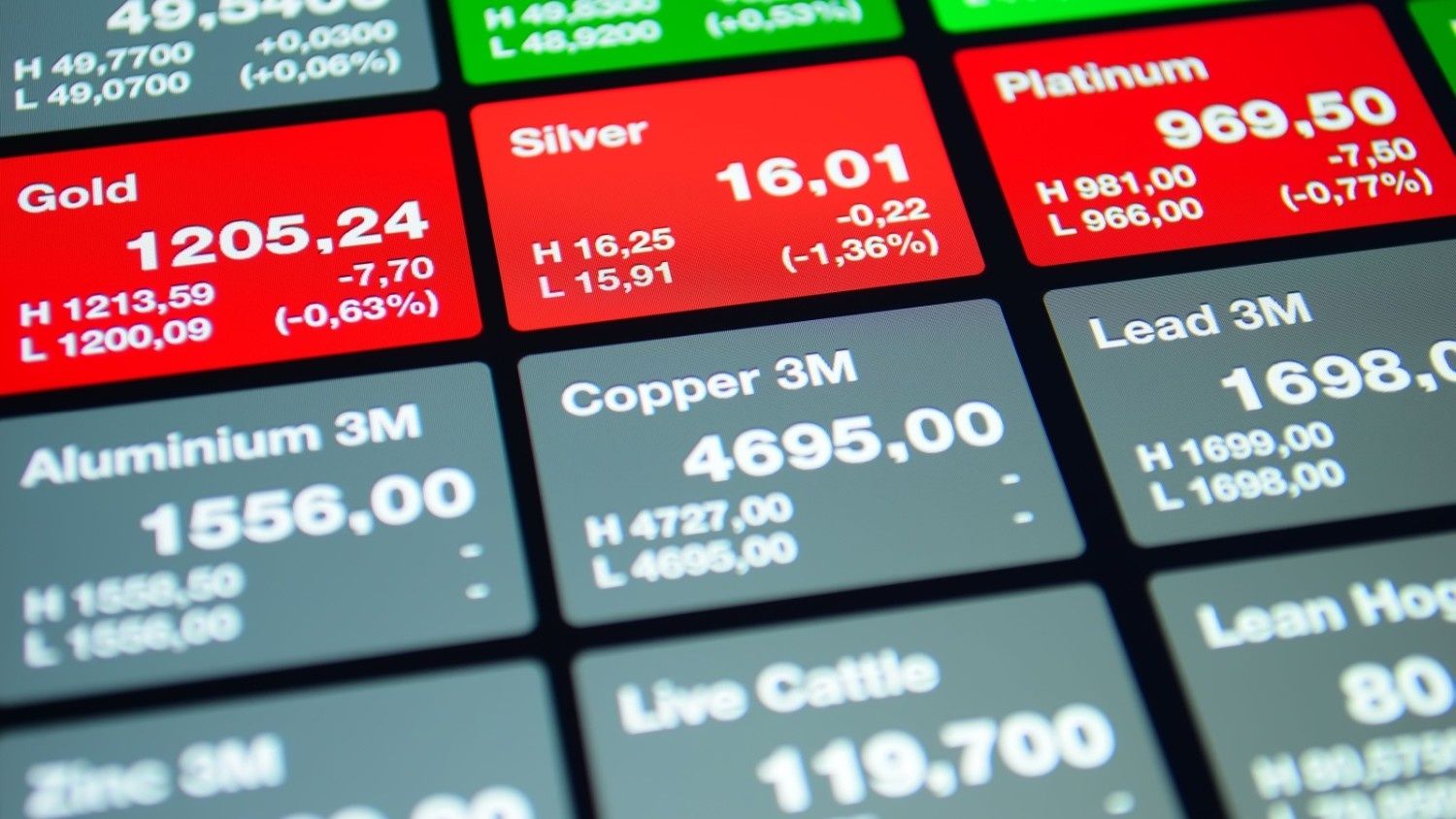
Commodity trading is actually buying and selling of commodities such as Oil, Agriculture goods, Gold, Silver and other precious metals. Traders can buy and sell physical commodities but more commonly, they can trade the commodities in derivatives markets to determine the price. The objective of trading is to earn profit from the favourable price movements.
Technical Analysis in Commodity Trading
Technical analysis in commodity trading is a way of predicting the future price movements by analysing volume, candlesticks and chart patterns. The technical analyst studies the past price movements to forecast the future price with the help of trendlines, support/resistance, moving averages and other indicators.
To start commodity trading, the traders must have a Demat and trading account. At Upstox, we provide all charting and technical analysis tools which helps traders to trade conveniently.
Key Concepts of Technical Analysis in Commodity Trading
Technical analysis is broad and has various tools to deploy the strategies. Below are the key concepts of technical analysis can be used in commodity trading:
1. Candlesticks Charts:
It gives the visual representation of the past price movements in a very simple way. The candlesticks show open, high, low, close of the particular session or any time interval.
2. Chart Patterns:
Some patterns are formed in the charts, such as double top, wedges, head & shoulders etc. These patterns help the trader to identify major shifts in particular commodities.
3. Support & Resistance:
Its the horizontal lines to be drawn in the charts based on the previous price swings. Resistance lines are those from which prices faced rejection from higher level in the past. Whereas, support lines are those from which prices found base and reverses upward in the past. These lines act as important levels for the coming sessions.
Trading Strategies in Commodity Trading
Commodity trading is equally tough as trading in any other securities. To increase the probability of success in commodity trading, we need trading strategies.
1. Box Breakout Trading Strategy:
In the box breakout trading, commodity price is considered to be trading in a tight range for a long period of time. When it breaks the upper range, it indicates price can go further up and generates a buy signal.
However, if the price slips below the lower range of the consolidation box, it indicates price can go down and generates a sell signal.
2. Mean Reversal Trading Strategy:
In the mean reversal trading, the commodity price reverses up or down from a particular price level. The level can be identified by exponential or simple moving average.
3. Trend Following Trading Strategy:
In the trend following trading strategy, we need to identify the ongoing trend in the market. Suppose, the price of Gold is continuously rising for last few weeks. So, it is considered that the trend is upward, and buy trades will work better as compared to sell trades.
We can identify trends by putting the 200-day exponential moving average in the chart. EMA is the technical indicator used to identify the trend. If the price is above the 200 day EMA, trend is up and if the price is below 200 day EMA trend is down.
4. RSI Trading Strategy:
Relative strength index (RSI) is a technical indicator used by traders to identify the price overbought and oversold zones.If the RSI is below 20, it is usually considered that prices are oversold. However, if the RSI is above 80, it indicates overbought zones. It helps to track the shifts in the price momentum.
5. MACD Crossover Trading Strategy:
Moving average convergence divergence (MACD) is a trend identifying indicator. If the MACD line positively crosses the signal line indicates bullishness. However, if the MACD line negatively crosses the signal line shows bearishness.
Risk Management in Commodity Trading
Risk management plays an important role in the success of commodity trading. Without properly defined risk management even a talented trader can lose. So, how to tackle risk management?
Before entering a trade just define your risk reward ratio. It is a financial metric that measures potential profit to potential loss. Suppose, you keep the risk reward ratio as 1:2, it means, to get 2 points gain, the trader is willing to lose 1 point.

Commodity trading can be rewarding in the long run, if done with proper strategies and risk management. Technical analysis helps in identifying the short term trading opportunities by analysing the past price fluctuations. Moreover, multiple factors such as geo-political news, tariffs etc, influence the commodity prices. So, to perform well in commodity trading, understanding fundamentals along with technical is important in the long run.
About Author
Subhasish Mandal
Sub-Editor
Finance professional with strong expertise in stock market and personal finance writing, he excels at breaking down complex financial concepts into simple, actionable insights. Holding a Master’s degree in Commerce, he combines academic depth with practical knowledge of technical analysis and derivatives.
Read more from Subhasish















Upstox is a leading Indian financial services company that offers online trading and investment services in stocks, commodities, currencies, mutual funds, and more. Founded in 2009 and headquartered in Mumbai, Upstox is backed by prominent investors including Ratan Tata, Tiger Global, and Kalaari Capital. It operates under RKSV Securities and is registered with SEBI, NSE, BSE, and other regulatory bodies, ensuring secure and compliant trading experiences.
Related articles

Commodity Trading
Do Interest Rates and the Dollar Still Drive Gold? Understanding the Changing Macro Playbook12 min read | Written by Bidita Sen

Commodity Trading
Why Silver Crashes Harder Than Gold: The Industrial Engine Exposed11 min read | Written by Bidita Sen

Commodity Trading
Why Gold Falls in a Crisis: The Margin Call Paradox Explained11 min read | Written by Bidita Sen
Commodity Trading
Is Silver on Sale or a Falling Knife? Decoding the 2026 Gold-silver Ratio8 min read | Written by Bidita Sen

Commodity Trading
Best Way to Invest in Gold in India in 2026: Digital Gold vs Gold ETF vs Physical Gold Explained14 min read | Written by Bidita Sen

Commodity Trading
What Is DME and Can It Replace LPG in Indian Kitchens?7 min read | Written by Pradnya Surana

Commodity Trading
Impact of Crude Oil Price Changes on the Indian Middle Class3 min read | Written by Subhasish Mandal