What is RBI USD/INR Forex Swap and How Does It Work?

Written by Bidita Sen
Published on June 01, 2026 | 10 min read

Key Takeaways
- The Reserve Bank of India uses the USD/INR Forex Swap tool to manage domestic rupee liquidity, currency volatility, and foreign exchange reserves.
- Forex swaps are temporary, multi-year currency trades between the RBI and commercial banks.
- A buy/sell swap helps keep your loan EMIs stable by injecting rupees into banks.
- Tracking these swaps helps investors anticipate broader interest rate and market shifts.
The Indian rupee has been under severe, unrelenting pressure since the beginning of 2026 and in the later part of May, it stooped to a historic intraday low of 96.96 against the US dollar.
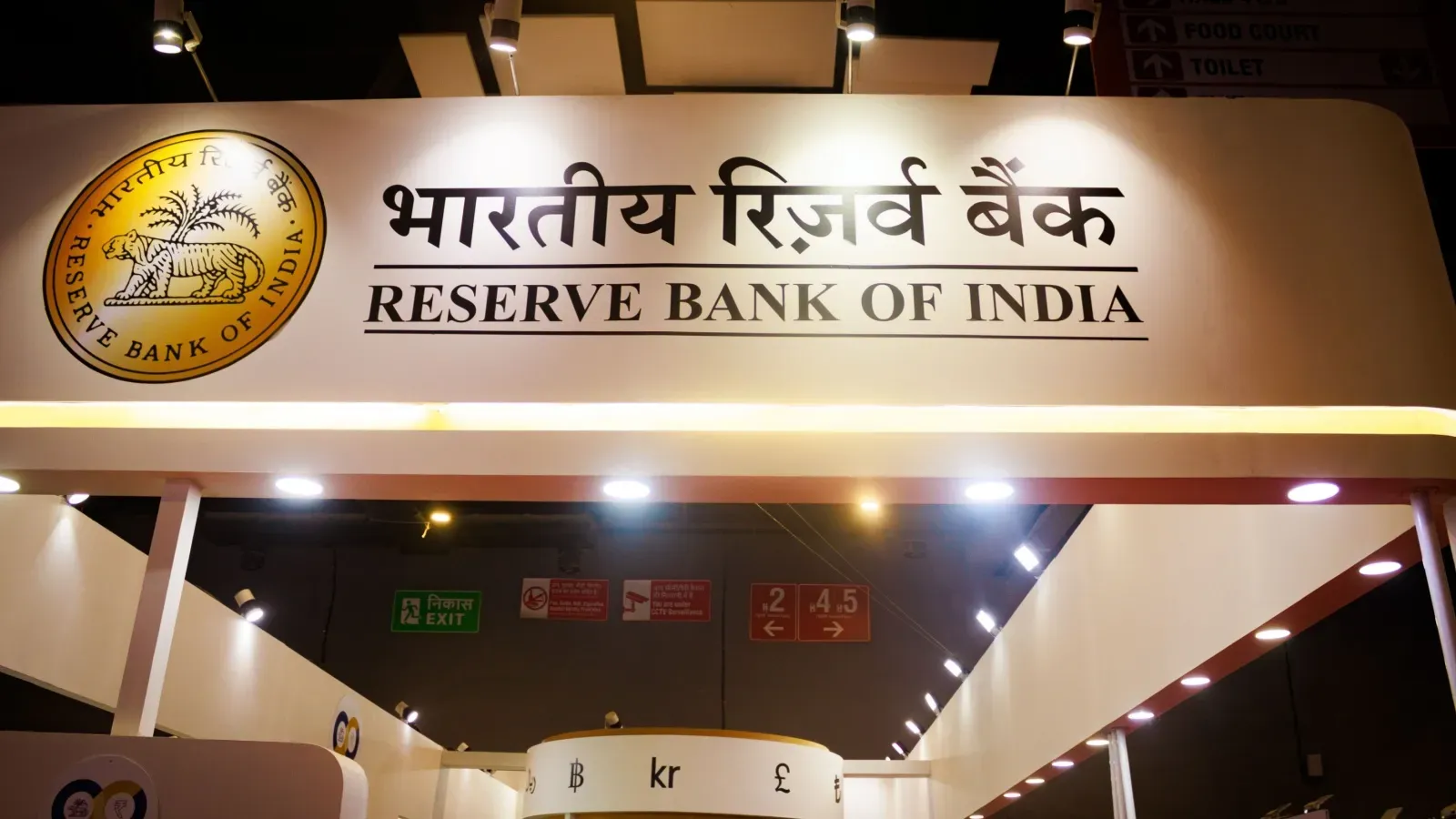
When a languishing rupee becomes in dire need, the Reserve Bank of India (RBI) intervenes with a financial tool called a forex swap to stabilise currency and cash markets.
Among other things, a weakening rupee makes foreign travel and imported electronics pricier. This article presents a simplistic analysis of how this monetary instrument protects your personal portfolio investments by quietens market panic and quietens market panic.
What Is RBI Dollar Swap, How Does Forex Swap Work?
Forex swaps are temporary, currency trades with a contractual promise to reverse it later.
In the context of RBI USD/INR swap auctions, commercial banks may hold surplus US dollar liquidity while requiring additional rupee funds for domestic operations. Instead of selling those dollars outright in the market, they can participate in a swap auction conducted by the RBI.
Under the spot leg of the transaction, a commercial bank sells its US dollars to the RBI at the applicable reference exchange rate specified for the transaction. The settlement usually takes place on a spot basis from the date of transaction. The central bank will credit an equivalent value of rupee funds to the current account maintained by the successful bidder with the RBI.
The bidder transfers US dollars to the account designated by the RBI. The RBI holds foreign currency assets with other central banks, like the Federal Reserve Bank of New York, the Bank of England, the Bank of Japan, the Bank for International Settlements (BIS), and highly rated foreign commercial banks.
The RBI may also maintain a portion of its foreign currency assets with the BIS in Switzerland.
In the reverse phase of the swap transaction, the bidder returns the rupee funds to the RBI, and receives US dollars at the pre-determined forward rate, which incorporates the swap premium discovered through the auction process.
In USD/INR forex swap, no permanent sale occurs. This temporary, self-reversing procedure is solely meant to manage short-term liquidity requirements and cash imbalances.
Buy/Sell Versus Sell/Buy Swap: What is the Difference?
India’s liquidity conditions have not been quite healthy for a while. Its net Liquidity Adjustment Facility (LAF) deficit reportedly touched a peak level of ₹3.1 lakh crore on January 25, 2025.
The RBI’s role is to recycle the money already present in the system using the country’s foreign exchange reserves to put liquidity back into the hands of banks that need it to keep the economy up and running.
The central bank can run a swap in two opposite directions. It helps balance liquidity conditions by controlling and channelling the money supply.
Buy/Sell Swap or the liquidity injection method: As the name suggests, the buy/sell swap is the process in which the RBI buys dollars on the spot date to sell them back later to the bidder, ideally three years later. Its aim is to pump fresh rupee liquidity into the banking channels and also increase the future supply of dollars. This action can help moderate forward premiums, lowering hedging costs for Indian importers.
Swaps usually happen when domestic banks face a cash deficit, making it hard for businesses to secure loans. On paper, India's headline foreign exchange reserves rise during a buy/sell swap because the RBI acquires foreign currency under the spot leg of the transaction. Global rating agencies and investors may view higher foreign exchange reserves favourably as part of India's external sector strength.
Sell/Buy Swap or the sterilisation Method: This is the reverse of the previous action. The RBI sells dollars on the spot date and buys them back later. This can support exporter hedging because the central bank raises future dollar demand by committing to buying dollars back in the future.
During many domestic IPOs, foreign investors invest billions of dollars, triggering a sudden dollar surge, which can cause the rupee to appreciate too rapidly, hurting local exporters.
The RBI then uses a sell/buy swap to absorb those dollars while limiting the liquidity impact on the domestic banking system.
This action can push up forward premiums, making it more attractive for exporters to lock in rates and hedge their future foreign earnings.
By temporarily locking away the excess liquidity from the banking system, the RBI prevents idle money from chasing too few assets, supporting overall price stability and inflation management.
Why Does the RBI Choose Forex Swaps Over OMOs?
The RBI does not rely solely on simpler monetary policy tools like printing money, changing reserve ratios, or buying bonds.
Continuous bond buying can distort the bond market yield curve. The central bank performs Open Market Operations (OMOs) by buying government securities (G-Secs) and thereby injects durable liquidity into the banking system.
There is a flip side to this practice. Repeated bond purchases can compress sovereign yields by pushing up domestic bond prices.
Banking and financial market participants can be affected by an artificially flat yield curve. Besides, it can create pricing distortions across corporate debt markets. Swaps inject cash while leaving the domestic bond market untouched.
Another key responsibility of the central bank is to protect the foreign exchange buffer. A direct spot-market intervention involves selling dollars to arrest a rupee slide, which can permanently deplete foreign exchange reserves.
The RBI may use the swap route to preserve India's sovereign creditworthiness and maintain the headline foreign exchange reserves at an optically strong level.
The swap action supports rupee liquidity through a self-reversing, tactical method, without requiring a permanent sale of foreign currency assets.
Forex swaps follow a self-correcting expiry mechanism. Permanent adjustments to the Cash Reserve Ratio (CRR) require active policy reversals while a forex swap has a built-in mechanism to reverse itself on a predetermined date. The money supply gradually returns towards its earlier level without creating long-term, structural inflationary overhangs because the cash injected during the near-leg automatically drains away on the far-leg.
Swap Premium and How Does the RBI Auction Run?
Let’s break down the auction mechanics and its core pricing component, the swap premium, in simple financial terms.
Forex swap actions are known for their elite institutional participants because participation is strictly limited to Category-I Authorised Dealers, primarily comprising top-tier domestic and foreign commercial banks. Retail investors and corporate treasuries cannot directly participate in RBI forex swap auctions.
Swap auctions follow a bidding and allocation process. The Reserve Bank’s electronic bidding platform is the e-Kuber system. Authorised participants use this Core Banking Solution (CBS) to bid in auctions, execute government transactions, and manage liquidity.
For instance, when the RBI announces a target amount of $5 billion, banks submit competitive bids specifying the exact dollar volume they wish to swap and the premium (in paisa) they are willing to pay.
The procedure has a multiple-price auction format. After aggregating these bids, the central bank ranks them in descending order of the premium offered. Bids are accepted top down, from the highest premium to a cut-off point that satisfies the target auction size. It’s crucial to note that successful bidding banks receive their swap transactions at the exact premium they bid under a multiple-price system. There is no uniform market clearing rate.
Let’s understand the economics of the swap premium. Contrary to popular notion, it is not an arbitrary fee. The interest rate differential between the two currencies is a key determinant of its value. For instance, if India's repo rate is 6.50% and the US Federal Reserve rate is 5.25%, the premium, quoted in paisa terms up to two decimal places, largely reflects the interest-rate differential and forward pricing between the two currencies over the swap period.
How Does the RBI Dollar Swap Impact Stock Markets and Rupee?
The central bank’s high-level balance sheet actions have a direct impact on the retail investor's daily portfolio, savings accounts, and loans.
Swap actions can support banking and equity markets. They avert credit squeezes and maintain systemic liquidity, which is the lifeblood of stock valuations. Banks can expand their credit books safely without sacrificing net interest margins (NIMs), as swaps avert credit squeezes. Adequate liquidity can also help reduce funding stress for corporate borrowers, supporting banking stock valuations and potentially lowering contributing to lower non-performing assets (NPAs).
Swap actions affect retail interest rates and EMIs. A buy/sell swap can lower short-term money market rates, such as Call Money and Certificate of Deposit (CD) yields, by pumping fresh rupee cash into commercial bank reserves, easing pressure on their Marginal Cost of Funds-Based Lending Rates (MCLRs). Consequently, retail home loan interest rates may avoid sharp increases, while banking deposit rates may remain relatively stable.
Is the RBI Forex Swap a Permanent Solution
A Tactical Painkiller, Not a Structural Cure: Economists are of the opinion that a forex swap is not a permanent solution for fundamental macroeconomic structural weaknesses. This is a financial painkiller designed to keep the system functioning during extreme global macro shocks, and not a panacea for a widening trade deficit, poor export competitiveness, or domestic fiscal imbalances.
The Challenge of Rollover and Refinancing Risk: Swaps create a future liability. If global dollar liquidity remains tight when the far-leg expires in three years, commercial banks may struggle to obtain the rupees or dollars needed to meet their swap obligations.
This could force the RBI to roll over the swap, triggering a cycle of continuous central bank intervention.

Parting Thoughts
For entry-level analysts and retail investors, swap auction announcements are an invaluable forward-looking indicator. They can provide insights into how the RBI views domestic liquidity conditions and foreign exchange market dynamics. Taking cue, smart market participants can rebalance their stock and debt portfolios ahead of the interest rate cycle.
FAQs
What is an RBI dollar swap?
An RBI dollar swap is a foreign exchange transaction in which the Reserve Bank of India exchanges US dollars and rupees with authorised dealer banks, with a contractual agreement to reverse the transaction at a future date.
What is the difference between a buy/sell swap and a sell/buy swap?
In a buy/sell swap, the RBI buys US dollars from banks and injects rupee liquidity into the system before reversing the transaction later. In a sell/buy swap, the RBI sells US dollars and absorbs rupee liquidity, with the transaction reversed at maturity.
What is the swap premium in an RBI forex swap?
The swap premium is the price discovered through the auction process. It reflects factors such as interest-rate differentials, market liquidity conditions, and forward pricing between the rupee and the US dollar.
Why does the RBI conduct USD/INR swap auctions?
The RBI uses swap auctions to manage liquidity in the banking system, support orderly market conditions, and influence short-term funding costs without directly intervening in the bond market.
Do RBI forex swaps increase India's foreign exchange reserves permanently?
No. Forex swaps are temporary transactions that are reversed on a pre-determined date. While reserves may rise during the spot leg of a buy/sell swap, the effect is not permanent because the transaction is reversed at maturity.
How do RBI forex swaps affect borrowers and investors?
By influencing liquidity and short-term money market rates, forex swaps can affect borrowing costs, banking system liquidity, bond yields, and overall market sentiment.
About Author
Bidita Sen
Senior Editor
Bidita Sen has spent over a decade first understanding the complex language of finance, then translating it into something humans can actually read. After a career spent chasing market trends, she now prefers chasing ghosts. When she's not working, you’ll find her reading or re-watching the Paranormal Activity series. Because, real-life math is much scarier than a haunted house.
Read more from Bidita



















Upstox is a leading Indian financial services company that offers online trading and investment services in stocks, commodities, currencies, mutual funds, and more. Founded in 2009 and headquartered in Mumbai, Upstox is backed by prominent investors including Ratan Tata, Tiger Global, and Kalaari Capital. It operates under RKSV Securities and is registered with SEBI, NSE, BSE, and other regulatory bodies, ensuring secure and compliant trading experiences.
Related articles
Banking
IMPS vs UPI: Comparing Two Digital Payment Methods in India7 min read | Written by Subhasish Mandal





Banking
Repo Rate vs Bank Rate: Meaning, Differences, Impact, and Examples9 min read | Written by Sachin Gupta