April 26, 2023

How to check the financial health of a bank

What could be better than a bank to ‘bank on,’ right? One would think that is a no-brainer. However, recent incidents of financial irregularities, and violation of RBI guidelines have created a lot of uncertainty in the minds of investors and created a trust deficit.
In such a scenario, it is prudent to check a few basic financial indicators of the bank before investing in its stock. In this blog, we'll look at some aspects of how to assess a bank's financial health and why it's important.

Key Indicators of Financial Health of a Bank

When it comes to checking the financial health of a bank, there are several key indicators that one can consider. These indicators give you an idea of the bank's overall financial position. These can also help in assessing the bank’s ability to weather economic storms.
  • Capital Adequacy Ratio (CAR): It is one of the most important indicators which measures a bank's capital against its risk-weighted assets and liabilities. This ratio is crucial because it tells you how much cushion a bank has to absorb losses before it becomes insolvent. Generally, a high CAR means that a bank has cushion to absorb losses without becoming insolvent.
  • Liquidity Ratio: This ratio highlights the proportion of highly liquid assets held by the bank to meet its short-term obligations. A bank with a high liquidity ratio is better placed to handle unexpected withdrawals or financial shocks. In general, this ratio shows how much high quality liquid assets a bank holds that are sufficient to cover 30 days of cash outflows.
  • Non-performing assets (NPAs): It is one of the most critical indicators of a bank's financial health. NPAs refer to the classification of loans which are not being repaid and have been tagged as default loans. As per RBI regulations, if interest on a loan is not paid for 3 months (90 days), the loan is categorised as a non-performing asset.
A higher NPA ratio indicates that the loans given by a bank are not being paid on time, which means that the asset quality of the bank is in poor shape. It is important to note that the interest income from loans is one of the main sources of income for banks.
  • Net interest margin (NIM): The NIM is a profitability indicator that highlights the likelihood of a bank thriving over a long period of time. It is the difference between interest earned by a bank on loans and the interest it pays on deposits. For better understanding of a bank's performance, one can also look at both NIM and NPAs together. For example, if the NPAs of a bank are rising then the interest earned by the bank should fall, resulting in decline of the NIM.
These are some of the key indicators that are essential in assessing a bank's financial health. Understanding each of them, and how they relate to each other, will give you a clear picture of a bank's overall financial health and allow you to make informed decisions before you invest.

Analysing Financial Statements

When reviewing a bank's financial health, one of the most important steps is to analyse the bank's financial statements. These statements typically include the balance sheet, profit and loss and cash flow statement. By going through these statements, you will be able to understand the bank's financial health. Like any listed company, banks are also expected to make public their financial statements on a quarterly basis. These documents are easily available on stock exchange websites.

Conclusion

In conclusion, it is important to check the financial health of a bank before you invest your hard-earned money in its stock. A few indicators such as capital adequacy ratio, liquidity ratio, non-performing assets and net interest margin provide insight into a bank's financial health. Analysing financial statements and regulatory reports can also help to assess a bank's financial stability. You can also use these numbers to compare the performance of different bank stocks and pick one that is aligned to your investment goal.

Disclaimer

The investment options and stocks mentioned here are not recommendations. Please go through your own due diligence and conduct thorough research before investing. Investment in the securities market is subject to market risks. Please read the Risk Disclosure documents carefully before investing. Past performance of instruments/securities does not indicate their future performance. Due to the price fluctuation risk and the market risk, there is no guarantee that your personal investment objectives will be achieved.

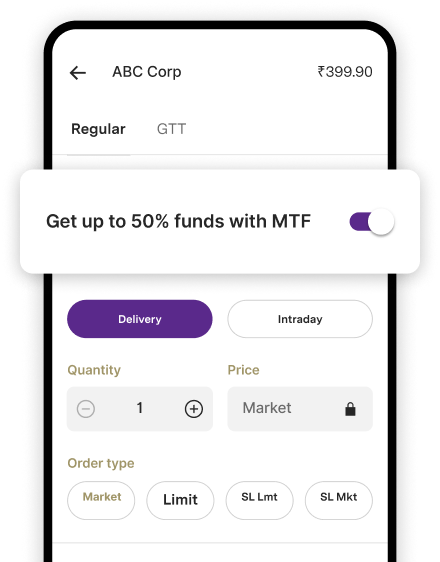
Never miss a trading opportunity with Margin Trading Facility

Enjoy 2X leverage on over 900+ stocks
Upstox Margin Trading Facility

RELATED ARTICLES

United Bank India Mobile Banking

- Have you run out of time to visit your bank branch to make an urgent fund transfer? - Are you looking at an alternative channel for your banking transactions which is convenient, compatible, accessible, comprehensive, easy to use,quicker, free of cost, bundled service offerings and is safe and secure. - Have you lost your network connection and yet you need to view your account balance on an urgent basis?. Mobile banking channel is the answer to your needs. Case in point being, United Bank of India ( UBI). UBI is now a part of Punjab National Bank (PNB), having merged with effect from April 1, 2020. Established in 1950 in Kolkata as a regional private bank catering to the eastern and north-eastern belt, the bank was nationalised in 1969 and over the years, the bank expanded its network of branches and asset base to become a mid-sized PSB ( Public Sector Bank) to include a network of more than 2000 branches and three fully equipped overseas branches in New Delhi, Kolkata and Mumbai. In fact, UBI is among the leading banks in the states of West Bengal, Assam, Tripura and Manipur. Backed by an asset base of ₹1.52 lakh crore ( as on September, 2019), UBI offers a comprehensive portfolio of services across multiple channels, offline and online through netbanking, mobile banking such as check balance, transfer money,make utility bill payments and much more. You can avail these services 247365, even on bank holidays, public holidays, weekends and that too, free of charge.

Reserve Bank of India - RBI Holidays -2022

Remember ! your good old school calendar in which our favourite page was the list of holidays chalked out at the beginning of each academic year. Just knowing this piece of information meant so much to us. Similarly, within the banking sector, the Reserve Bank of India ( RBI) is the apex body which publishes a detailed list of bank holidays, national and state-wise at the beginning of each calendar year. The RBI, India’s Central bank, also called as the banker’s bank key responsibility is to regulate and supervise the monetary and other banking policies of the financial sector which comprises financial institutions, commercial banks, non-banking financial companies. As an extension to its core responsibilities, the RBI publishes a list of holidays at the beginning of each calendar year. As per the holiday list, whether it is national specific or regional specific, banks would not be operational on those dates. Say for example: Republic Day, Independence Day, and Gandhi Jayanti are the only three National holidays; all other holidays are state-specific. For example: Banks remained closed on September 7-8, 2022 in Kerala for the Onam and Thiruvonam respectively. There will be a bank holiday on September 26, 2022 in Jaipur and Imphal for Navratri Sthapna. This comprehensive list of holidays is in addition to weekend Sunday holidays as well as alternate second and fourth Saturdays holidays during which all Banks across India remain closed. Consequently, the Banks across India would remain open on the 1st, 3rd and 5th Saturdays of every month (as per the notification of the RBI dated 28th August, 2015). The main purpose of declaring this comprehensive holiday list ( details given in Annexure) in advance at the beginning of each calendar year is to make you aware of the impending holidays so that you can plan your banking transactions accordingly with minimal stress. Consequently, it is mandatory for every bank across the Central / State Governments / Union Territories to follow the guidelines issued by RBI. Just to delve a bit deeper, this comprehensive list of holidays published by RBI is categorised as: - State-wise celebrations - Religious holiday - Festival celebrations and the basis of these holidays is governed by: - Holiday under Negotiable Instruments Act Real Time Gross Settlement Holiday - Banks’ Closing of Account The RBI holiday list is applicable to traditional banking transactions. As an netbanking and mobile banking customer, you can access your account 247365. You can also transact through NEFT payment service which is also available for 24×7365 (including bank holidays). However, in case of RTGS ( Real Time Gross Settlement) payment process, the 2nd and 4th Saturdays and all Sundays in a month are RTGS Holidays for every bank in India as per RBI guidelines. Besides, there is a list of additional RTGS holidays 20222 (apart from the already given holidays on 2nd & 4th Saturdays and every Sunday).

What are the RTGS Timings?

Given the need for speed in an increasingly digitised world, the banking ecosystem too continues to keep abreast with the changing times, with faster processing of your transactions without compromising on the safety aspect of the transaction.

What is Debit Card - Meaning, Types, Advantages, Uses, & Features

Debit cards have revolutionised the way we handle our finances, offering unparalleled convenience and security. Imagine a world without them, difficult right? In India, where digital transactions are gaining prominence, debit cards have become an indispensable tool for everyday transactions. In this article, we will delve into the benefits of using debit cards, explore the different types available, and highlight some of the best debit cards offered by leading banks in India towards the end. We recommend you read the complete article before heading to the top debit cards section.