Impact of US Inflation on the Indian Economy and Stock Market

Written by Mariyam Sara
Published on April 16, 2026 | 8 min read


Summary
When the Fed increases interest rates to manage inflation, Foreign Institutional Investors (FIIs) tend to withdraw capital from emerging markets like India and invest in higher-yield US treasury bonds.
Key Takeaways
-
Inflation is the erosion of money's purchasing power, driven by factors such as trade wars, geopolitical tensions, and currency depreciation. As the world’s largest economy and a global market leader, the United States' high inflation impact extends beyond its borders, impacting emerging markets like India.
-
To control high inflation, the US Federal Reserve increases interest rates to restrict cash flow and cool the economy.
-
The United States’ high inflation strengthens the dollar against the rupee, making essential commodity imports such as crude oil and metal expensive, resulting in domestic inflation.
-
High inflation in the US triggers significant volatility in the Indian stock markets, compelling investors to shift capital from equities to safer assets such as gold and bonds.
Introduction
Inflation rate in the US jumped from 2.4% in February ‘26 to 3.3% in March ‘26. This significant increase may trigger the US central bank, the Federal Reserve, to increase the benchmark interest rate to manage inflation. The impact of these interest rate adjustments driven by inflation trickles down to emerging markets such as India and impacts the Indian stock market and economy.
US inflation and recession significantly impact Indian markets, triggering abnormal volatility and stock market meltdowns. Driven by factors such as trade wars, geopolitical tensions, and currency fluctuations, the high US Inflation remains a core factor, turning portfolios red.
Let’s understand in detail how US inflation impacts the Indian economy and stock market.
Correlation Between the US Inflation and Interest Rates
Inflation refers to a reduction in the purchasing power of money as the prices of goods and services increase. It is a complex economic factor that can be either “good” or “bad” for the economy, depending on its rate and speed.
High inflation reduces purchasing power and leads to potential interest rate increases. On the other hand, moderate inflation is considered essential for an economy's growth and health.
Inflation and interest rates are positively correlated, with high inflation leading to interest rate hikes. As of February 2026, the US inflation rate stands at 2.4%. In a letter to shareholders, JP Morgan Chase’s CEO Jamie Dimon warned of an increase in inflation and interest rates due to geopolitical conflicts.
How Does US Inflation Affect Indian Stock Markets?
From the start of the US-Iran conflict on 28 Feb 2026, the S&P 500 fell from $6,878 to $6,343 on 30th March, declining by $535 in a month. If the analysts' forecasts are correct and the Federal Reserve does increase the interest rates, the US market may continue to tumble.
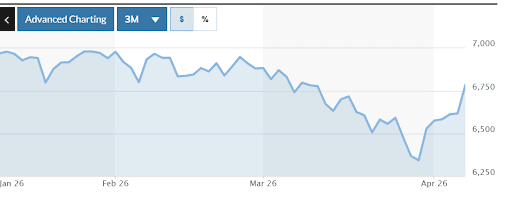
Source: MarketWatch
Increased interest rates trigger high volatility and sell-offs by Foreign Institutional Investors (FIIs) who move capital from Indian stock markets to high-yielding US Treasury bonds.
How Do US Interest Rates Influence RBI Monetary Policy & Interest Rates in India?
When the Federal Reserve in the United States raises the benchmark interest rate, the return on U.S bonds increases, which influences Foreign Institutional Investors (FIIs) to withdraw capital from Indian markets and invest in safer, high-yielding US Treasury bonds. This compels RBI to increase the interest rates in India to prevent FII outflows and maintain the rupee’s attractiveness.
On the other hand, when the Feds cut down the rates, the RBI has more flexibility to lower Indian interest rates to boost domestic investment and support growth or maintain a neutral stance, depending on the prevailing economic conditions.
Which Sectors Are Significantly Impacted by Fed Rate Changes?
These sectors would benefit from rate hikes but be hurt by rate cuts:
- IT Sector
Foreign companies outsource IT services from India, so IT companies earn in dollars and pay in rupees. A strong dollar would increase the profitability of these companies, potentially increasing stock prices.
- Pharma or Healthcare Sector
According to Fueling innovation, advancing equity: The power of partnerships and digital-first strategies driving Indian pharma's global dominance, a report published by EY, Indian pharma exports surged from US$15.07 billion to US$27.85 billion. These numbers are expected to cross US$30 billion by the end of 2026.
A stronger US dollar would increase the profitability of these pharma companies, directly benefiting their investors.
- Export-Oriented Manufacturing
Other export-oriented companies that domestically manufacture products and export them would benefit from a strengthening dollar over the rupee.
These sectors would benefit from rate cuts but be hurt by rate hikes:
- Banking & NBFCs
A rate hike in the US can lead to FII capital outflows, forcing the RBI to raise repo rates, in turn, increasing interest rates on loans. Whereas lower interest rates would make loans affordable as the RBI cuts down repo rates.
- Real Estate
Repo rate cuts influenced by Fed rate cuts make home loans more affordable, boosting property demand and increasing profitability. A higher interest rate makes borrowing expensive and lowers demand for properties, especially residential.
- Automobile
A lower interest rate would increase demand and sales of cars and motorcycles, while a higher rate would discourage customers from buying vehicles on loan, reducing demand.
How Does a Strong Dollar Impact Indian Investors?
The US Federal Reserve’s interest rate policies significantly impact the Indian economy by influencing capital flows, exchange rates, domestic monetary policy, and inflation.
A Fed rate hike typically triggers capital outflows from India to the US, driving up the cost of crude oil imports and increasing domestic inflation. On the other hand, Fed rate cuts tend to drive capital inflows into Indian equity and debt markets, boosting the economy.
Capital Outflows
An interest rate hike makes US bonds more attractive to investors and funds, resulting in funds and investors moving capital from India to the US in search of higher returns.
Currency Value
The Indian Rupee’s value is determined by whether dollars are flowing in or out of the economy. If the interest rate in the US increases, the dollars move out of the Indian economy, and the rupee may weaken. A weak rupee would result in paying more rupees to buy dollars. For example, for one US dollar, you would have to pay approximately ₹94.
Market Uncertainty
A significant and persistent outflow of FII capital from the economy could temporarily hit benchmark indices such as Nifty50 and Sensex, leaving the Indian market vulnerable to volatility.
Costly Imports
As high US interest rates depreciate the rupee against the dollar, essential imports like crude oil become more expensive, directly impacting India, which relies on imports for over 85% of its oil needs
Expensive Education & Travel
If the rupee weakens, students and vacationers abroad would end up paying more rupees to buy dollars, even though the air tickets, hotel tariffs, or college fees would remain the same.
Expensive Loans
The Reserve Bank of India (RBI) adjusts the benchmark interest rate based on prevailing inflation, currency value, and economic conditions. In case of a weakening currency, the RBI would avoid reducing interest rates to maintain India’s attractiveness to foreign investors and encourage foreign capital inflows.
Higher Inflation
A weak rupee, along with a deficient monsoon, would drive up domestic inflation, shaking up households' budgets and savings. The rupee’s weakening against the dollar as a result of the U.S rate hike may drive up India’s inflation as reliance on imports increases.
Focus on Foreign Direct Investment (FDI)
India is likely to shift its focus from Foreign Institutional Investors (FIIs) to Foreign Direct Investment (FDI), as it is less sensitive to rate hikes, as their capital is locked in for the long-term.
IT Sector
A strong dollar and the US Fed rate hikes specifically benefit Indian IT companies since they earn in dollars.
Expensive Borrowing for India
The majority of Indian companies opt for foreign borrowing to meet financial needs. According to the 2024–25 external debt report, sovereign debt increased by 13.3% to $168.4 billion from $148.7 billion at the end of March 2024, with NFCs (Non-Financial Corporations) acting as the largest borrowers at $261.7 billion.
The government’s and corporations' heavy reliance on debt exposes them to greater risk from the Fed’s interest rate hikes, making borrowing expensive.

Emerging markets like India are significantly impacted by US inflation, as it often triggers changes in benchmark interest rates. Since the US is the world’s largest economy, its economic effects trickle down to smaller and emerging markets like India. As an investor, you must closely monitor the US current affairs, economic conditions, and prevailing interest rates to make informed investment decisions.
FAQs
What is Inflation? Inflation refers to the erosion of the purchasing power of money and the rising costs of goods and services.
How does US Inflation impact the Indian Economy? During high inflation, the US central bank may increase the benchmark interest rate to control inflation, which would strengthen the dollar, making imports expensive and compelling FIIs to withdraw capital from Indian markets and invest in high-yielding US Treasury bonds, increasing domestic inflation in India.
When do the Feds cut down interest rates? When domestic inflation is at the normal rate and considered healthy, the US Federal Reserve cuts down the interest rate to boost economic growth by making borrowing affordable.
How does US inflation affect the Indian economy? US inflation impacts the Indian economy through capital flows, currency exchange rates, and global trade. Higher inflation in the US often leads to tighter monetary policy, which can reduce foreign investments in India and weaken the rupee.
Why does US inflation influence Indian stock markets? The US inflation significantly impacts the Indian stock markets, as high inflation prompts the Fed to raise interest rates to control inflation. This increases the return on US bonds for Foreign Institutional Investors, influencing them to shift their capital from Indian markets to the US bond market.
Does US inflation lead to FII outflows from India? Yes, higher US inflation can lead to rate hikes, influencing Foreign Institutional Investors (FIIs) to move their capital from emerging markets like India back to the US for better returns.
Which sectors in India are most affected by US interest rate changes? Sectors such as banking, IT, energy and other export-oriented sectors are significantly affected by interest rate changes in the US.
How does the US Federal Reserve impact Indian markets? Decisions by the Federal Reserve, such as interest rate hikes, directly influence liquidity and investment flows into India, impacting both the economy and stock markets.
Can US inflation cause inflation in India? Yes, inflation in the US results in the eroding purchasing power of money, where there is a large amount of dollars chasing a few goods. To combat this imbalance, the Federal Reserve increased the interest rate to control the cash flow into the economy.
This strengthens the dollar against the rupee, making crude oil imports expensive, which drives up the prices of goods and services.
How should Indian investors respond to rising US inflation? During high inflationary pressure in the US, Indian investors may consider diversifying their portfolio to include export-oriented sectors, invest in the defensive sector and monitor global events and the RBI policies to make informed investment decisions.
Does US inflation affect Indian GDP growth? Yes, indirectly. High inflation may lead to high interest rates, reducing the borrowing power for companies and their spending. This could slow global growth and reduce exports, impacting India’s GDP growth.
About Author
Mariyam Sara
Sub-Editor

holds an MBA in Finance and is a true Finance Fanatic. She writes extensively on all things finance whether it’s stock trading, personal finance, or insurance, chances are she’s covered it. When she’s not writing, she’s busy pursuing NISM certifications, experimenting with new baking recipes.
Read more from Mariyam





















Upstox is a leading Indian financial services company that offers online trading and investment services in stocks, commodities, currencies, mutual funds, and more. Founded in 2009 and headquartered in Mumbai, Upstox is backed by prominent investors including Ratan Tata, Tiger Global, and Kalaari Capital. It operates under RKSV Securities and is registered with SEBI, NSE, BSE, and other regulatory bodies, ensuring secure and compliant trading experiences.
Related articles

Share Market
What Is a Market Correction? Meaning, Causes, and Strategy15 min read | Written by Bidita Sen

Share Market
Cyclical vs Defensive Stocks: Differences, Examples and Strategy15 min read | Written by Bidita Sen

Share Market
What is Efficiency Ratio: Meaning, Types, Formula and More12 min read | Written by Sachin Gupta

Share Market
What is a Solvency Ratio: Meaning, Types, Benefits, Limitations and More12 min read | Written by Sachin Gupta
Share Market
Profitability Ratios: Meaning, Formula, Benefits, Limitations and More11 min read | Written by Sachin Gupta

Share Market
A Guide to American Depository Receipts (ADR) for Indian Investors13 min read | Written by Subhasish Mandal