How to Invest in Solar Energy Stocks?

Written by Mariyam Sara
Published on April 16, 2026 | 6 min read


Summary
India has crossed the 150 GW milestone by adding 50 GW of solar capacity in just 14 months, reported the National Solar Energy Federation of India (NSEFI). The country is now on track to hit 280–300 GW by 2030, to support the 500 GW non-fossil fuel target.
Key Takeaways
-
Solar energy harnesses light and heat from the sun using photovoltaic (PV) and solar thermal systems to generate heat or electricity.
-
The government permits 100% FDI (Foreign Direct Investment) in the solar energy sector and reduced GST on renewable energy devices and parts for manufacturing from 12% to 5%, showing strong policy support.
-
Currently, India boasts a total renewable energy installed capacity of 250.52 GW and aims to hit 500 GW by 2030.
-
The Ministry of New & Renewable Energy (MNRE) extended the BCD (Basic Customs Duty) exemption to capital goods for lithium-ion cell manufacturing for Battery Energy Storage Systems to reduce reliance on China-imported battery packs and support India’s Atmanirbhar goals.
Oil and natural gas could run out in about 50 years with the current consumption rate, according to experts. Thus, it is essential to find alternative fuel sources that are cost-effective and renewable.
India's geographical proximity to the equator makes solar energy the most preferred energy source. The Ministry of New and Renewable Energy (MNRE) reported that around 42 lakh households have installed rooftop solar panels up till April, 2026.
India is one of the largest importers of crude oil, meeting around 80–90% of its requirement through imports. With a weakening rupee making imports expensive and volatile crude oil prices, India seeks out alternative energy sources.
With the consistent growth of solar energy consumption and the government's strong policy support for initiatives like Atmanirbhar Bharat, smart investors are adding solar stocks to their portfolio.
What is Solar Energy?
Solar energy is a clean and renewable energy source that harnesses the sun’s rays using photovoltaics (PV) and solar thermal systems and converts them into electricity. It helps reduce greenhouse gas emissions and reliance on fossil fuels.
Solar panels are often installed on residential and commercial rooftops, large-scale utility plants and in remote areas prone to load-shedding. These solar panels consist of semiconductor materials that, when hit by the sunlight, create a flow of electrons, i.e., electricity, which is then stored in batteries.
Why Should You Invest in Solar Energy Stocks?
The prices of Crude oil, which is the primary component for generating electricity, are consistently rising due to various macroeconomic factors such as geopolitical tensions, supply disruptions, sanctions, and under-investments.
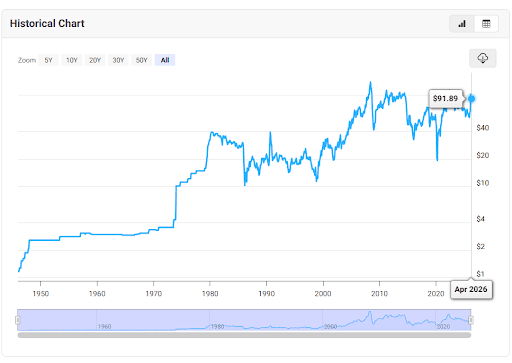
Source: macrotrends
India imports around 80–90% of its crude oil requirement, and pays in US dollars for these imports, making crude oil even more expensive due to the depreciation of the rupee against the dollar.
Apart from being expensive and non-renewable, traditional power generation produces significant carbon dioxide emissions, around 510–1,170 gms of carbon dioxide produced per kilowatt-hour.
To combat these environmental and monetary drawbacks, India seeks alternative and renewable sources of energy such as solar, wind, hydropower, geothermal, and biomass. Among all these energy sources, utility-scale solar energy is the most affordable and easiest to generate.
In the Union Budget 2026, renewable energy allocation increased to ₹32,914 crore, with the highest allocation of ₹30539.36 crore dedicated to the solar energy sector.
This increased allocation is expected to help more companies enter the solar energy industry, increasing the output, which would make India energy independent.
How to Identify Good Solar Energy Stocks?
Solar energy stocks will certainly benefit from the favourable regulations, policy support and increased funds allocation. Here’s how you can identify quality solar energy stocks in India.
- Strong Order Book
Check the company’s order book and invest only if it has a significant number of secured projects or confirmed manufacturing orders.
- Debt-to-Equity Ratio
The renewable energy sector is a capital-intensive industry, and a high debt-to-equity ratio is quite normal. Find out the industry average and ensure the company you invest in has a lower debt-to-equity ratio than its peers.
- Profit Margins
Check the company’s operating profit, that is, profit from its core operations, PBIT (Profit Before Interest and Tax). Look for companies with good profit margins and high returns on capital employed (ROE) to ensure the company’s efficiency in using its capital and profitability.
What Are the Risks of Investing in Solar Energy Stocks?
Though solar stocks have high growth potential, you need to consider the following risks before investing in them.
Capital Intensive
Solar energy-generating companies require significant capital up front and borrow capital to set up the infrastructure. An increase in interest rates would make loans more expensive, putting pressure on profit margins.
Regulatory Risk
While the solar energy sector is currently backed by government funding and supportive policies, a withdrawal of these benefits would cause a significant slowdown. Reduced competitiveness, combined with manufacturing disruptions, would force domestic firms to struggle against cheaper, imported alternatives.
Environmental Risk
Since solar energy relies on sunlight for generating electricity, during the monsoon season, when sunlight is scarce, solar panels may not perform well.
Competitive Landscape
New companies are entering the solar energy sector, increasing the competition within the sector. Companies would need to either sell products at competitive prices or offer exclusive, innovative products and services to maintain market share and position.
Project Execution
Ensure the solar energy company's management is competent to execute projects on time to reduce risk arising from delayed production.

The solar energy sector is growing rapidly, achieving new milestones in generation capacity and is expected to expand further in the coming years. To boost the renewable energy sector, the government is allocating significant funds, with solar energy securing the highest grant compared to other renewable energy sources such as wind, biomass and hydropower.
Before investing in solar energy, it is important to evaluate a company’s profit margins, debt-to-equity ratio, and order book to make informed investment decisions.
FAQs
What are solar energy stocks?
Solar energy stocks are shares of companies involved in manufacturing solar panels, developing solar power projects, or providing related services in the renewable energy sector.
How can I invest in solar energy stocks in India?
You can invest by directly purchasing stocks of solar companies or investing in mutual funds with a renewable energy sector theme.
Are solar energy stocks a good investment?
Solar stocks can offer strong long-term growth due to rising demand for clean energy, government support, and global sustainability goals.
What factors affect solar energy stock prices?
Factors such as government policies, solar panel prices, changes in interest rates and global energy demand significantly affect solar energy stock prices.
What are the risks of investing in solar energy stocks?
The solar energy stocks carry risks such as policy changes, high debt levels in companies, increased competition and market volatility.
How do I analyse solar companies before investing?
To analyse solar companies before investing, you need to evaluate the companies' revenue growth, profit margins, debt levels, order book, and project pipeline.
Are solar stocks suitable for long-term investment?
Yes, solar stocks are generally considered suitable for long-term investors as the world is shifting from traditional power to renewable energy sources. With the Indian government's efforts to make the country energy self-sufficient, solar stocks have high potential for growth.
Do solar energy stocks pay dividends?
Since solar companies are in the expansion and growth stage, most companies do not typically pay dividends yet.
How does global energy demand impact solar stocks in India?
Global demand for clean energy directly influences export opportunities, pricing, and investor sentiment in Indian solar stocks.
About Author
Mariyam Sara
Sub-Editor

holds an MBA in Finance and is a true Finance Fanatic. She writes extensively on all things finance whether it’s stock trading, personal finance, or insurance, chances are she’s covered it. When she’s not writing, she’s busy pursuing NISM certifications, experimenting with new baking recipes.
Read more from Mariyam





















Upstox is a leading Indian financial services company that offers online trading and investment services in stocks, commodities, currencies, mutual funds, and more. Founded in 2009 and headquartered in Mumbai, Upstox is backed by prominent investors including Ratan Tata, Tiger Global, and Kalaari Capital. It operates under RKSV Securities and is registered with SEBI, NSE, BSE, and other regulatory bodies, ensuring secure and compliant trading experiences.
Related articles

Share Market
What Is a Market Correction? Meaning, Causes, and Strategy15 min read | Written by Bidita Sen

Share Market
Cyclical vs Defensive Stocks: Differences, Examples and Strategy15 min read | Written by Bidita Sen

Share Market
What is Efficiency Ratio: Meaning, Types, Formula and More12 min read | Written by Sachin Gupta

Share Market
What is a Solvency Ratio: Meaning, Types, Benefits, Limitations and More12 min read | Written by Sachin Gupta
Share Market
Profitability Ratios: Meaning, Formula, Benefits, Limitations and More11 min read | Written by Sachin Gupta


Share Market
A Guide to American Depository Receipts (ADR) for Indian Investors13 min read | Written by Subhasish Mandal