8th Pay Commission: Everything You Need to Know

Written by Pradnya Surana
Published on April 20, 2026 | 12 min read

Key Takeaways
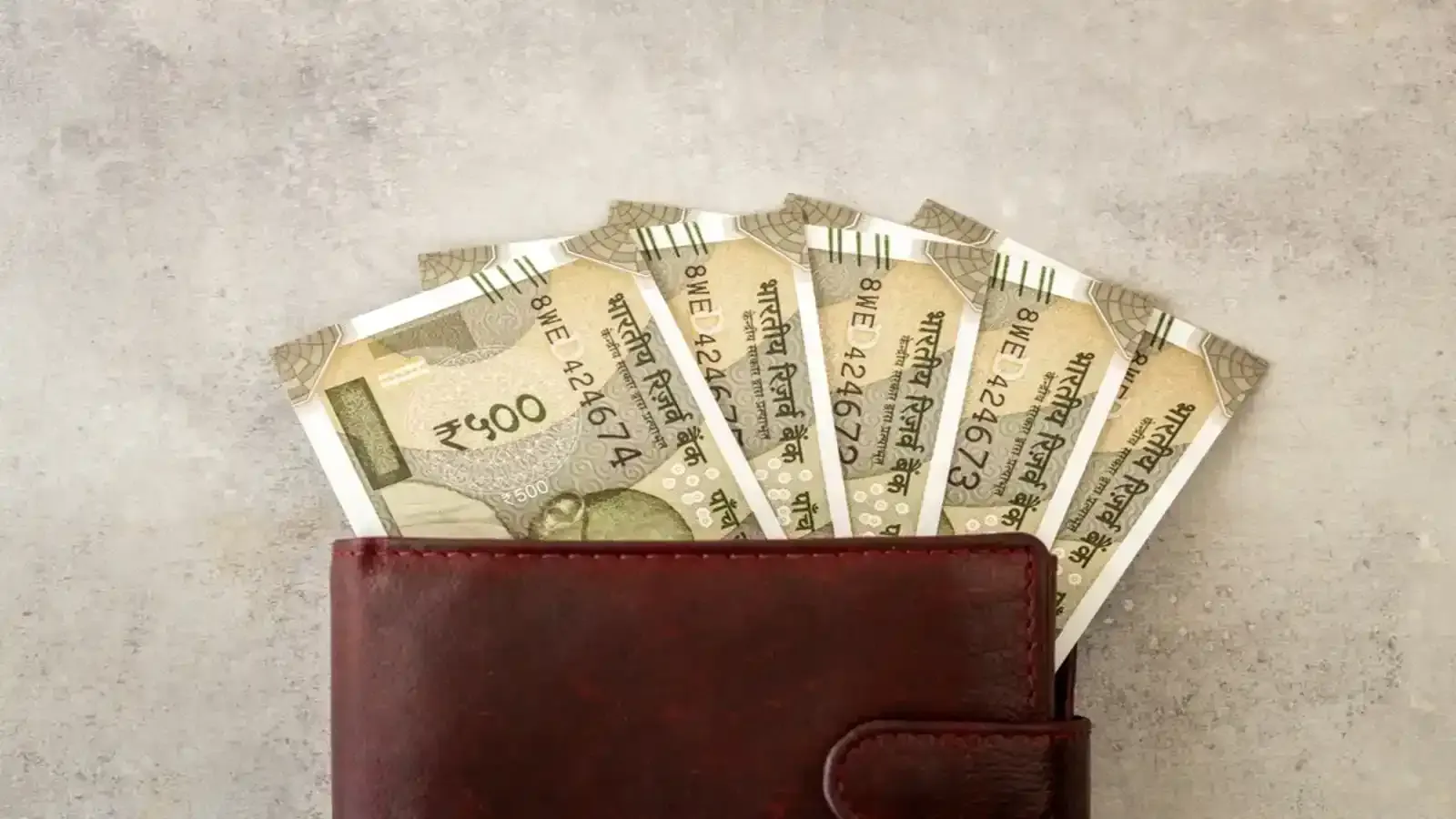
- The 8th Pay Commission may increase salaries significantly through a higher fitment factor,raising minimum basic pay to ₹46,000–₹54,000 or more.
- Arrears will be paid from January 1, 2026, even though implementation is expected in 2027 or early 2028.
- Pension reforms, including demands for the Old Pension Scheme, are a major focus area.
- Allowances like HRA and transport allowance are likely to be revised to reflect higher living costs.
- The impact will go beyond employees, boosting consumption in sectors like housing, automobiles and retail.
What is a Pay Commission?
A Pay Commission is a government-appointed body that reviews and updates salaries, allowances, and pensions of central government employees. India has followed this system since 1946, with a new Pay Commission usually set up every 10 years to adjust pay in line with inflation and changing living standards.
What Is the 8th Pay Commission?
The 8th Pay Commission (8th CPC) is the latest such exercise. It is expected to recommend a fitment factor in the range of 2.57 to 3.0 (with union demands up to 3.833). This could increase the minimum basic pay from ₹18,000 to roughly ₹46,000–₹54,000, and in a more aggressive scenario, up to around ₹69,000. How to Estimate Your New Salary To estimate your revised salary, multiply your current basic pay by the expected fitment factor. For example, if your current basic pay is ₹30,000, applying a range of 2.57 to 3.0 gives an estimated new basic pay of ₹77,100 to ₹90,000. This is not exact, but it gives a practical range to understand the likely increase.
Arrears - What to expect
The effective date is January 1, 2026, but implementation is expected only in 2027–2028. This delay means employees will likely receive arrears for 1.5 to 2 years, depending on when the final decision is approved.
What About Pensioners?
Pensioners are also a main part of the 8th Pay Commission. Around 69 lakh pensioners are expected to benefit, with pensions revised in line with salary changes and arrears applicable from January 1, 2026. There are also ongoing demands such as restoring the Old Pension Scheme for certain employees, increasing minimum pension levels, and improving parity between older and newer pensioners. While final decisions are still pending, pension revision will be a major outcome of the 8th CPC. The Union Cabinet formally approved the constitution of the 8th Pay Commission on January 16, 2025. The Commission was officially notified through a Gazette Notification on November 3, 2025, when its Terms of Reference (ToR) were also finalised. It has been given 18 months from November 3, 2025 to study pay structures, consult stakeholders, and submit its final recommendations to the government.
Important Pay Commission Timelines at a Glance
| Milestone | Date |
|---|---|
| Cabinet approves 8th Pay Commission | January 16, 2025 |
| Public announcement of 8th Pay Commission | January 17, 2025 |
| Cabinet press note on Terms of Reference (CCEA) | October 28, 2025 |
| Official Gazette Notification + ToR finalised | November 3, 2025 |
| Chairperson Justice Ranjana Prakash Desai appointed | November 2025 (with gazette) |
| Commission moves into office (Chanderlok Building) | January 2026 |
| Secretarial vacancy circular issued | January 20, 2026 |
| MyGov public consultation questionnaire closed | March 31, 2026 |
| NC-JCM drafting committee finalisation meeting | April 13, 2026 |
| NC-JCM memorandum formal submission deadline | April 30, 2026 |
| Expected report submission | Mid-2027 (18 months from November 2025) |
| Realistic implementation | 2027–2028 |
| Effective reference date (arrears applicable from) | January 1, 2026 |
January 1, 2026 has been set as the notional effective date, coinciding with the end of the 7th Pay Commission's tenure. However, actual salary revisions will only come into force after the Commission submits its report, the government reviews it, and a formal notification is issued. Any revision implemented after this date will carry arrears from January 1, 2026.
The Regulatory Authority: Who Runs the 8th Pay Commission?
The 8th CPC operates under the Ministry of Finance, Government of India. Other institutional stakeholders in the process are,
- The Commission itself - Led by Justice Ranjana Prakash Desai (Chairperson) and comprising two other members, the panel is the primary body that collects data, consults departments and drafts recommendations.
- Department of Expenditure (Ministry of Finance) - Acts as the nodal ministry for processing the Commission's recommendations before they go to the Cabinet.
- Union Cabinet - The final decision-making authority that accepts, modifies, or rejects the Commission's report before it is notified.
- National Council – Joint Consultative Machinery (NC-JCM) - The official bilateral forum between the government and central government employee unions. The NC-JCM Staff Side is currently finalising a 51-page memorandum to be submitted to the Commission by April 30, 2026.
- MyGov Platform -The government opened a public consultation module for suggestions on pay structure, fitment factor, allowances, pension and service conditions, with a submission deadline of March 31, 2026.
Who Are the Stakeholders?
The 8th Pay Commission affects diverse citizens, both directly and indirectly.
- Central Government Employees - This covers all civilian employees across ministries, departments, central services, and attached offices, spanning Group A, B, C and D categories.
- Defence Personnel - The Indian Army, Navy, and Air Force personnel fall under a separate but parallel revision process coordinated with the CPC.
- Pensioners (approx. 69 lakh) - The Finance Ministry has confirmed that pensions are not excluded from the 8th CPC's scope. Pensioners who retired on or before December 31, 2025, will be eligible for pension revision upon implementation.
- State Government Employees - Though not directly covered, most state governments traditionally align their pay structures with Central Pay Commission recommendations, making the 8th CPC's impact much broader in practice.
- Employee Unions and Federations - Major bodies such as AIRF (All India Railwaymen Federation), NFIR, Confederation of Central Government Employees and the NC-JCM Staff Side are actively lobbying for higher fitment factors and restoration of the Old Pension Scheme.
- The General Public and Economy - A revision affecting over 1.2 crore direct beneficiaries has a significant multiplier effect on consumption, housing markets and the FMCG sector.
8th Pay Commission vs 7th Pay Commission: Differences
Understanding how the 8th CPC differs from the 7th requires a look at the context in which each was formed.
-
Fitment Factor The fitment factor is the multiplier applied to the existing basic pay to arrive at a new salary. The 7th Pay Commission used a flat fitment factor of 2.57, which raised the minimum basic pay from ₹7,000 to ₹18,000 (effective January 1, 2016). This resulted in an average salary hike of 23.5%. For the 8th Pay Commission, employee unions and federations are demanding a fitment factor ranging from 2.86 to 3.833. The NC-JCM Staff Side's latest memorandum (April 2026) proposes a fitment factor of 3.833, which would raise the minimum basic pay to approximately ₹69,000. More conservative analyst estimates suggest the government may settle for a factor between 2.57 and 3.0, implying a minimum basic pay in the range of ₹46,260 to ₹54,000.
-
Minimum Basic Pay
| Pay Commission | Fitment Factor | Minimum Basic Pay |
|---|---|---|
| 6th CPC (2006) | — | ₹7,000 |
| 7th CPC (2016) | 2.57 | ₹18,000 |
| 8th CPC (Proposed) | 2.86 (Union demand) | ₹51,480 |
| 8th CPC (Union max demand) | 3.833 | ₹69,000 |
-
Pay Matrix Structure The 7th Pay Commission replaced the old Grade Pay and Pay Band system with a simple 18-level Pay Matrix. This made salary structures clearer and easier to understand. The 8th Pay Commission is expected to keep this system but increase starting salaries and reduce the gap between nearby pay levels, which has been a common concern among employees.
-
Pension Demands Before the 7th Pay Commission, there was no strong demand to bring back the Old Pension Scheme (OPS). But during the 8th Pay Commission discussions, employee groups have clearly asked for OPS to be restored for employees who joined on or after January 1, 2004. This shows growing dissatisfaction with the current National Pension System (NPS). The government introduced the Unified Pension Scheme (UPS) from April 1, 2025, which partly addresses these concerns by offering a more predictable pension based on the average of the last drawn salary.
-
DA Merger and Minimum Wage Formula Employee representatives have suggested updating the formula used to calculate minimum wages. They want the family size assumption to increase from 3 to 3.6 units, based on a 2019 expert committee recommendation. This would lead to a higher minimum salary. There is also a demand to merge Dearness Allowance (DA), which is currently at 58% as of July 1, 2025, with basic pay before calculating the new salaries. However, the government has said that there is no separate plan right now to merge DA.
-
Expected Salary Hike
| Pay Commission | Average Hike | Fitment Factor Used |
|---|---|---|
| 7th CPC (2016) | 23.50% | 2.57 |
| 8th CPC (Expected) | 30–34% (conservative) | 2.86–3.0 |
In a conservative scenario with a fitment factor of around 2.86 to 3.0 may translate into a 30% to 34% increase in basic pay. In a higher-end scenario, if the fitment factor moves closer to 3.5 or above, the salary increase could be significantly higher. The final impact on take-home salary will vary based on grade, allowances like HRA and DA and how the pay matrix is revised.
Major Demands from Employee Unions
The NC-JCM Staff Side's 51-page memorandum (April 2026) and submissions from major federations collectively demand:
On Salary - They are asking for a fitment factor of 3.833, which could increase the minimum basic pay to ₹69,000. They also want some pay levels to be merged (like Level 1 with Level 2, Levels 3-4, and Levels 5–6) and are pushing for a higher yearly salary increment.
On Pension - They want the Old Pension Scheme (OPS) to be brought back for employees who joined after 2004. Other demands include setting a minimum pension equal to minimum wages, increasing family pension benefits, and ensuring fair treatment between older and newer pensioners.
On Allowances - They are asking for higher house rent allowance (HRA) based on current housing costs, better education allowance for children and improved transport allowance across cities.
On DA Formula - They want the Dearness Allowance calculation to be updated to reflect the latest inflation data and a higher family consumption unit of 3.6 instead of 3.
How Many Lives Will the 8th Pay Commission Affect?
The impact is very large. The government has confirmed in Parliament that over 50.14 lakh central government employees and around 69 lakh pensioners will be covered, adding up to nearly 1.2 crore people. If you include their families, the total number of people affected could be around 4–5 crore. The impact does not stop there. Many state governments usually follow the Central Pay Commission, so lakhs of state government employees may also see changes. For employees, one important aspect is arrears planning. Since arrears are usually paid as a lump sum, they can increase short-term cash flow. Instead of treating this as extra spending money, it can be useful to plan ahead, whether for clearing loans, building an emergency fund or investing for long-term goals. There is also an impact on the economy. When salaries increase at this scale, people tend to spend more on things like housing, cars, electronics and everyday goods, which helps boost overall economic activity.

The 8th Pay Commission is an important policy step for India. It comes at a time when inflation has reduced the real value of salaries, living costs have increased, and there is a growing demand for a better pension security. With a higher expected fitment factor, focus on pension changes and a detailed consultation process that included public input, the 8th Pay Commission could bring one of the biggest salary revisions in recent years. However, the final recommendations are subject to government approval, so actual outcomes may differ from current projections. *All figures relating to 8th CPC recommendations are proposals and projections; actual implementation values will be confirmed after official government notification.
FAQs
1. What is the 8th Pay Commission?
It is a government body that reviews and revises salaries, allowances and pensions of central government employees and pensioners.
2. When will the 8th Pay Commission be implemented?
Implementation is expected in 2027 or early 2028 after the report is submitted and approved.
3. What is the expected fitment factor in the 8th Pay Commission?
It is likely to be between 2.57 and 3.0, although employee unions are demanding up to 3.833.
4. What will be the new minimum basic salary?
It could increase from ₹18,000 to around ₹46,000–₹54,000 and possibly up to ₹69,000 in a higher scenario.
5. Will employees receive arrears?
Yes, arrears will be paid from January 1, 2026, once the new pay structure is implemented.
6. Will pensions also increase?
Yes, pensions are expected to be revised and there are ongoing discussions around improving pension benefits.
7. Will state government employees benefit from the 8th Pay Commission?
Not directly, but many states usually follow central recommendations, so they may implement similar revisions.
8. What changes are expected in allowances?
Allowances like HRA, transport, and education benefits are likely to be revised based on current costs.
9. Is there any update on the Old Pension Scheme (OPS)?
Employee unions are demanding its return, but no final decision has been taken yet.
10. How will the 8th Pay Commission impact the economy?
Higher salaries can increase spending, which may boost sectors like real estate, automobiles, and consumer goods.
About Author
Pradnya Surana
Sub-Editor
is an engineering and management graduate with 12 years of experience in India’s leading banks. With a natural flair for writing and a passion for all things finance, she reinvented herself as a financial writer. Her work reflects her ability to view the industry from both sides of the table, the financial service provider and the consumer. Experience in fast paced consumer facing roles adds depth, clarity and relevance to her writing.
Read more from Pradnya





















Upstox is a leading Indian financial services company that offers online trading and investment services in stocks, commodities, currencies, mutual funds, and more. Founded in 2009 and headquartered in Mumbai, Upstox is backed by prominent investors including Ratan Tata, Tiger Global, and Kalaari Capital. It operates under RKSV Securities and is registered with SEBI, NSE, BSE, and other regulatory bodies, ensuring secure and compliant trading experiences.
Related articles

Personal Finance
Investing in Debt Instruments: Meaning, Types, Benefits, Risks and More13 min read | Written by Sachin Gupta


Personal Finance
Time Value of Money: Meaning, Formula, How to Calculate It?10 min read | Written by Subhasish Mandal

Personal Finance
What is Public Provident Fund: Meaning, Benefits, Risks, Investment Process and More12 min read | Written by Sachin Gupta

Personal Finance
Complete Guide to Debt Investments in India: Types, Benefits, Risks, and More13 min read | Written by Sachin Gupta

Personal Finance
What is E-Insurance Account and How to Open it?12 min read | Written by Subhasish Mandal
Personal Finance
Post Office Time Deposit: A Complete Guide to Interest Rates, Eligibility & Benefits13 min read | Written by Sachin Gupta

Personal Finance
Bond Yields Explained: Understanding Coupon Rate, Current Yield, and YTM11 min read | Written by Sachin Gupta