Credit Ratings in Debt Mutual Funds

Written by Mariyam Sara
Published on May 14, 2026 | 10 min read

Key Takeaways
-
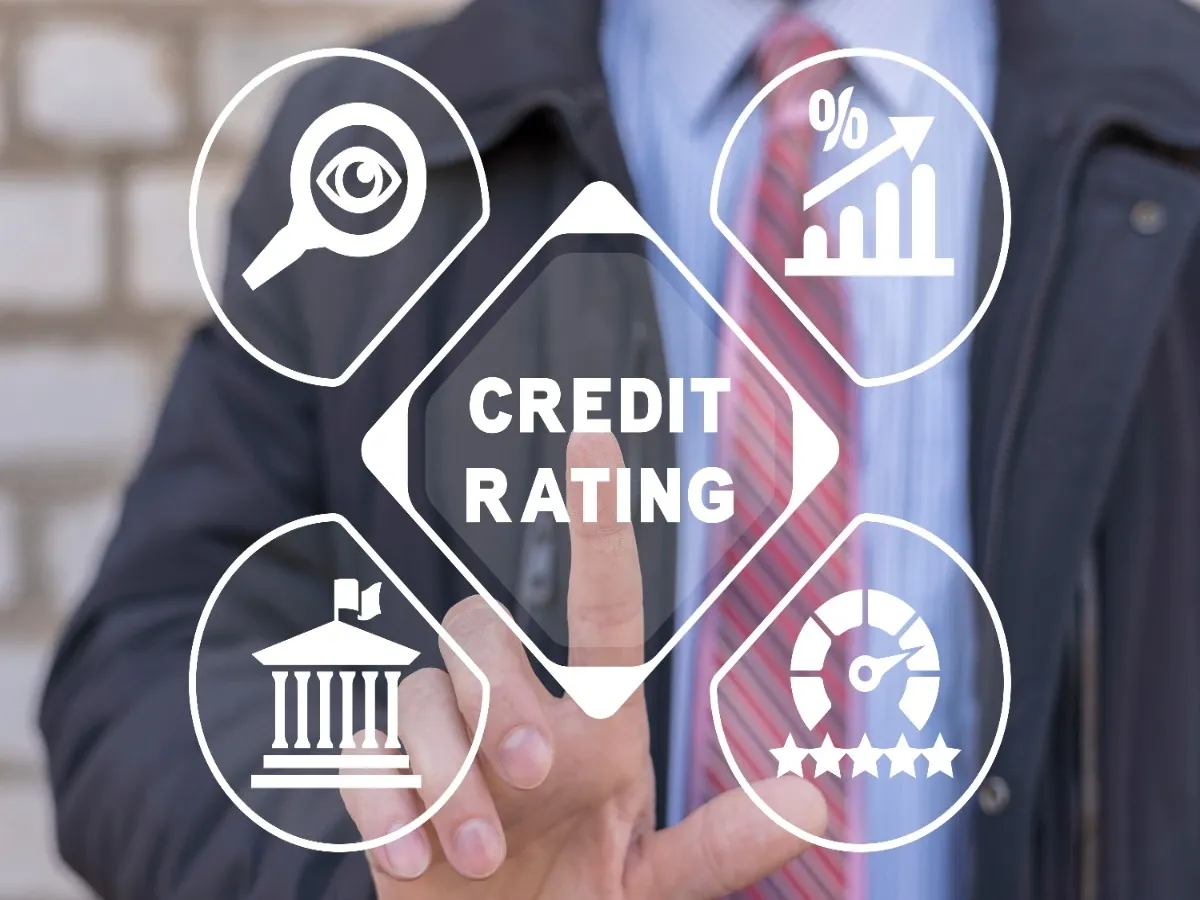
Credit ratings in debt mutual funds are independent assessments of the credit quality and default risk of the bonds and fixed-income securities held in the debt fund's portfolio.
-
Credit rating agencies such as CRISIL, CARE, ICRA, and IRR assign ratings to bonds and debt instruments. These agencies are strictly regulated by SEBI (Securities and Exchange Board of India).
-
Higher-rated debt securities provide greater safety with lower yields, while lower-rated debt instruments carry increased default risk but also offer potentially higher returns.
-
When the credit ratings of debt instruments in a portfolio fall, the market value of those bonds decreases, creating downward pressure on the fund's Net Asset Value (NAV) and lowering overall investor returns.
When you invest in any debt mutual fund, the fund manager uses your money to buy bonds and fixed income instruments issued by When you invest in any debt mutual fund, the fund manager uses your money to buy bonds and fixed-income instruments issued by companies, banks, and government bodies. Even in hybrid mutual funds, the debt component of their portfolio gets invested in similar securities.
Let’s understand what credit ratings are, their scale, and who assigns them.
Who Assigns Credit Ratings in India?
In India, credit ratings are assigned by agencies registered with the Securities and Exchange Board of India (SEBI). The four main credit rating agencies operating in India are,
- CRISIL (Credit Rating Information Services of India Limited)
It is India's oldest and most widely referenced rating agency. Established in 1987, it’s mainly owned by S&P Global. It rates bonds, mutual fund portfolios and other structured finance instruments.
- ICRA Limited
This agency was established in 1991 and is affiliated with Moody's Investors Service. It covers corporate bonds, bank instruments and structured products.
- CARE Ratings (Credit Analysis and Research Limited)
It was established in 1993 and provides ratings across corporate debt, infrastructure bonds and financial sector instruments.
- India Ratings and Research
It is a Fitch Group company and rates corporate issuers, infrastructure projects and financial instruments.
All four agencies follow a standardised rating scale defined under SEBI's (Credit Rating Agencies) Regulations 1999, thereby ensuring comparability across agencies.
What the Rating Scale Means
Credit ratings are expressed as letter grades. Here is what each level indicates,
| Rating | What It Means | Risk Level |
|---|---|---|
| AAA | Highest safety. Issuer has the strongest capacity to repay debt | Lowest risk |
| AA | High safety. Very strong repayment capacity with minor differences from AAA | Low risk |
| A | Adequate safety. Strong repayment capacity but slightly more vulnerable to economic conditions | Moderate risk |
| BBB | Moderate safety. Adequate repayment capacity, but more exposed to adverse conditions | Medium risk |
| BB | Moderate risk. Speculative element present, repayment capacity may weaken | Higher risk |
| B | High risk. Vulnerability to default, repayment capacity is weak | High risk |
| C | Very high risk. Issuer is likely to default or already in financial stress | Very high risk |
| D | Default. The issuer has already missed a payment | In default |
Ratings from AA to B are further fine tuned with a plus or minus sign. So AA+ is stronger than AA, which in turn is stronger than AA-. Ratings of BBB and above are considered investment grade. Ratings of BB and below are considered speculative grade, often referred to as high-yield or junk bonds.
Rating symbols and definitions can vary slightly across agencies and instrument types. For example, CRISIL uses AAA, AA, A, BBB for long-term instruments but uses A1+, A1, A2 for short-term instruments, while ICRA follows a similar but slightly different notation.
Hence, investors should not assume that all symbols mean same across agencies. It is advisable to always read the rating scale legend provided in the fund's factsheet or the rating agency's website.
How Credit Ratings Apply to Debt Mutual Funds
Every debt mutual fund publishes a monthly portfolio factsheet showing the credit rating of every bond it holds. The overall credit quality of the fund is arrived by calculating the weighted average of these ratings.
A fund with 80% of its portfolio in AAA-rated bonds and 10% in AA-rated bonds carries very different risk from a fund with 40% in AA bonds and 30% in A or below-rated bonds, even if both are classified as short-duration funds.
As per SEBI's rules, certain fund categories are required to maintain a minimum credit quality threshold. For example, liquid funds and overnight funds are mandated to invest in the top-rated instruments. Credit risk funds, that aim higher returns,are designed to invest at least 65% of their portfolio in AA and below rated instruments.
The trade-off is between risk and returns. High-rated bonds offer lower yields but higher safety in terms of repayment. Lower-rated bonds offer higher yields but carry a higher probability of default or downgrade.
What Happens When a Rating Is Downgraded
A downgrade is when a rating agency revises the bond rating to a lower level. For example, from AA to A or from A to BBB. It indicates that the agency now sees the issuer's ability to repay has dropped. For debt mutual fund investors, a downgrade has a direct and immediate impact. The market value of the downgraded bond falls and that fall gets reflected instantly in the fund's NAV through mark-to-market valuation. The more concentrated the fund's holdings in a single issuer and the lower the starting rating, the larger the NAV impact of a downgrade.
Cases From Indian Markets
- IL&FS Crisis (2018)
Infrastructure Leasing and Financial Services (IL&FS) was one of India's largest infrastructure finance companies and carried high credit ratings since its inception. However, in September 2018, it defaulted on its debt obligations. Rating agencies downgraded IL&FS from AAA to default status within weeks. Several debt mutual funds that held IL&FS papers saw steep NAV drops overnight. The IL&FS default was a flashpoint for the Indian debt mutual fund industry. It exposed the risk of concentrated holdings in even highly-rated issuers. Simultaneously, it also prompted SEBI to introduce stricter single-issuer exposure limits for mutual funds.
- DHFL Crisis (2019)
Dewan Housing Finance Corporation Limited (DHFL) was a housing finance company that carried investment-grade ratings until its financial problems became public in 2019. When DHFL's ratings were downgraded sharply, several Franklin Templeton debt funds that held DHFL paper had immediate NAV impacts. DHFL couldn’t repay its existing bondholders, creating serious credit stress. This eventually led to the winding up of six Franklin Templeton schemes in April 2020. The episode showed how a single large downgrade in a concentrated holding could cascade into a fund-level crisis.
- Vodafone Idea Downgrade
Vodafone Idea's bonds were gradually downgraded as the company's financial position deteriorated following intense competition and regulatory dues. Debt funds that held Vodafone Idea paper were required to mark down these holdings in line with the revised ratings, resulting in NAV impacts for affected schemes. This case shows that even large, well-known companies can experience prolonged credit deterioration that steadily erodes bond values.
Credit Risk Funds - High Yield, Higher Risk
Credit risk funds, by design, are meant for investors who want higher returns from debt investments and are willing to accept the credit risk that comes with it. These funds invest a minimum of 65% of their portfolio in bonds rated AA and below. The higher yields offered by lower-rated bonds can generate attractive returns in stable market conditions. However, in uncertain markets, these bonds are the first to get downgraded and face trading difficulties. Investors in credit risk funds should understand that the extra yield they receive is a trade-off for taking on the risk of exactly the kind of events described in the cases above.
What to Check Before Investing in a Debt Fund
Portfolio credit quality - Look at the percentage of AAA, AA, A and below-rated holdings in the fund's monthly factsheet. The higher the proportion of AAA and AA holdings, the lower the credit risk.
Concentration risk - Check whether the fund has a large exposure to any single issuer. Although SEBI has capped single-issuer exposure at 10% of a fund's net assets, even a 10% holding in a defaulting issuer can drop NAV significantly.
Category of the fund - Understand what credit profile the fund category is designed to hold. Overnight funds and liquid funds are the safest. Credit risk funds carry the highest credit exposure by design.
Fund house track record - Some AMCs have a stronger track record of credit research and risk management than others. Look at how a fund house handled financial stress in the past before committing.

Credit ratings in debt mutual funds are independent assessments of the credit quality and default risk of the bonds and fixed-income securities held in the fund's portfolio. These credit ratings help investors understand how likely a company or organisation is to repay its debt.
Investors must understand that a high credit rating does not mean that the investment is completely safe. They need to check the fund’s portfolio, the amount invested in lower-rated bonds, the fund’s exposure to a single company, and the type of debt fund to make informed investment decisions.
FAQs
Is a AAA-rated bond completely safe?
AAA is the highest rating and indicates the strongest repayment capacity at the time of rating. However, ratings can change. The IL&FS case is a reminder that even AAA-rated issuers can default if their financial position deteriorates rapidly. AAA means very low risk, not zero risk.
What is the difference between a credit risk fund and a regular debt fund?
A credit risk fund deliberately invests at least 65% of its portfolio in bonds rated AA and below to generate higher yields. A regular short-duration or corporate bond fund targets higher-rated, BB and above, instruments. Credit risk funds are suitable only for investors who understand and accept the possibility of credit events affecting their NAV.
How often are credit ratings reviewed?
Rating agencies review ratings on a regular basis, typically annually or when material events occur. They can also place an issuer on a Rating Watch or Rating Outlook to signal that a rating change is being considered. Fund houses are required to update their portfolio disclosures when a rating change occurs.
Can two agencies give different ratings to the same bond?
Yes. Different agencies may assess the same issuer differently based on their methodology and information. Mutual funds generally take a conservative approach. The fund managers use the lower of two available ratings for valuation purposes
Does a higher yield always mean lower credit quality?
Generally yes. In a bond market, yield and credit risk move together. A bond offering significantly higher yield than comparable instruments is usually doing so to compensate investors for taking on higher default risk. If a debt fund's returns look unusually high compared to peers, it is worth checking the credit quality of its portfolio.
What should I do if my debt fund holds a downgraded bond?
Do not panic-redeem immediately. First, check what percentage of the fund's portfolio is in the downgraded bond, the severity of the downgrade, and whether the fund manager has issued a statement. A small holding in a bond downgraded from AA to A may have a limited NAV impact. A large holding in a bond downgraded to default requires a more careful assessment of your options.
About Author
Mariyam Sara
Sub-Editor

holds an MBA in Finance and is a true Finance Fanatic. She writes extensively on all things finance whether it’s stock trading, personal finance, or insurance, chances are she’s covered it. When she’s not writing, she’s busy pursuing NISM certifications, experimenting with new baking recipes.
Read more from Mariyam

















Upstox is a leading Indian financial services company that offers online trading and investment services in stocks, commodities, currencies, mutual funds, and more. Founded in 2009 and headquartered in Mumbai, Upstox is backed by prominent investors including Ratan Tata, Tiger Global, and Kalaari Capital. It operates under RKSV Securities and is registered with SEBI, NSE, BSE, and other regulatory bodies, ensuring secure and compliant trading experiences.
Related articles

Mutual Funds
What is IDCW in Mutual Funds and How Does It Work?11 min read | Written by Subhasish Mandal
Mutual Funds
What Are Multi-Cap Mutual Funds: A Complete Guide for Retail Investors11 min read | Written by Sachin Gupta
Mutual Funds
How to Read AMFI Monthly Data: A Complete Beginner's Guide16 min read | Written by Bidita Sen
Mutual Funds
Bond ETF vs Bond Mutual Funds: A Quick Comparison9 min read | Written by Subhasish Mandal

Mutual Funds
What is an Asset Management Company? How Mutual Fund AMCs Work16 min read | Written by Bidita Sen
Mutual Funds
What is AMFI? Role Of AMFI In India’s Mutual Fund Industry7 min read | Written by Bidita Sen