What is the Difference between BSE and NSE?

Written by Bidita Sen
Published on April 16, 2026 | 10 min read

Summary
The Bombay Stock Exchange and the National Stock Exchange of India are the two key pillars of India’s equity markets. While explaining the structural, historical, and functional differences between the two, the article highlights how investors can choose between them based on liquidity, listings, trading activity, and market conditions.
Key Takeaways
- BSE is older, NSE is technology-driven.
- BSE has more listed companies than NSE.
- NSE leads in liquidity and derivatives trading.
- Both exchanges are regulated by SEBI.
- Both exchanges follow the T+1 settlement cycle.
- Price differences can exist for the same stock.
- NSE suits active traders; BSE suits broader exposure.
- Both exchanges work together to strengthen markets.
- Index movements drive institutional flows.
- RBI policy impacts both exchanges equally.
Introduction
Ever heard of people talking about trading and stock exchanges. What is the relation between the two? One cannot function without the other. The Indian equity market is one of the world's most dynamic capital ecosystems. The economic hub is governed by 2 primary gateways, the Bombay Stock Exchange (BSE) and the National Stock Exchange (NSE), which facilitate the buying and selling of securities. They follow distinct historical, technological, and liquidity frameworks. Brokers act as intermediaries between investors and traders. Under regulations framed by the Securities and Exchange Board of India (SEBI), securities can be bought and sold only through SEBI-registered stock brokers, who are members of recognised stock exchanges.
An investor well versed in the subtle nuances between the NSE stock and the BSE stock can stay relevant in the challenging Indian financial markets and optimally strategise their portfolio.
This article dissects the core differences between the BSE and the NSE while highlighting their core features, advantages and historical facts.
Companies raise capital through these two platforms.
Historical Foundations; When The Story Started
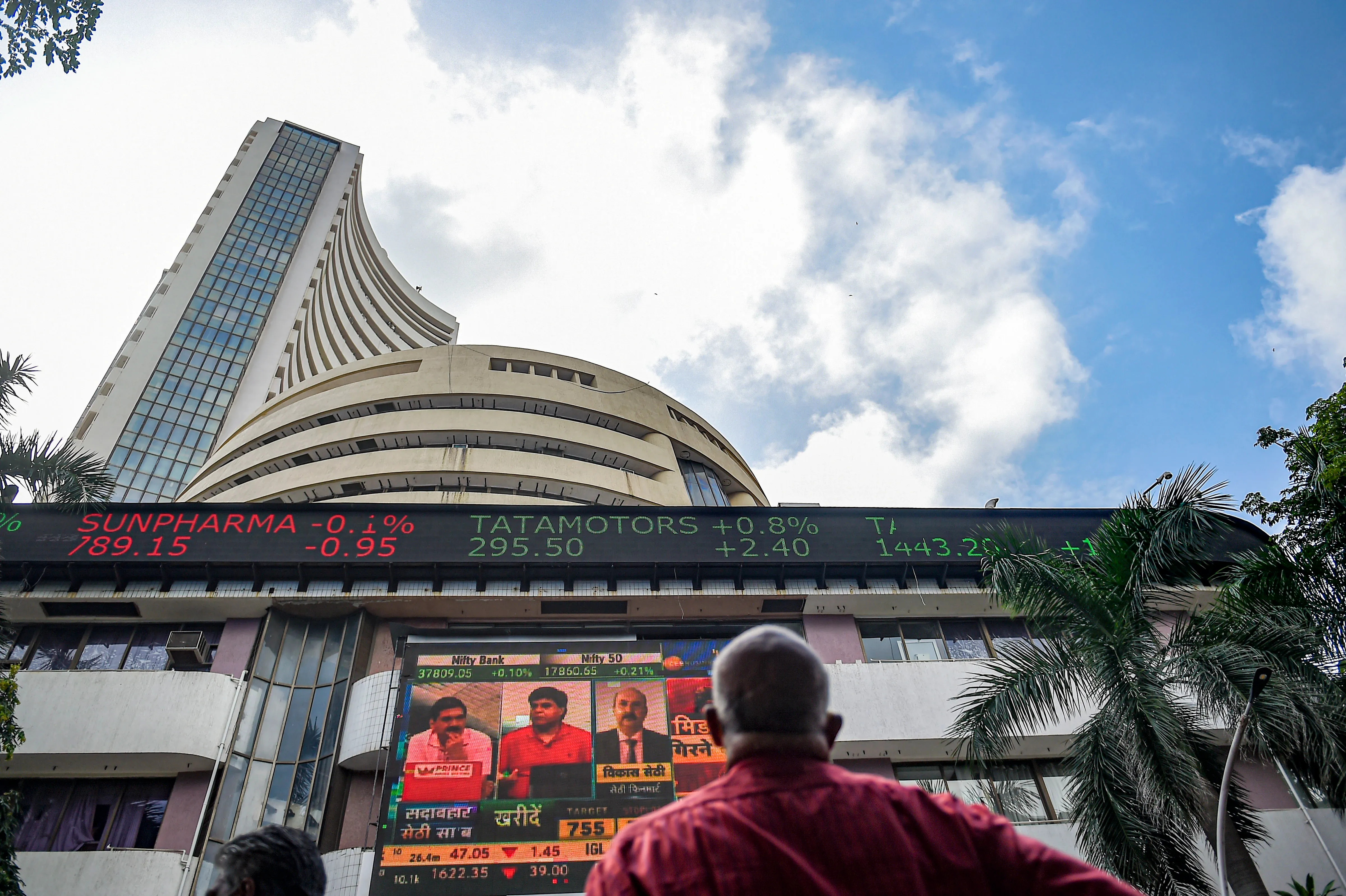
The Bombay Stock Exchange (BSE) The BSE was established in 1875 as The Native Share & Stock Brokers' Association. It is Asia’s first and oldest stock exchange. For over a century, it has been shaping Indian capitalism through the ‘open outcry’ system on Dalal Street. The open outcry system is a traditional method of trading where buyers and sellers gather on a trading floor, shout, show hand signals, and make gestures to place and. One of the world's largest exchanges houses over 5,000 listed companies. Its primary benchmark, the S&P BSE Sensex, was launched in 1986 and consists of 30 most financially sound, most active large-cap companies in more than 10 sectors. Besides Sensex, other important indices on the BSE include, BSE 100, BSE 200, BSE 500, BSE MIDCAP, BSE SMLCAP, BSE PSU, BSE Auto, BSE Pharma, BSE FMCG, and BSE Metal.
In March 2014, the combined market capitalisation of all listed stocks on the BSE touched the ₹100 lakh crore mark. It hit ₹200 lakh crore in February 2021, ₹300 lakh crore in July 2025. In April 2026, the stock exchange passed another milestone, recording a combined market capitalisation of ₹400 lakh crore.
The National Stock Exchange (NSE) The NSE was incorporated in 1992, recognised as a stock exchange by the SEBI in 1993, and commenced operations in 1994. It started with the wholesale debt market and later introduced the cash market segment. In the year 1995-96, NSE launched the NIFTY 50 Index and commenced trading and settlement in dematerialised securities.
The NSE was specifically designed to bring transparency into the market with the help of technology. It pioneered fully automated, screen-based electronic trading in India, challenging the traditional floor-trading model. With over 2,000 very small aperture terminals (VSATs), the NSE has emerged as the largest private wide-area network in the country.
With the introduction of the flagship index, the NIFTY 50, NSE started trading and settling dematerialised securities in 1995–1996. The base period for the Nifty 50 index is the closing prices of November 3, 1995, which marks the completion of one year of operations of NSE's Capital Market Segment. The base value of the index has been set at 1,000 and a base capital of Rs 2.06 lakh crore.
The Nifty 50 Index represents about 54.10% of the free float market capitalisation of the stocks listed on NSE as on September 30,2025.
The NSE tracks the performance of the top 50 companies by free-float market capitalisation, which are listed by Nifty. Besides Nifty, other important NSE indices are Nifty Next50, Nifty500, Nifty Midcap150, Nifty Small cap 250, and Nifty Mid Small cap 400.
Similarities Between NSE and BSE
The NSE and the BSE have several similar operational and regulatory features. The similarity starts with both exchanges are platforms for trading equities and other financial instruments. Besides this, the other key similarities are listed as follows:
1. The two exchanges are regulated by the Securities and Exchange Board of India (SEBI) to bring fairness into the trading practices and protect investors from any fraudulent activity.
2. Both the exchanges operate on electronic trading systems, ideal for screen-based order matching and transparency. This solves the problem of accessibility to retail and institutional investors.
3. Companies list their shares on both the exchanges to raise capital. Benchmark indices such as Nifty 50 for NSE, Sensex for BSE track top stocks.
Comparative Overview
| Feature | Bombay Stock Exchange (BSE) | National Stock Exchange (NSE) |
|---|---|---|
| Establishment | 1875 (Asia's Oldest) | 1992 (Tech Pioneer) |
| Benchmark Index | S&P BSE SENSEX (30 Stocks) | NIFTY 50 (50 Stocks) |
| Total Listed Entities | Over 5,500 Companies | Over 2,500 Companies |
| Market Capitalisation | Over ₹450 Lakh Crore | Over ₹400 Lakh Crore |
| Trading Volume | Significant, but lags NSE | Global leader in Equity Derivatives |
| Settlement Cycle | T+1 (Standardised) | T+1 (Standardised) |
| Regulatory Body | SEBI | SEBI |
Data Sources: BSE India, NSE India, SEBI Monthly Reports.
Key Points of Difference Investors Must Watch
Listing Breadth vs Liquidity Depth
The BSE is a larger exchange than the NSE, and hosts over double the number of listed companies compared to the NSE. Investors seeking exposure to micro-cap, small-cap, and regional enterprises prefer the BSE. The more stringent listing criteria of the NSE discourages such investors.
The NSE tops the BSE in terms of liquidity. The former’s advantage is its narrower bid-ask spreads for large-cap stocks and high-frequency trading. Active traders and institutional hedgers mostly select the NSE because of its daily turnover in the cash segment as of early April 2026, and its undisputed global leadership in equity derivatives (by volume).
Synergy and Coexistence The BSE and the NSE coexist and work in tandem as complementary pillars of India’s capital markets. Together, they improve liquidity distribution, promote effective price discovery across the equity ecosystem, support diverse listings, and strengthen market depth. The terms are used interchangeably – "NSE and BSE" or "BSE and NSE", which shows the parallel nature of their operations. Investors get better choices out of this synergy and the market stability is maintained through strong liquidity and a competition-based environment.
Global Impact The BSE and the NSE India’s position in the global financial ecosystem is cemented by their contributions to India's economic development. They attract international investors. These exchanges are attractive hubs for those seeking opportunities within one of the world's fastest-growing economies.
Which Is Better: NSE or BSE?
The NSE and the BSE are an integral part of India’s capital markets. Investors consider trading activity, investment choices, and market participation while choosing between the NSE and the BSE. The following are the few key factors to evaluate before deciding where to trade:
Liquidity of the Stock: In plain terms, it means how easily shares can be bought or sold. A stock with higher liquidity sees faster trade execution and narrower bid-ask spreads. Investors check for exchanges that record higher trading activity for the stock they want to trade.
Availability of the Company: Some firms are listed only in one of the two exchanges. A company’s listing exchange and other details point to the exchange through which the trade can be executed. Type of Trading Activity: Futures and options traders often consider the exchange with stronger derivatives participation, and a large share of derivatives activity takes place on the NSE.
Price Differences: You may come across a stock trading at different price levels on the two exchanges. This is because of different supply and demand conditions. Investors and brokers always prefer the exchange offering the most favourable price at the time of the trade.
Regulatory and Macro Influence
The Reserve Bank of India’s (RBI’s) monetary policy decisions colour the exchange dynamics. Repo rate adjustments sway market liquidity and the cost of capital, and thereby affect investor sentiments across both the BSE and the NSE. Both the exchanges experience a heightened retail participation in periods of stable interest rates and cooling commodity prices because domestic conditions become more conducive to equity investment.
What Investors Should Watch
Investors should monitor the following trigger points to decide between the BSE and the NSE for specific trades:
SME Listing Activity: The BSE SME platform has a favourable ecosystem to harbour emerging companies. The BSE is the primary hunt ground for investors turning to early-stage equity.
Transaction Costs: Traders can monitor exchange-specific transaction charges. In 2025-26, the BSE offered competitive pricing on specific stock options, which is advantageous if liquidity is sufficient.
Index Rebalancing: The Nifty and the Sensex go through semi-annual rebalancing. This process triggers massive institutional flows. A trader should understand which index a stock belongs to for predicting short-term price movements.

Conclusion
There exists a structural dichotomy between the BSE and the NSE, which creates a strategic advantage for the Indian market. The BSE’s expansive breadth required for deep-value discovery and historical depth, and the NSE’s high-octane liquidity and derivatives sophistication required for modern risk management cover all the corners that an investor must consider.
The decision-grade investor’s choice of exchange is driven by the specific demands of the trade like liquidity, asset availability, or price efficiency. The parallel growth of these two institutions is essential to make India a resilient and attractive destination for global capital.
FAQs
What is the main difference between BSE and NSE?
The BSE has more listed companies, while the NSE offers higher liquidity and dominates derivatives trading.
Which is better for trading, NSE or BSE?
NSE is generally preferred for active trading due to higher liquidity and tighter spreads.
Why are stock prices different on BSE and NSE?
Price differences arise due to varying demand, supply, and trading volumes on each exchange.
Can I buy shares on BSE and sell on NSE?
Yes, through arbitrage or broker-enabled mechanisms, but execution depends on liquidity and regulations.
Which exchange has more listed companies in India?
The BSE has significantly more listed companies compared to the NSE.
Why does NSE have higher trading volume than BSE?
NSE’s advanced electronic trading system and strong derivatives segment attract more traders.
Are BSE and NSE regulated by the same authority?
Yes, both are regulated by the Securities and Exchange Board of India (SEBI).
What are Sensex and Nifty 50?
Sensex is the benchmark index of BSE, while Nifty 50 represents NSE’s top 50 companies.
Which exchange is better for beginners?
Both are suitable, but beginners often trade stocks listed on NSE due to better liquidity.
Do companies list on both BSE and NSE?
Yes, many companies are dual-listed to increase visibility and investor participation.
What role does RBI play in stock exchanges?
The Reserve Bank of India influences liquidity and investor sentiment through monetary policy.
What should investors check before choosing an exchange?
Investors should evaluate liquidity, stock availability, trading costs, and price differences.
About Author
Bidita Sen
Senior Editor
Bidita Sen has spent over a decade first understanding the complex language of finance, then translating it into something humans can actually read. After a career spent chasing market trends, she now prefers chasing ghosts. When she's not working, you’ll find her reading or re-watching the Paranormal Activity series. Because, real-life math is much scarier than a haunted house.
Read more from Bidita
















Upstox is a leading Indian financial services company that offers online trading and investment services in stocks, commodities, currencies, mutual funds, and more. Founded in 2009 and headquartered in Mumbai, Upstox is backed by prominent investors including Ratan Tata, Tiger Global, and Kalaari Capital. It operates under RKSV Securities and is registered with SEBI, NSE, BSE, and other regulatory bodies, ensuring secure and compliant trading experiences.
Related articles

Share Market
What Is a Market Correction? Meaning, Causes, and Strategy15 min read | Written by Bidita Sen

Share Market
Cyclical vs Defensive Stocks: Differences, Examples and Strategy15 min read | Written by Bidita Sen

Share Market
What is Efficiency Ratio: Meaning, Types, Formula and More12 min read | Written by Sachin Gupta

Share Market
What is a Solvency Ratio: Meaning, Types, Benefits, Limitations and More12 min read | Written by Sachin Gupta
Share Market
Profitability Ratios: Meaning, Formula, Benefits, Limitations and More11 min read | Written by Sachin Gupta

Share Market
A Guide to American Depository Receipts (ADR) for Indian Investors13 min read | Written by Subhasish Mandal