What Is WPI and Why It Matters?

Written by Pradnya Surana
Published on June 08, 2026 | 7 min read

Key takeaways
- WPI measures wholesale price changes before goods reach the retail market.
- A rising WPI often signals retail inflation is likely to follow soon.
- High WPI squeezes manufacturer margins and can hurt corporate earnings directly.
- WPI falling while CPI rises signals a disconnect in India's inflation story.
- Global crude and commodity prices are the biggest drivers of India's WPI.
Everyone gets affected by inflation. Changes in prices affect household budgets, businesses get impacted and the overall economy gets recalibrated. While steady inflation within limits is a healthy sign of economic growth, higher inflation is often considered a a cautionary sign. Policymakers often change interest rates to keep inflation within limits.
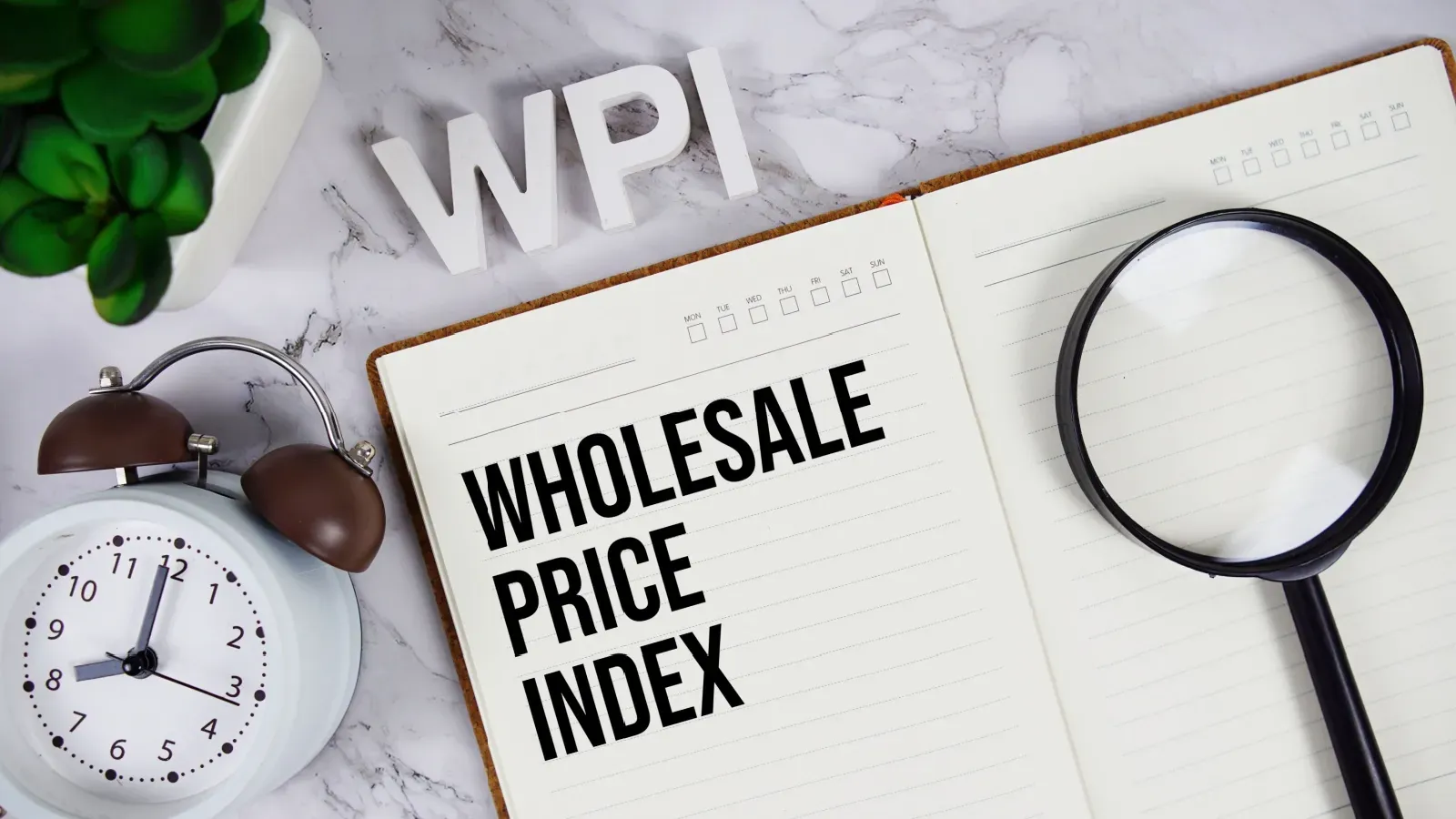
While many are familiar with the Consumer Price Index (CPI), economists, businesses and policymakers also monitor another important inflation indicator, the Wholesale Price Index (WPI).
WPI measures changes in prices at the manufacturing and distribution levels before customers purchase goods. As a result, it is often taken as a precursor to the inflation trends in the economy. But what exactly is WPI, how is it calculated, how is it different from CPI and why does it matter for businesses, investors and policymakers? Let's understand.
What Is WPI?
The Wholesale Price Index (WPI) tracks the prices that manufacturers, producers and wholesalers pay or receive for goods before those goods reach retail markets and consumers. For example, if the wholesale price of steel, cement, crude oil or wheat increases, the impact may eventually be passed on to businesses and consumers through higher prices.
Because it captures price changes earlier in the supply chain, WPI is often considered a leading indicator of inflation.
Who Publishes WPI in India?
In India, WPI is compiled and released by the Office of Economic Adviser (OEA) under the Department for Promotion of Industry and Internal Trade (DPIIT), Ministry of Commerce and Industry. The index is released every month.
What Is the Current Base Year of WPI?
The current WPI series uses 2011-12 as the base year, with the index value set at 100 for that year. The base year was revised from 2004 - 05 to 2011-12 to better reflect changes in India's economic structure and production patterns. A base year serves as a benchmark against which future price changes are measured.
For example,
- WPI = 100 in the base year
- WPI = 120 means wholesale prices are, on average, 20% higher than the base year
- WPI = 95 means wholesale prices are 5% lower than the base year
The government has also approved a revision of the base year from 2011-12 to 2022-23, although the revised series is yet to be fully implemented.
Components of WPI
As of June 2026, the WPI basket currently contains 697 commodities grouped into three major categories as per the OEA, DPIIT, Government of India under the WPI series with base year 2011-12.
| Component | Weight (%) | Examples |
|---|---|---|
| Primary Articles | 22.62 | Food grains, vegetables, fruits, minerals |
| Fuel & Power | 13.15 | Coal, petrol, diesel, LPG, electricity |
| Manufactured Products | 64.23 | Steel, cement, textiles, chemicals, machinery |
Manufactured products carry the highest weight in WPI, accounting for nearly two-thirds of the index. As a result, changes in manufacturing costs can significantly influence overall WPI inflation.
How Is WPI Calculated?
WPI is calculated by comparing current wholesale prices of selected commodities with their prices in the base year.
The formula can be simplified as:
WPI = (Current Price ÷ Base Year Price) × 100 Suppose the wholesale price of a commodity was ₹100 in the base year and rises to ₹120 today.
WPI = (120 ÷ 100) × 100 = 120
This indicates a 20% increase in the wholesale price compared with the base year.
In practice, the index uses weighted averages across hundreds of commodities rather than a single product. Different items are assigned different weights depending on their importance in the economy.
Why Is WPI Important?
1. Early Indicator of Inflation
WPI provides information about price movements before they reach consumers. A rise in wholesale prices today, in a few months, may translate into higher retail inflation.
2. Helps Businesses Track Input Costs
As the prices of raw materials, fuel and other goods in the supply chain go up, production costs increase. Hence, producers and manufacturers get directly impacted by WPI.
3. Useful for Economic Analysis
Economists use WPI to analyse supply-side inflation and assess costs in different sectors of the economy.
4. Used in Commercial Contracts
Many long-term infrastructure and industrial contracts have price escalation clauses linked to WPI. This helps adjust payments when costs rise significantly.
5. Helps Measure Real Economic Growth
WPI is also used as a deflator in certain economic calculations, helping convert nominal values into inflation-adjusted figures.
WPI vs CPI: What's the Difference?
Although both measure inflation, they focus on different stages of the economy.
| Feature | WPI | CPI |
|---|---|---|
| Full Form | Wholesale Price Index | Consumer Price Index |
| Measures Prices Paid By | Wholesalers and businesses | Consumers |
| Includes Services | No | Yes |
| Covers Retail Prices | No | Yes |
| Focus Area | Producer and wholesale level | Consumer level |
| Published By | Office of Economic Adviser (OEA), DPIIT | National Statistical Office (NSO) |
| Used for RBI Inflation Targeting | No | Yes |
Today, the Reserve Bank of India primarily uses CPI inflation rather than WPI while formulating monetary policy.
Advantages of WPI
- Provides early signals of inflationary pressures.
- Covers a wide range of commodities.
- Useful for businesses and manufacturers.
- Helps policymakers identify supply-side inflation trends.
- Widely used in contracts and economic analysis.
Limitations of WPI
Despite its usefulness, WPI has several limitations.
- Does Not Include Services - Services such as healthcare, education, banking, transportation etc. are excluded from WPI.
- Does Not Reflect Consumer Experience - Consumers pay retail prices, not wholesale prices. Therefore, WPI may not accurately represent the inflation experienced by households.
- Multiple Counting Risk - Since goods may be captured at different production stages, some economists argue that WPI can be affected by multiple-counting issues. For example, diesel may be reflected across the entire supply chain and can get counted multiple times.
- Less Relevant for Monetary Policy - Because it excludes services and consumer spending patterns, CPI has become the preferred inflation measure for monetary policy decisions.

WPI is one of India's most important inflation indicators. It tracks price movements at the wholesale level, helping businesses, economists and policymakers understand cost pressures in the economy before they reach consumers. Although CPI has become the primary measure for inflation targeting, WPI remains highly relevant for economic analysis, commercial contracts, industrial planning and monitoring supply-side inflation.
Frequently Asked Questions
What does WPI measure?
WPI measures changes in the prices of goods at the wholesale or producer level before they reach consumers.
Who publishes WPI in India?
The Office of Economic Adviser (OEA) under DPIIT publishes WPI every month.
What is the current WPI base year?
The current base year is 2011-12 = 100.
Does WPI include services?
No. WPI covers only goods and excludes services.
Which is more important: WPI or CPI?
Both are important, but CPI is more relevant for measuring consumer inflation and guiding RBI monetary policy.
Why is WPI considered a leading inflation indicator?
Because wholesale price changes often occur before retail prices change, WPI can provide early signals of inflationary pressures.
About Author
Pradnya Surana
Sub-Editor
is an engineering and management graduate with 12 years of experience in India’s leading banks. With a natural flair for writing and a passion for all things finance, she reinvented herself as a financial writer. Her work reflects her ability to view the industry from both sides of the table, the financial service provider and the consumer. Experience in fast paced consumer facing roles adds depth, clarity and relevance to her writing.
Read more from Pradnya














Upstox is a leading Indian financial services company that offers online trading and investment services in stocks, commodities, currencies, mutual funds, and more. Founded in 2009 and headquartered in Mumbai, Upstox is backed by prominent investors including Ratan Tata, Tiger Global, and Kalaari Capital. It operates under RKSV Securities and is registered with SEBI, NSE, BSE, and other regulatory bodies, ensuring secure and compliant trading experiences.
Related articles

Personal Finance
Investing in Debt Instruments: Meaning, Types, Benefits, Risks and More13 min read | Written by Sachin Gupta

Personal Finance
Time Value of Money: Meaning, Formula, How to Calculate It?10 min read | Written by Subhasish Mandal
Personal Finance
What is Public Provident Fund: Meaning, Benefits, Risks, Investment Process and More12 min read | Written by Sachin Gupta

Personal Finance
Complete Guide to Debt Investments in India: Types, Benefits, Risks, and More13 min read | Written by Sachin Gupta

Personal Finance
What is E-Insurance Account and How to Open it?12 min read | Written by Subhasish Mandal
Personal Finance
Post Office Time Deposit: A Complete Guide to Interest Rates, Eligibility & Benefits13 min read | Written by Sachin Gupta

Personal Finance
Bond Yields Explained: Understanding Coupon Rate, Current Yield, and YTM11 min read | Written by Sachin Gupta