The National Stock Exchange (NSE): A Strategic Guide for the 2026 Investor

Written by Bidita Sen
Published on April 27, 2026 | 9 min read

Key Takeaways
- National Stock Exchange (NSE) serves around 12.7 crore unique registered investors as of January 2026.
- The total unique trading accounts or client codes surpassed 25 crore in February 2026.
- Investors can hold accounts with multiple brokers, making the number of trading accounts more than the count of unique investors.
- NSE remains the world’s largest derivatives exchange by number of contracts traded, by volume, and one of the top 5 equity hubs in the world.
- NSE follows the standardised next-day (T+1) settlement for higher capital efficiency and significantly lower counterparty risk for traders.
- The SEBI (Stock Brokers) Regulations 2026, intensifies responsibilities and obligations of stock brokers, and mandates strict, real-time segregation of client funds and assets.
- The Nifty 50 acts as the definitive sampler of the roughly ₹468 lakh crore Indian equity market in early 2026.
What do you see when you try to buy a share of a blue-chip company like Reliance or HDFC Bank? You likely interfaced with the National Stock Exchange (NSE). It may appear like a digital app on your phone, but its scale and reach are unfathomable. The NSE is a massive, highly regulated infrastructure institution of national importance with international stature.
The NSE is counted among the world’s largest exchanges and a catalyst for driving India’s economic growth.
The country’s leading financial exchange with high standards of corporate governance is headquartered in Mumbai.
By January 2026, the NSE reached a historic milestone, surpassing 12.7 crore unique registered investors. The growth has been driven by a system built on speed, transparency, and institutional-grade technology.
The National Stock Exchange (NSE): Definition & History From Reform to Global Dominance
Before the NSE, traders shouted prices on a floor as part of the traditional open outcry systems. Then NSE was born as the first exchange in India to implement electronic or screen-based trading.
As of early 2026, the total market capitalisation of companies listed on the National Stock Exchange of India stood at around ₹460 lakh crore. This stock exchange comprised diverse shareholding assets from both global and domestic investors, and includes: Equities: Shares of India’s largest corporations. Derivatives: Futures and Options (F&O) on indices and individual stocks. Debt: Government securities and corporate bonds. Commodities & Currency: Gold, silver, crude oil, and USD/INR pairs.
The NSE emerged at the behest of the Government of India following the Pherwani Committee's recommendations in 1991 to bring transparency to a market in distress due to inefficiency.
It was the first exchange in India to provide a nationwide, satellite-based network, integrating investors throughout the country into a single base. Within a year of launching its equity segment in November 1994, its daily turnover surpassed the century-old Bombay Stock Exchange (BSE). Over the years, it has emerged as the primary venue for institutional liquidity, involving big players like pension funds, insurance companies, and foreign investors. It facilitates transactions worth lakhs of crores every month.
How the NSE Actually Works
The NSE operates as an order-driven market. Beginners must take note of this critical technical distinction. In a quote-driven market, ‘market makers’ set the price. At the NSE, the buyers and sellers determine the price.
The NEAT System of NSE Every order you place goes into a central computer system called NEAT (National Exchange for Automated Trading). The system matches orders based on Price-Time Priority. Price Priority is the process in which if you offer to buy a stock at a higher price than another buyer, your order gets matched first. In case of time priority, if two people offer the same price, the person who placed the order first gets the trade.
NSE: The T+1 Settlement Cycle India is a global leader in settlement speed, and also among the earliest major markets globally to fully implement T+1 (rolled out in phases during 2022–2023).
As of 2026, Indian equity markets operate on a T+1 settlement cycle. If you buy shares on Monday, the money leaves your account and the shares reflect in your Demat account by Tuesday. This reduces counterparty risk — the possibility of a trade failing due to non-delivery by one party.
The Nifty 50: India’s Economic Barometer
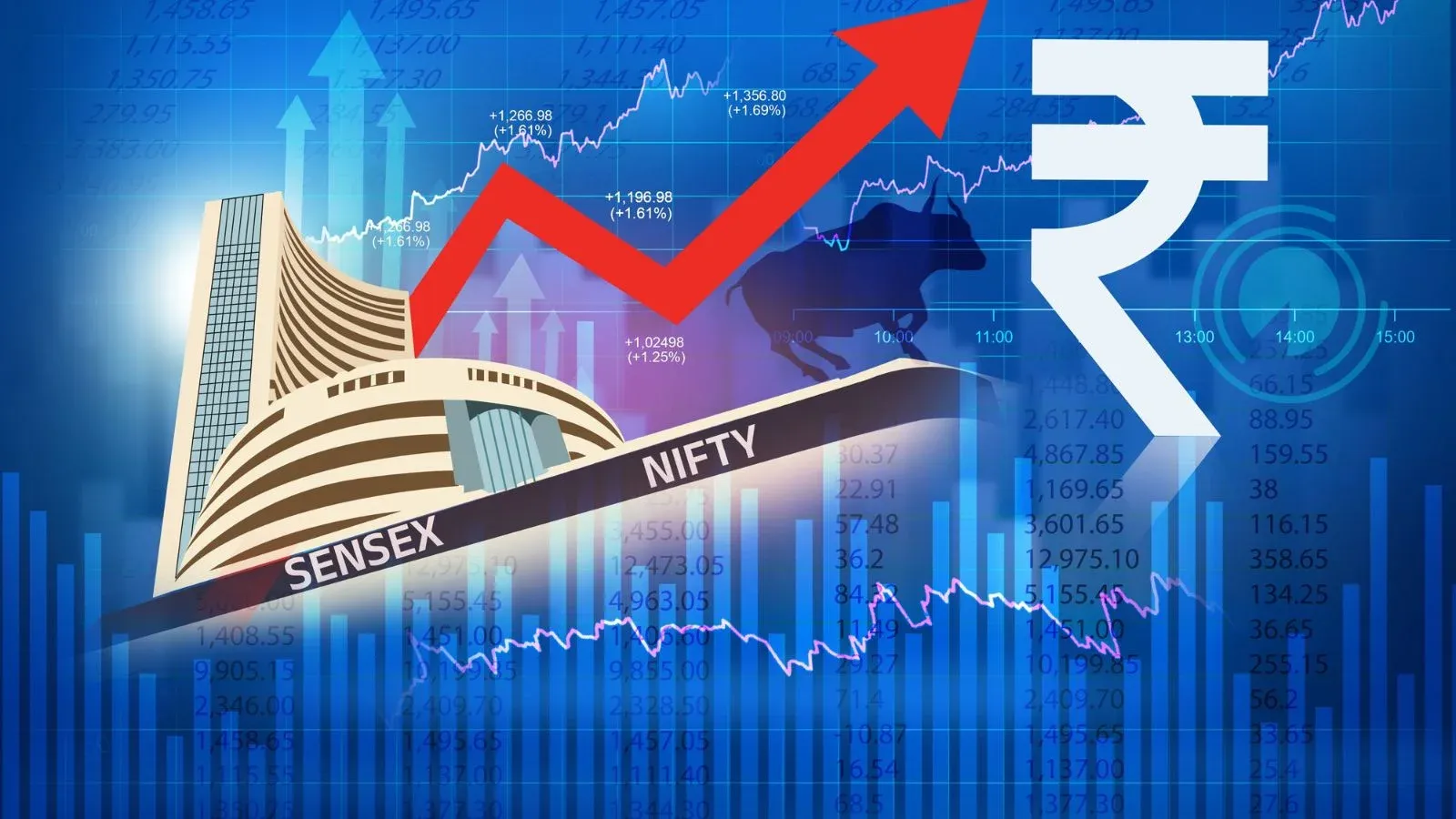
You cannot discuss the NSE without mentioning the Nifty 50. This is the flagship index, tracking the weighted performance of the 50 largest and most liquid companies listed on the exchange.
Think of the Nifty 50 as a "sampler platter" of the Indian economy. It covers around 13 sectors, ranging from Financial Services and IT to Energy and Consumer Goods. When analysts say "the market is up," they are usually referring to the Nifty 50's movement, which reflects the health of India's over ₹460 lakh crore equity ecosystem.
NSE Versus BSE: Which One Should You Choose?
New investors often ask if they should trade on the NSE or the BSE. In 2026, the choice usually depends on your specific goal:
| Feature | National Stock Exchange (NSE) | Bombay Stock Exchange (BSE) |
|---|---|---|
| Primary Strength | Liquidity and Derivatives (F&O) | Wide variety of listed companies |
| Benchmark Index | Nifty 50 | Sensex |
| Trading Volume | Controls ~80% of equity volumes | Lower, but growing in SME stocks |
| Best For | Active traders and F&O participants | Value investors seeking small-cap stocks |
The Pro Tip: For most blue-chip stocks (like Reliance or Infosys), you can buy on either. However, NSE’s higher liquidity usually means a tighter spread— the difference between the buy and sell price is smaller, saving you tiny amounts on every trade.
The Regulatory Guardrails of NSE
The NSE doesn't operate in a vacuum. It is strictly overseen by the Securities and Exchange Board of India (SEBI).
In January 2026, SEBI replaced the three-decade-old framework with the SEBI (Stock Brokers) Regulations, 2026. This updated system mandates: Absolute Asset Segregation: Brokers must strictly separate client funds and securities from their proprietary assets. Real-time Surveillance: Mandated investment in IT systems to identify trading irregularities instantly. 21-Day Resolution: A binding timeline for brokers to resolve any investor grievances.
These rules ensure that even if a broker faces financial trouble, your shares and cash remain protected. The NSE also has its own clearing corporation (NSE Clearing Limited) which guarantees that every trade made on the platform will be settled.
What Should Investors Watch in 2026?
The market is never static. If you are starting your journey now, keep an eye on the following three action triggers: F&O Volatility: The NSE is the world's largest derivatives exchange. High-frequency trading (HFT) and algorithmic trading drive much of the volume. Retail investors should be cautious of impact cost, which is the cost of executing a large order in a volatile market. SME Growth: Keep an eye on NSE EMERGE, the exchange's platform for small and medium enterprises. It is where the unicorns of tomorrow list before they hit the mainboard. RBI Policy: Since the NSE is a hub for banking stocks (which make up a massive chunk of the Nifty 50), any change in interest rates by the Reserve Bank of India (RBI) usually causes immediate, high-volume movement on the exchange.

Final Thought
The NSE has democratised wealth creation in India. Whether you are a long-term investor or a tactical trader, the exchange provides the infrastructure you need to participate in India’s growth story.
Start by observing the Nifty 50. Understand the companies within it. Once you are comfortable with how prices move based on demand and supply, you will be ready to make your first informed trade on India’s premier financial gateway.
FAQs On The NSE
What is the National Stock Exchange (NSE)?
The National Stock Exchange of India is India’s leading stock exchange that facilitates electronic trading in equities, derivatives, debt, and other financial instruments.
How many investors are registered with the NSE in 2026?
As of early 2026, NSE serves over 12.7 crore unique registered investors, reflecting the rapid deepening of India’s equity culture.
What is the difference between trading accounts and unique investors?
A single investor can open multiple trading accounts with different brokers, which is why total trading accounts (over 25 crore) exceed the number of unique investors.
Is NSE the largest derivatives exchange in the world?
Yes, NSE is the world’s largest derivatives exchange by number of contracts traded, driven largely by index options volumes.
What is the T+1 settlement cycle followed by NSE?
Under T+1, trades are settled within one business day — shares are credited and funds debited the next day after the trade.
Why is T+1 settlement important for investors?
It improves capital efficiency, reduces counterparty risk, and ensures faster access to funds and securities.
What is the Nifty 50 index?
The Nifty 50 tracks the performance of 50 large, liquid companies and acts as a benchmark for the Indian equity market.
What is the total size of the Indian equity market in 2026?
The Indian equity market is valued at roughly ₹460–468 lakh crore in early 2026.
How does the NSE differ from the BSE?
The NSE dominates in liquidity and derivatives trading. The BSE Limited has a broader base of listed companies, especially in small-cap and SME segments.
Who regulates NSE?
The exchange operates under the supervision of the Securities and Exchange Board of India, which ensures transparency, investor protection, and market integrity.
What changed with the SEBI (Stock Brokers) Regulations, 2026?
The new framework mandates real-time segregation of client funds, enhanced surveillance systems, and faster grievance resolution timelines, strengthening investor protection.
How does NSE ensure trade settlement safety?
Through its clearing arm (NSE Clearing Limited), the exchange guarantees settlement, ensuring that every executed trade is honoured, even if one party defaults.
About Author
Bidita Sen
Senior Editor
Bidita Sen has spent over a decade first understanding the complex language of finance, then translating it into something humans can actually read. After a career spent chasing market trends, she now prefers chasing ghosts. When she's not working, you’ll find her reading or re-watching the Paranormal Activity series. Because, real-life math is much scarier than a haunted house.
Read more from Bidita







Upstox is a leading Indian financial services company that offers online trading and investment services in stocks, commodities, currencies, mutual funds, and more. Founded in 2009 and headquartered in Mumbai, Upstox is backed by prominent investors including Ratan Tata, Tiger Global, and Kalaari Capital. It operates under RKSV Securities and is registered with SEBI, NSE, BSE, and other regulatory bodies, ensuring secure and compliant trading experiences.
Related articles
Trading Account
Insider Trading in India: Understanding the Legal Framework6 min read | Written by Upstox Desk


Trading Account
Gross Profit - Formula, Ratio, Meaning, Net Profit, Margin, & How to Calculate2 min read | Written by Pradnya Surana
Trading Account
What is Swing Trading for Beginners - Strategies, Meaning, Indicators, & How to Do5 min read | Written by Dev Sethia
Trading Account
Commodity Market Trading For Beginners & How to Trade in India - Strategy & Meaning5 min read | Written by Mariyam Sara