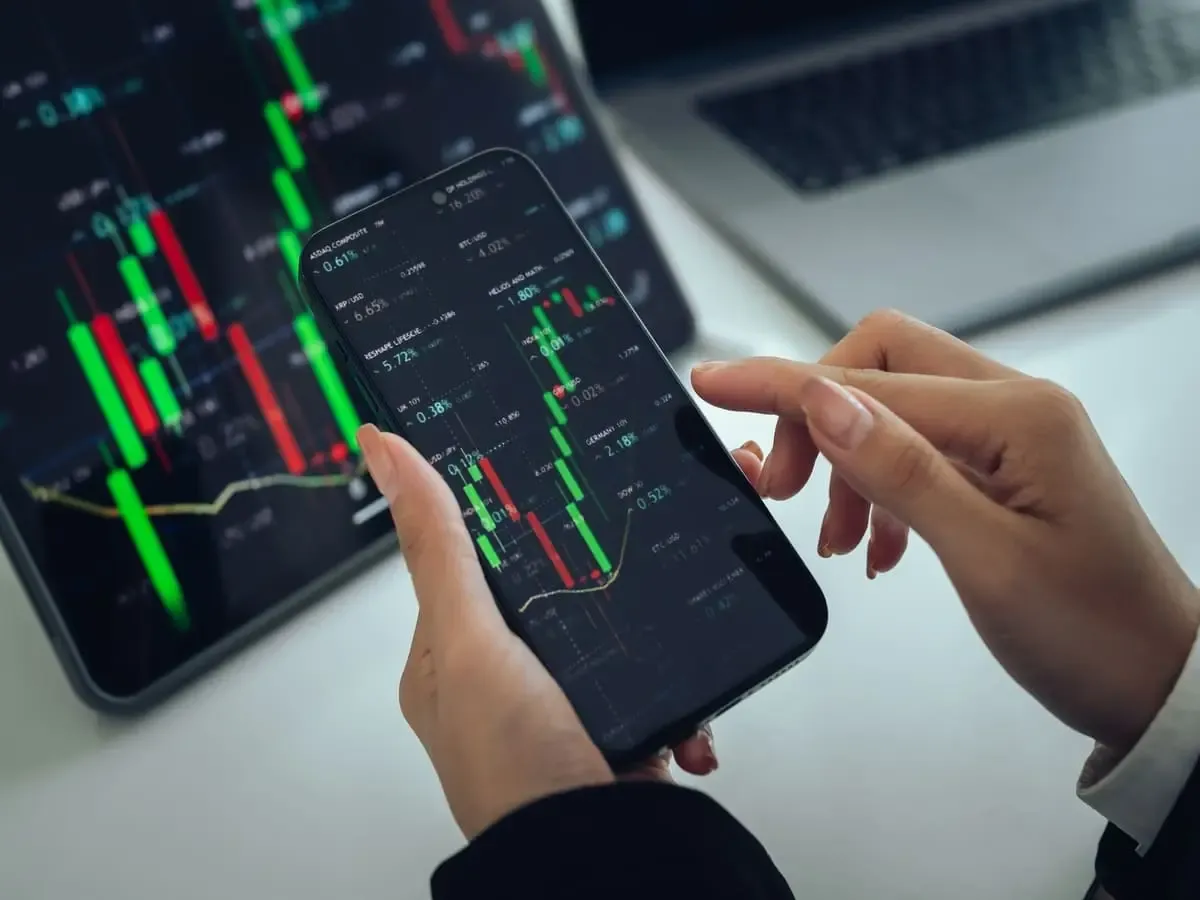
How to start an online trading portfolio

Written by Mariyam Sara
Published on October 27, 2017 | 5 min read


Key Takeaways
-
To start online trading, you need to open a Demat Account and a Trading Account with a SEBI-registered stockbroker like Upstox.
-
Online trading is the buying and selling of securities such as stocks, currencies, and commodities on online platforms.
-
Trading can be risky, hence traders must have an emergency fund, a good trading strategy and risk management to reduce the chances of significant losses.
-
Online trading carries significant risks, including market volatility, liquidity shortages, and emotional decision-making.
Online trading has eliminated the need to carry physical documents such as share certificates and bond agreements, allowing traders to trade anywhere and anytime via their mobile phones or laptops. Today, your stock, bonds and other securities are safely held in a dematerialised (electronic) form in your Demat Account and can be transferred using a Trading Account.
You can open a Demat Account and Trading Account online with a SEBI-registered stockbroker, like Upstox, and start trading online. Here’s everything you need to know about online trading.
What Is Online Trading?
Online trading refers to the buying and selling of financial securities, such as stocks, bonds, currencies, and commodities, via online trading platforms. Because the market moves rapidly, traders aim to profit from short-term price movements. Therefore, most choose online trading for its convenience, lower costs, and access to real-time market data.
How Does Online Trading Work?
Online trading eliminates the need for human brokers, allowing traders to directly access their investments and place orders. To start online trading, you need to:
-
Open a Demat and Trading Account with a SEBI-registered stock broker like Upstox.
-
Use trading platforms to track price movements of securities, analyse trends and buy/sell orders.
-
When you place an order, the broker passes the order to the stock exchange, such as BSE and NSE, to execute it by matching your order against another trader’s order within seconds.
-
If you placed a buy order, the purchased shares will be deposited into your Demat Account within a few hours. If you placed a sell order, the shares sold will be removed from your Demat account within hours.
How to Open a Trading and Demat Account
You can easily open a Trading account online by following the steps below.
Step 1. Choose a depository participant to open your demat account with. It could be a bank or a trusted brokerage firm like Upstox, authorised by SEBI.
Step 2. Submit a Demat account opening form to begin. Most stockbrokers, including Upstox, provide convenient 2-in-1 Demat and Trading accounts.
Step 3. Fill the Demat plus Trading account opening form and attach the scanned copies of your documents. The list of documents required is given below.
Step 4. After filling the form, you’re expected to sign an agreement with your broker, clearly stating your respective responsibilities as trader/investor and broker.
Step 5. Once all documentation and verifications are done, your Demat and Trading accounts will be activated.
Step 6. Add funds to your Trading Account and start trading online!
Documents Required to Open a Trading and Demat Account
To open a Demat and Trading account, the following documents are required:
- ID Proof
- Resident Proof
- PAN
- Passport-size photos
To open a Demat and Trading account for an NRI, the following documents are required:
- A copy of your passport.
- A copy of your valid visa.
- Overseas address proof and address proof of your workplace.
- A PINS permission letter from an authorised dealer.
- A copy of your PAN card.
- Passport-size photographs.
- Proof of bank accounts.
- PIS approval letter from the Bank
- Cancelled cheque copy of PINS bank account
For trading in Futures and Options, you need to submit proof of income along with the documents mentioned above.
Common Trading Strategies for Beginners
The following are a few trading strategies commonly used by beginners in online trading.
Trend Following
In a trend following strategy, traders identify the direction of the price movement and trade in that direction. To identify a trend, you must look for higher highs and higher lows in an uptrend and lower lows and lower highs in a downward trend.
Price Action Trading
In price action trading, traders rely on chart patterns, candlesticks and support/resistance levels to make trading decisions.
Breakout Trading
A stock is said to break out when its price breaks the support or resistance level with high trading volume. This indicates a potential new trend and forms new support and resistance levels.
Moving Average Crossover
In moving average crossover, two Exponential Moving Averages with a short and long duration are used. If the short-term moving average crosses above the long-term moving average, it triggers a ‘Buy’ signal and vice versa.
Swing Trading
In swing trading, traders hold positions for several days or weeks to wait for the price to reverse to book a profit.
Range Trading
In range trading, a range is identified within which traders buy or sell securities over a short period of time. The trader buys the stock when it's near the support level and sells it when it approaches the resistance level.
Key Mistakes to Avoid in Online Trading
Here are some common mistakes you must avoid in online trading.
Overtrading
The majority of traders often overtrade either to recover losses or make consistent profits. This could lead to excessive brokerage fees and impulse-driven trades.
Emotion-driven Decisions
Most traders base their decisions on assumptions and emotions, which can lead to significant losses. Avoid emotion-driven trading and research well before placing orders.
Ignoring Risk Management Strategies
Every trader must use stop-loss to cut their losses if the market moves against them.
Herd Mentality
Avoid following the herd and taking trading “tips” from WhatsApp and Telegram groups. Do your own research and use technical analysis to make data-backed trades.
What Are the Risks Involved in Online Trading?
Though online trading can offer short-term profits, it carries extreme risk.
Market Volatility
Equity markets can be highly volatile, experiencing sudden and dramatic price swings. This increases the trading risk, since it makes it difficult to forecast cash flow or secure profitable exits.
Liquidity Risk
Liquidity risk refers to the inability to buy or sell securities quickly at the right price. High market illiquidity results in wide bid-ask spreads.
Leverage Risk
Some traders borrow funds from the broker to take large positions to secure high gains. If the market moves against the trade, traders can face significant losses.
Operational Risk
Operational risk refers to technical failures, such as downtime or internet connectivity issues, that result in missed trading opportunities.
Online trading refers to buying and selling of financial securities such as stocks, bonds and commodities to earn short-term profit. To start trading online, you need to have a Demat and Trading Account.
Before trading in the real market, you should practise in a demo account to gain experience and minimise risk. While trading, remember to avoid emotion-driven decisions, refrain from overtrading, use risk management, and conduct your own research before placing a trade.
About Author
Mariyam Sara
Sub-Editor

holds an MBA in Finance and is a true Finance Fanatic. She writes extensively on all things finance whether it’s stock trading, personal finance, or insurance, chances are she’s covered it. When she’s not writing, she’s busy pursuing NISM certifications, experimenting with new baking recipes.
Read more from Mariyam




















Upstox is a leading Indian financial services company that offers online trading and investment services in stocks, commodities, currencies, mutual funds, and more. Founded in 2009 and headquartered in Mumbai, Upstox is backed by prominent investors including Ratan Tata, Tiger Global, and Kalaari Capital. It operates under RKSV Securities and is registered with SEBI, NSE, BSE, and other regulatory bodies, ensuring secure and compliant trading experiences.
Related articles

Online Trading
Forex Trading in India: Rules, Risks & How It Works10 min read | Written by Pradnya Surana