IPO basics: Everything you need to know about investing in an IPO

Written by Mariyam Sara
Published on September 15, 2017 | 7 min read

Key Takeaways
-
To apply for an IPO, you need to have a Demat Account and a Trading Account. You need to bid for a minimum lot size of shares during the open subscription period.
-
Before applying for the IPO, thoroughly read the Red Herring Prospectus (RHP) to evaluate the company's financials and the credibility of the management.
-
Use the Application Supported by Blocked Amount (ASBA) when applying for IPOs to ensure your money remains in your bank account (temporarily blocked) and is debited only if the shares are allocated to you.
-
Don’t fall for the IPO hype or over-rely on the Grey Market Premium to evaluate an IPO. Do your research and analyse all risk factors before investing.
According to the Economic Survey 2025-26, IPO volumes in FY26 increased by 20%, with capital raised rising 10% compared to the same period in FY25. With a high volume of companies going public, investors must thoroughly vet the companies to ensure profitable decisions.
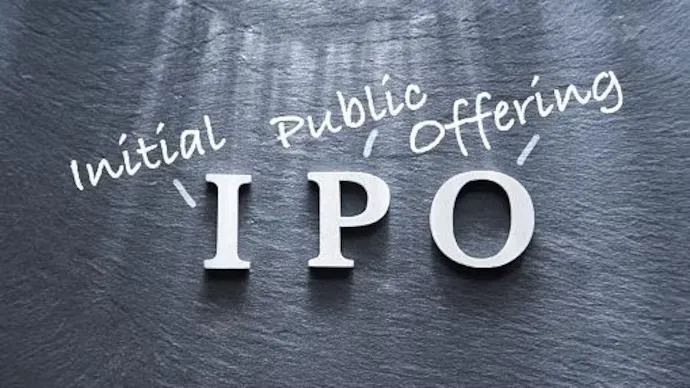
An Initial Public Offer (IPO) is the process through which a private company sells their shares to the public for the first time to raise capital. The capital raised is used to fund the company’s growth and expansion, research and development (R&D), or to pay off existing debt.
In FY26, IPO issuance increased by 20% compared to FY25, while the amount raised increased by 10% compared to the same time frame in FY25. But not every IPO is worth applying for. Let’s check out a few tips and strategies to evaluate IPOs so you can make the right investment.
How to identify good IPOs for investment
Not every IPO is worth applying for.Some companies go public to raise funds to cover their debt and may not prove to be a good investment. To avoid bad IPO investments, keep the following things in mind to identify investment-worthy IPOs.
Study the Prospectus
When a company plans to go public, they file a Draft Red Herring Prospectus (DRHP), a preliminary registration document, with SEBI before the IPO. Once approved, the RHP is released to the public. It includes the company’s financial details, business model, promoters and the risks they face.
Study the RHP carefully to gauge the company’s financial position, growth potential and how it intends to use the capital raised.
Evaluate the financial performance of the company
Ignore the high valuation hype and evaluate the company's financials disclosed in the DRHP. A company with consistent revenue growth, expanding profit margins and low debt levels could be a good investment.
Analyse valuation
Analyse the company’s valuation by comparing its price-to-earnings ratio (P/E) or price-to-book (P/B) with its established peers to see if the company is overvalued.
Evaluate the quality of management
Before applying for an IPO, evaluating the management quality of the company is necessary to determine if the leadership is competent enough to drive long-term value, ensure effective risk management and increase investor confidence in the company’s future.
Use ASBA
To apply for an IPO, use Application Supported by Blocked Amount (ASBA). In this method, your funds are temporarily locked in your bank account and debited only if the shares are allocated to you.
How IPO investing works for retail investors
Retail investors can apply for shares in an IPO within the subscription period via a trading account. In an IPO, you need to bid for the company shares just like in an auction. But you cannot bid for a single share. You need to bid for a minimum lot size and price.
Here’s how IPO investing works for retail investors.
Research
Read the company’s RHP approved by SEBI and analyse the company’s financials, growth potential, and risk factors.
Bidding
Investors can apply for shares during the subscription period, which usually lasts for 3-5 working days. The issue’s opening and closing dates are mentioned in the RHP. You cannot bid for individual shares; you have to bid for a minimum lot size.
Allotment
Most of the time, IPOs are oversubscribed. To ensure fair allocation of shares, a lottery system is used to determine which investors get the shares.
Listing
If the shares are allocated to you, the shares will be credited to your Demat account. If no shares are allocated to you, then the blocked funds in your bank account will be unblocked.
How an IPO share price is determined
The shares are priced using pricing methods such as Fixed price and Book Building.
Fixed Price
In a fixed price method, the company going public hires investment banks and their underwriter to determine the share price in an IPO. Investors have to bid for the shares at the fixed price.
In this method, 50% of the total shares are reserved for retail investors.
Book Building Process
In a book building process, investors can bid for shares within a specific price range determined by the underwriters. This pricing method is the most common and widely used method for determining the price of the shares.
In this method, 35% of the total shares are reserved for retail investors.
IPO vs secondary market: Where should you invest?
An IPO offers access to new and potential high-growth companies, while the secondary market provides liquidity and price transparency. Let’s explore whether you should apply for the IPO or wait for the shares to hit the secondary market.
IPO investments are suitable for investors,
- Seeking long-term investments that could grow and offer capital appreciation.
- With a high-risk appetite and tolerance for volatility and potential listing day crashes.
- Looking for innovative and emerging companies that are not yet listed.
Secondary market investments are suitable for investors,
- Preferring established companies with solid financials
- Short-term investment horizon, seeking entry/exit positions based on daily market movements.
- Seeking dividend income, commonly offered by listed firms.
While many IPOs are hitting the primary markets, it is crucial not to fall for the hype and do your due diligence before applying for one. Research about the company’s financials, evaluate its management and gauge its future growth potential to make smart investment decisions.
FAQs
What is an IPO, and how can investors participate?
An Initial Public Offer (IPO) is when a private company sells its shares to the public for the first time to raise funds. Investors can participate by applying through a demat account using ASBA via their bank or broker platform.
Is investing in IPOs profitable for retail investors?
Whether IPO investments are profitable or not depends on the company. They can be profitable if the company is financially strong with low debt levels. However, returns on IPO investments are not guaranteed.
How can I increase my chances of being allotted an IPO?
You can improve allotment chances by applying at the cut-off price, using multiple demat accounts belonging to family members and avoiding highly oversubscribed issues.
What factors should I check before investing in an IPO?
Before investing in an IPO, you must check the company’s financial performance, valuation in comparison to competitors, promoters’ holding and how the company plans to use the funds raised.
What is the role of the SEBI (Securities and Exchange Board of India) in IPOs?
SEBI strictly regulates IPOs in India to ensure transparency, protect investor interests, and enforce disclosure requirements for companies going public.
Are IPOs risky investments?
Yes, IPOs are considered risky due to high volatility, potential overvaluation, and limited historical data. Therefore, investors are recommended to research thoroughly before applying for an IPO.
What is the Grey Market Premium (GMP) in IPOs?
Grey Market Premium (GMP) is an unofficial indicator of the expected listing price. While it reflects market sentiment, it is highly speculative and is not a reliable indicator of the IPO’s success.
Can beginners invest in IPOs?
Yes, beginners can invest in IPOs. They must focus on fundamentally strong companies and start with small amounts to minimise the risk of loss.
What happens if I don’t get an IPO allotment?
If shares are not allotted to you, the blocked funds in your bank account will be unblocked.
About Author
Mariyam Sara
Sub-Editor

holds an MBA in Finance and is a true Finance Fanatic. She writes extensively on all things finance whether it’s stock trading, personal finance, or insurance, chances are she’s covered it. When she’s not writing, she’s busy pursuing NISM certifications, experimenting with new baking recipes.
Read more from Mariyam




















Upstox is a leading Indian financial services company that offers online trading and investment services in stocks, commodities, currencies, mutual funds, and more. Founded in 2009 and headquartered in Mumbai, Upstox is backed by prominent investors including Ratan Tata, Tiger Global, and Kalaari Capital. It operates under RKSV Securities and is registered with SEBI, NSE, BSE, and other regulatory bodies, ensuring secure and compliant trading experiences.
Related articles


IPO
The Ultimate Guide to Initial Public Offerings (IPO): Everything You Need to Know Before Investing11 min read | Written by Mariyam Sara