
Upstox Originals
Why an interest rate hike rarely stops Indians from buying vehicles

4 min read | Updated on October 08, 2026, 10:32 IST


SUMMARY
The RBI’s first rate hike in over three years pulled auto stocks lower today. Yet nine years of data show vehicle sales barely flinch at rate moves. Sticker prices, aspirations and steady replacement demand are more important factors that affect longer-term vehicle demand. For investors, while rates may influence sentiment in the short term, a broader perspective is essential to understanding the sector’s long-term prospects.
Stock list

On October 7, 2026, the RBI raised the repo rate by 25 bps to 5.5%, the first hike since February 2023. | Image: Shutterstock
On October 7, 2026, the RBI raised the repo rate by 25 bps to 5.5%, the first hike since February 2023. It took rate cuts off the table for now and shifted its stance from neutral to calibrated tightening. As expected, auto stocks reacted on cue. The Nifty Auto index fell 1.6% on Wednesday, and almost all of its 15 stocks closed in the red.
On the face of it, the rationale looks watertight. Roughly four out of five cars in India are bought with a loan. Costlier loans should mean fewer buyers.
Sales grew fastest in the year rates rose the most
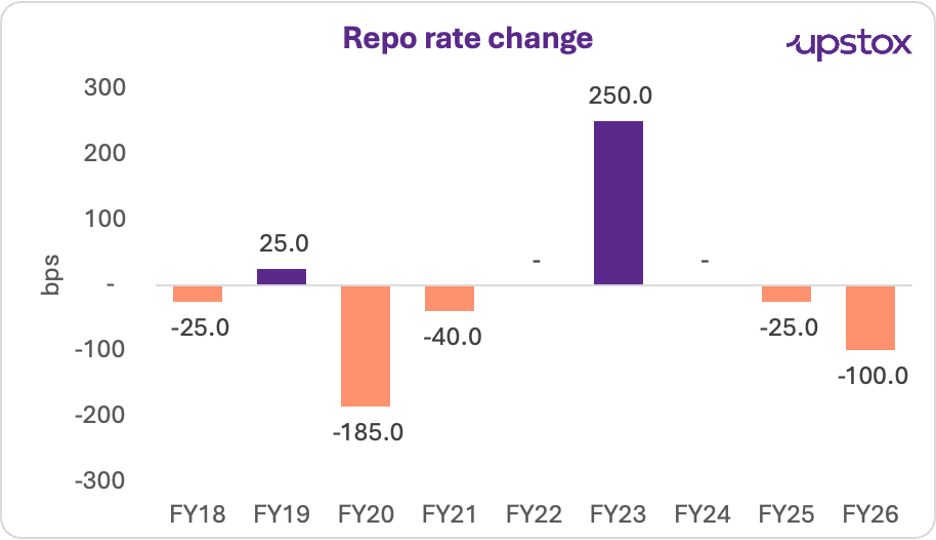
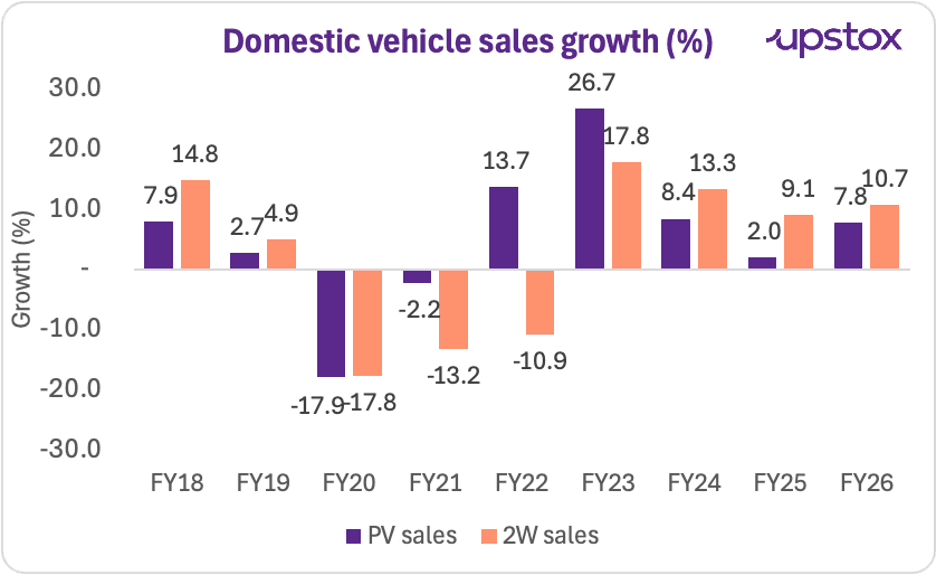
We matched each financial year’s repo rate change with growth in domestic sales of passenger vehicles (cars and utility vehicles) and two-wheelers.
Repo rate change vs domestic vehicle sales growth, FY18–FY26
Source: RBI policy announcements
Source: SIAM; PV - Passenger Vehicles; 2W - Two Wheelers
A look at both the charts above suggests that changes in interest rates have limited impact on auto sales.
In FY20, RBI cut rates by 185 bps, and sales of both cars and two-wheelers fell almost 18%. Just for the record – the COVID-19 lockdown came only in the last week of the fiscal year. Vehicle sales that year were actually impacted due to sharp price rises from stricter safety and emission rules as well as an overall weakness in financing and liquidity.
FY23 is another stark example. The RBI raised rates six times (250 bps in all), yet sales of cars and two-wheelers jumped. Some of the rise can be attributed to the rebound after two pandemic-hit years. Even so, the sharpest tightening of these nine years did not get in the way.
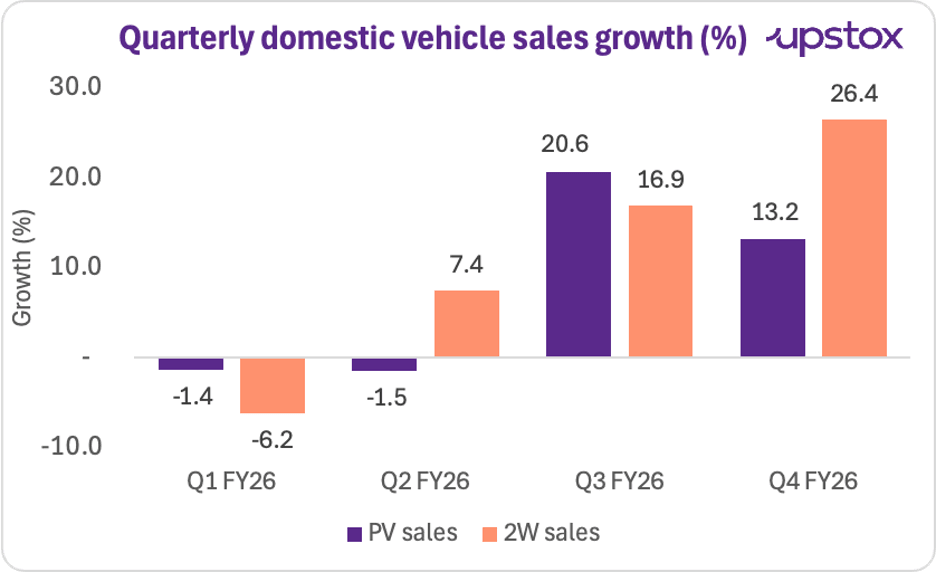
FY26 offered an unusually clean test. Between February and June 2025, the RBI cut the repo rate by 100 bps. Yet PV sales fell 1.4% in April–June and 1.5% in July–September. Then, in September 2025, GST on small cars and on motorcycles up to 350cc was reduced from 28% to 18%. PV sales rose 20.6% in the October–December quarter.
The turnaround was supported by the festive season, which fell in that quarter, the income tax relief from Budget 2025, and the rate cuts too. Still, six months of cheaper loans had left car sales flat to negative. They turned only when sticker or retail selling prices fell.
Source: SIAM quarterly releases; RBI policy announcements
A 25 bps hike adds about ₹105 to the average car EMI
Run the numbers and the reason is plain. The average auto loan in India is now ₹8.6 lakh, according to credit bureau CRIF High Mark. Take a five-year loan at 9%. If the lender passes on today’s full hike, the EMI moves from ₹17,852 to ₹17,957.
That is ₹105 a month.
Vehicles remain an aspirational purchase for most Indian families. It is an important life goal for families, some of whom plan and save well in advance to buy their first vehicle. As such, it seems that a marginal rise in their EMI is not a major deterrent to vehicle purchase.
Besides that, another potential reason that explains this is a steady replacement cycle (selling your older vehicle for a new one). Assuming an average replacement cycle of 12-15 years, there would be steady replacement demand that comes through every year, providing support to fresh demand for vehicles.
In summary
The above arguments don't make interest rates irrelevant. They matter at the margin, and they matter a great deal to the banks and NBFCs that finance these vehicles. For gauging vehicle demand, though, two other things deserve closer attention. The repo rate grabs the headlines. The sticker price decides the sale.
About The Author
Next Story

