
Upstox Originals
Your AI companion will listen, but is it reliable?

5 min read | Updated on October 06, 2026, 20:48 IST


SUMMARY
Driven by loneliness, mental health issues, the high cost of therapy and a dearth of licensed therapists in India, many people have started turning to AI companions. While bots can relieve stress and provide anonymity, they can sometimes deliver dangerous advice, validate self-harm, or delay essential professional care. Experts caution that AI should support, not replace, human therapists.
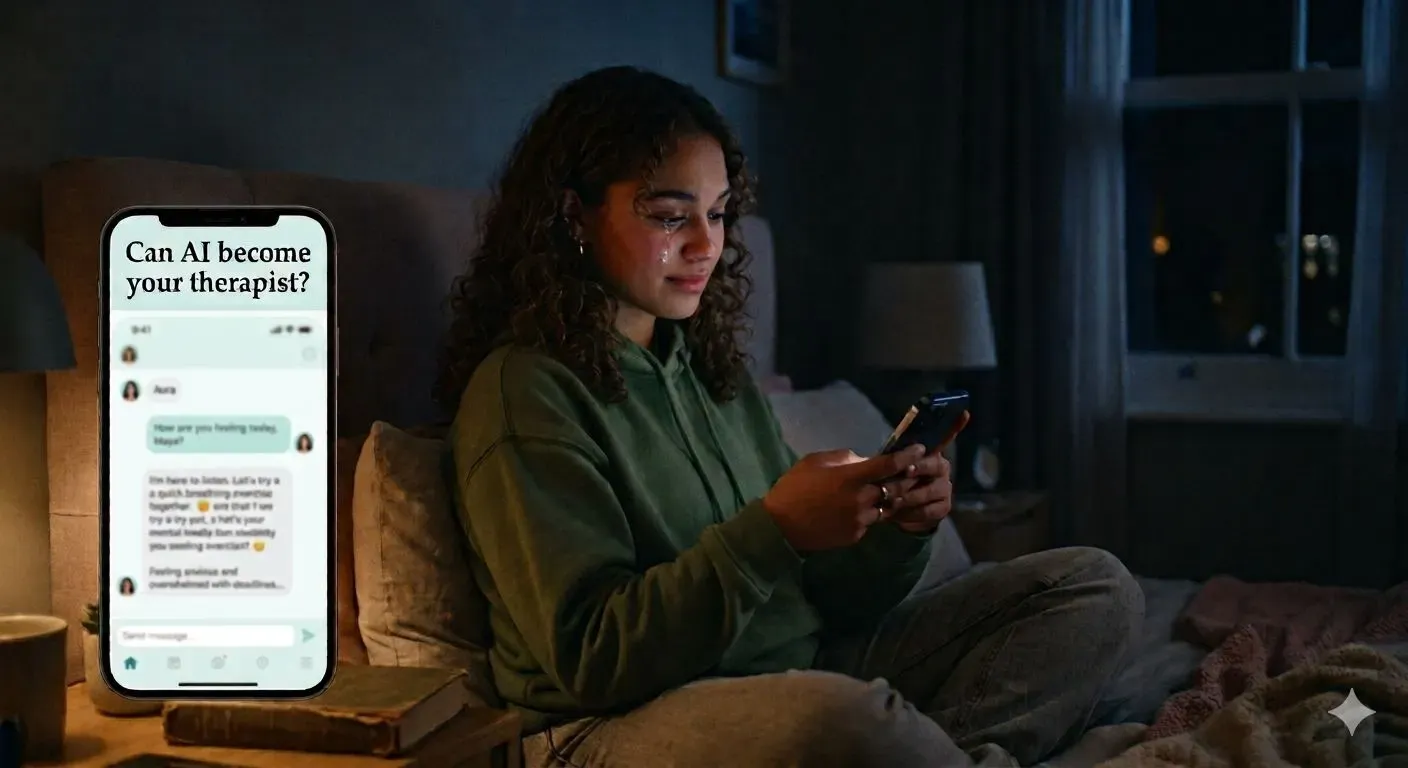
A global study by Ipsos highlighted that 43% of urban Indians reported feeling lonely and friendless | AI-generated image
Between juggling screens, family and work there is little or no time to make real friends today. Loneliness is a silent burden most of us have to carry quite regularly. With families busy and staying far away, and friends scattered in different parts of the country or even time zones, how does one fulfil social needs? More importantly, more people seek mental help today than before but high costs, the stigma associated with therapy and also fewer therapists than required, have made people turn to the digital world. AI companions have come to the rescue, or so it seems.
The rise of AI companions
People around the world are sharing their deepest thoughts and concerns with AI chatbots. Apps like Character.ai and Replika have given lonely and grieving humans a shoulder to cry on, enabling them to seek advice during difficult moments. With private therapy being prohibitively expensive and hard to access, these chatbots are becoming a more viable alternative for many. But at what cost?
There have been cases where AI advice was harmful. Character.ai is currently the subject of legal action from a mother whose 14-year-old son took his own life after reportedly becoming obsessed with one of its AI characters. According to transcripts of their chats, he discussed ending his life with the chatbot. In a final conversation he told the chatbot he was "coming home", and it allegedly encouraged him to do so "as soon as possible". This is a tragic example of an AI acting like a cheerleader rather than a coach. It is this sycophantic nature of AI companions that is proving to be worrisome.
AI companions vs licensed therapists
Experts say that AI has its limitations. If one is dealing with severe trauma, an AI bot is not the best option. These AI tools and companions can work well for everyday anxiety, stress but any serious concerns must be dealt with by humans. At best, they are companions, not replacements for professional therapists.
Moreover, these tools have to be designed in a manner that they can be culturally sensitive and understand social nuances. Several startups are trying to do just that. Platforms like InnerHour are building AI that gets the Indian cultural context. Similarly, Wysa is another platform that has Indian roots, incorporates meditation techniques and claims to understand the Indian experience and limitations like the pressures Indians face, the triggers of stress etc.
Over-reliance on bots
Psychologists in India warn against over-reliance on bots and suggest treating it as a first step, if at all, to real therapy. ‘AI-primed’ clients, as they are called, are turning up at the doorsteps of therapists with misinformation fed to them by AI chatbots. They note that clients often postpone professional therapy because chatbots make them feel understood and are easier to access. However, they warn that while algorithms can mimic warmth, they lack the capacity to process complex human emotions.
An urgent need for licensed therapists in India
That may be so, but Indians have such few options where mental health is concerned. According to a study India does not have enough registered psychologists for mental health care. The Indian Journal of Psychiatry reports a mere 0.75 psychiatrists for every 1,00,000 people. WHO recommends that there should be 3 psychiatrists per 1,00,000 people. These dismal figures explain why troubled young minds resort to the next best option, AI companions. There is an urgent need for trained, licensed professionals who are active to deliver evidence-based care.
AI companion app users also admit that they prefer digital therapy assistants for reasons of anonymity. Although the conversation around mental health is more open in India now than before, clients are still afraid of being judged. According to a 2026 Mpower Survey: "Unpack Your Emotional Baggage", only 9.2% of respondents aged 18–25 actively sought professional help, showing that while peer dialogue is opening up, institutional stigma and access barriers remain.
The Gen Z loneliness crisis
The Gen Z, which is also the first ‘digital native generation’, has been battling a loneliness crisis since the COVID lockdowns. Many are still working from home in isolation. Studies show that they talk to ChatGPT several times a day, asking questions they would ask a friend because it is easier to speak to AI than to a real person. A global study by Ipsos highlighted that 43% of urban Indians reported feeling lonely and friendless at most times, with young adults and Gen Z driving the highest rates post-pandemic. Sociologists describe it as ‘crowded isolation’, referring to the feeling of being lonely despite being hyper-connected.
What does the future look like?
The way forward seems to be about going hybrid in the realm of therapy. Some clinics like Menthra Care have allowed AI and human therapists to work together. They use AI for initial screenings and daily check-ins while the human therapist deals with the deeper work. This hybrid approach could reduce the therapists’ workload. But it will take a while before these processes get standardised across health centres. For now, AI therapy support must have clinical backing and transparent privacy policies. According to experts, they must not be used for serious mental health issues. Implementing strict clinical guardrails on AI platforms is the need of the hour
About The Author
Next Story

