
Upstox Originals
New gold ETF folios drop from 12 lakh in January to 4,000 in September; here's why

5 min read | Updated on September 29, 2026, 15:32 IST


SUMMARY
In January 2026, Indians opened 12 lakh new gold ETF folios in a single month; in August, barely 4,000 were added. Retail gold purchases haven't stopped, though, and August purchases through UPI apps more than doubled from a year earlier. The catch is where that money now sits and if it is in a regulated environment.
August inflows into gold ETFs rose 67% from July to ₹2,597 crore| Image: Shutterstock
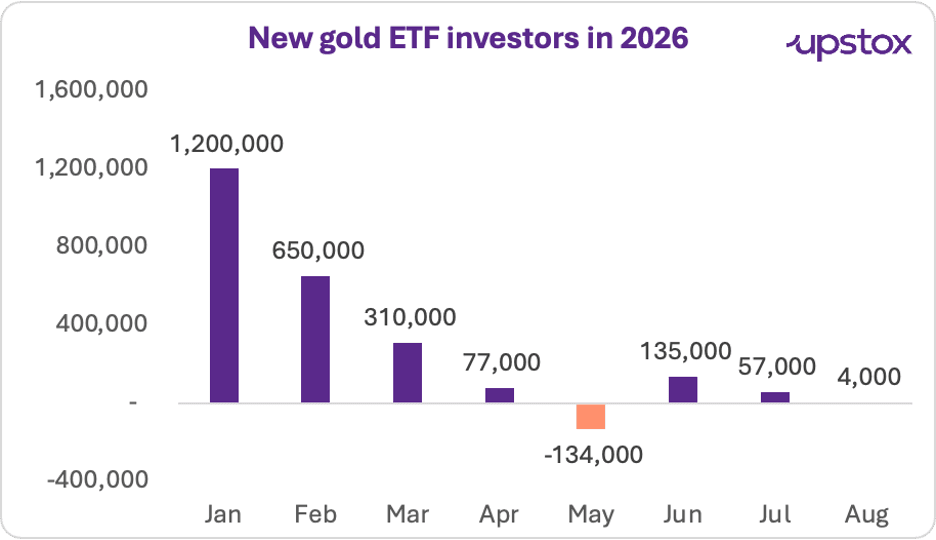
In January 2026, gold took over a lot of Indian dinner tables. Prices were setting records almost every day, and people were discussing the best way to own it. After a nearly 60% rally in 2025, was it still a good time to buy gold in January? That month, investors opened 12 lakh new gold ETF folios. It made headlines.
Eight months later, slowly but steadily, that sentiment seems to have turned. In August, net new gold ETF folios opened were merely ~4,000. The irony is that the macro environment remains unstable, oil prices remain elevated, and equity and bond markets are still volatile. But has the sentiment towards gold soured, or is this just a temporary pause?
Dip in gold ETF folios
Source: World Gold Council, AMFI
The slide did not happen overnight. New folios have been falling since the year started. May was unusual. India's import duty on gold increased from 6% to 15% effective May 13, 2026, pushing domestic prices higher. The resulting price spike may have encouraged some investors to book profits, although the precise drivers of the outflows are difficult to isolate.
Please note, a folio is an account, not a person. One investor can hold several folios. Regardless of the exact headcount, the trend is difficult to ignore.
Has the money stopped flowing in?
No. August inflows into gold ETFs rose 67% from July to ₹2,597 crore. But that money is coming mostly from people who were already in. It is also important to note that gold ETFs are predominantly held by institutions. As of March 2026 (latest available data), companies held 58% of gold ETF assets, wealthy individuals 31%, and retail investors just 11%.
So, what explains this slowdown?
Gold ETFs saw an inflow of ~₹24,040 crore in January, almost comparable to the ₹24,029 crore that went into equity mutual funds. Nearly 80% of the first quarter's gold ETF inflows arrived in that one month.
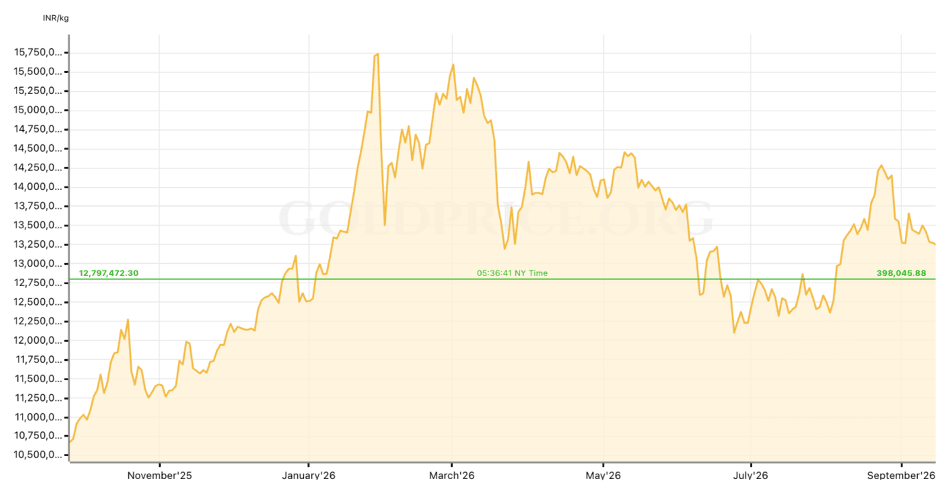
The timing was at the cycle peak (of course, this is easy to say with the benefit of hindsight). Domestic gold hit new highs and has since corrected meaningfully (over 10%).
Many investors who entered near January's peak would have seen little to no return, and some may still be sitting on losses. An asset that many investors expected to keep outperforming has frustrated investors, with gold prices broadly remaining flat to negative.
The loss would be small, but if it is one of the first investment losses or a loss that occurred in a supposed “sure and safe bet,” it can discourage future investments.
Gold price (per kg) in India
Source: Goldprice.org
Look at digital gold. Purchases of digital gold through UPI averaged about ₹2,500 crore a month from June to August, or roughly 1.6 tonnes of gold a month. August purchases were up 110% from a year earlier. The World Gold Council also notes that some investors appear to be shifting from physical gold to digital forms.
The reason is fairly simple: a gold ETF needs a demat account and a trading app.
Digital gold needs a UPI app you already have, and some platforms let you start with ₹10. The appeal goes beyond convenience. Most investors buying ₹100 or ₹500 worth of gold every month are not comparing custody structures or regulatory frameworks. They are comparing user experiences. For a new saver, convenience often outweighs regulation.
In summary
India's appetite for gold did not collapse after January. It merely changed form. The first-time buyer either paused after a painful start or perhaps drifted to the product with the least friction.
It's fair to ask whether the bigger backdrop explains all this. The rupee weakened, and the Prime Minister urged Indians to avoid non-essential gold purchases for a year. All of this almost certainly weighed on gold buying. But the timing doesn't match the first-timer story.
New gold ETF folios had already halved in February, then halved again in March, well before the appeal or the duty hike. And if people had gone off gold itself, digital gold purchases would not have been up 110% from a year earlier in August.
The real turning point came earlier, in the last week of January, when many new investors discovered that gold can fall too.
About The Author
Next Story

