Market News
Oil-linked stocks split: HPCL, Indian Oil, Asian Paints, IndiGo decline; ONGC, OIL gain as crude jumps

4 min read | Updated on July 23, 2026, 12:48 IST


SUMMARY
Oil prices surged more than 1.5% on Thursday to their highest level in over six weeks, as escalating geopolitical tensions in the Middle East fuelled concerns over potential supply disruptions.
Stock list
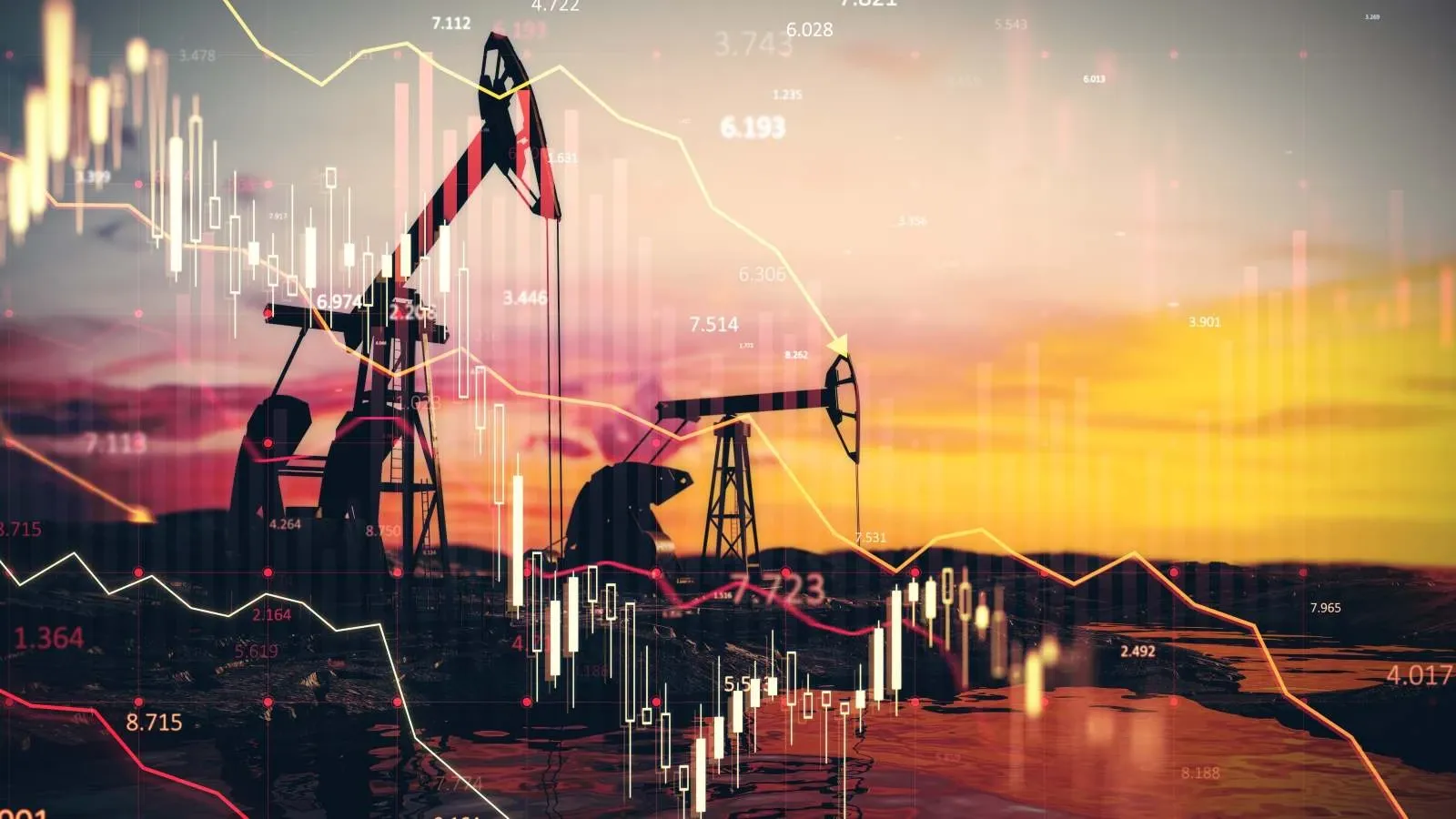
Brent crude rose $1.93 to $96 per barrel, its highest level since June 8. Image: Shutterstock
Shares of oil-linked stocks were in the spotlight on Thursday, July 23. Oil marketing companies (OMCs), tyres, aviation, and paints were mostly trading lower while upstream companies such as ONGC and Oil India (OIL) traded higher.
Oil prices surged more than 1.5% on Thursday to their highest level in over six weeks, as escalating geopolitical tensions in the Middle East fuelled concerns over potential supply disruptions.
Brent crude rose $1.93 to $96 per barrel, its highest level since June 8, after the United States launched a fresh round of strikes on Iran while Yemen's Houthi rebels targeted oil tankers in the Red Sea.
The US military said it carried out a 12th consecutive night of attacks on Iran, hours after US President Donald Trump vowed to destroy an Iranian bridge or power plant each time Iran attacks a ship in the Strait of Hormuz, further escalating tensions in the region.
Upstream companies
These companies explore for and produce crude oil and natural gas. Their earnings generally improve when crude oil prices rise because they can sell the oil they produce at higher prices.
Examples in India are ONGC and Oil India (OIL).
If Brent crude rises from $80 to $95 per barrel, upstream companies typically earn more revenue per barrel of oil they produce, boosting profitability (assuming production costs remain relatively stable).
Downstream companies
These companies refine crude oil into fuels such as petrol, diesel, LPG and aviation turbine fuel (ATF), and market these products to consumers.
Their main raw material is crude oil. When crude prices rise sharply, input costs increase. If they are unable to fully pass on the higher costs to consumers—due to competition or government intervention—their refining and marketing margins can come under pressure.
Why paints and airlines also fall when crude rises
Although they are not downstream oil companies, they are oil-sensitive sectors because crude is a key input.
-
Asian Paints: Crude derivatives are used to make many paint raw materials. Higher crude prices increase input costs.
-
IndiGo: Aviation turbine fuel (ATF), which is refined from crude oil, is one of the airline's biggest operating expenses. Rising crude usually leads to higher ATF prices, squeezing margins.
Today's market update
When last seen, the NIFTY OIL & GAS index traded 0.27% lower at 11,212.95 levels.
Among individual names, HPCL shares traded 3% lower at ₹383.55 apiece on the NSE, while Indian Oil Corporation (IOC) stock was down 0.18% at ₹141.78. On the other hand, BPCL stock was trading 0.53% higher at ₹315.65 on the NSE.
Asian Paints shares traded 0.62% lower at ₹2,676.10 apiece on the NSE. Interglobe Aviation (IndiGo) was trading flat at ₹5,112 on the NSE.
Meanwhile, ONGC shares traded 0.29% higher at ₹252.62 apiece on the NSE, while Oil India traded 1.7% higher at ₹458.80.
BPCL, HPCL Q1 FY27 earnings
State-owned fuel retailers Hindustan Petroleum Corporation Ltd (HPCL) and Bharat Petroleum Corporation Ltd (BPCL) swung to losses in the June quarter after selling petrol, diesel and LPG below cost despite a sharp rise in crude oil prices triggered by the West Asia crisis, with losses on fuel sales outweighing windfall refining margins.
On a standalone basis, it posted a net loss of ₹11,526 crore against a profit of $4,371 crore in the year-ago period. Revenue from operations rose 21% to $1.45 lakh crore.
Revenue from operations increased to ₹1.59 lakh crore from ₹1.35 lakh crore a year ago.
The losses followed a more than 50% surge in crude oil prices after the conflict in West Asia escalated following US and Israeli strikes on Iran and Tehran's retaliation. Despite the increase in input costs, state-run retailers HPCL, BPCL and Indian Oil Corporation (IOC) held petrol and diesel prices unchanged for nearly two-and-a-half months.
Subsequent increases of over ₹7.50 a litre for petrol and diesel and ₹89 per 14.2-kg LPG cylinder in the second half of May were insufficient to fully offset the higher costs.
Related News
About The Author
Next Story