Market News
NIFTY50, SENSEX end lower on June 5 as investors evaluate RBI’s inflation and growth forecasts

3 min read | Updated on June 05, 2026, 16:01 IST


SUMMARY
The NIFTY50 and SENSEX ended with losses in the red territory after a highly volatile trading session on Friday, June 5, as investors focused on RBI forecasts amid FII outflows.
Stock list
NIFTY50 index closed 0.21% lower, while SENSEX lost 0.16% or 116 points as of the stock market close on Friday, June 5. | Photo: Shutterstock
At 3:30 pm, the benchmark NIFTY50 index closed 0.21% or 49 points lower at 23,366.70 points after the trading session on Friday, compared to 23,416.55 points at the previous market close, according to NSE data.
The BSE SENSEX index closed 0.16% or 116 points lower at 74,243.34 points after the trading session on June 5, compared to 74,360 points at the previous market close, as per the exchange data.
Soon after Governor Sanjay Malhotra’s official address, sharing growth estimates, the benchmark indices dropped into the negative territory. However, the stock market remained highly volatile throughout the day, eventually ending lower.
The stock indices were witnessing constant pressure from the foreign investors' outflows, as the geopolitical uncertainty prompts traders to pull investments out of emerging market bets like India.
With sustained pressure from the foreign outflows, even the Indian rupee strengthening to $94.7 against the US dollar failed to uplift the market sentiment of investors. However, the domestic buyers remained the key support for the indices, limiting major losses.
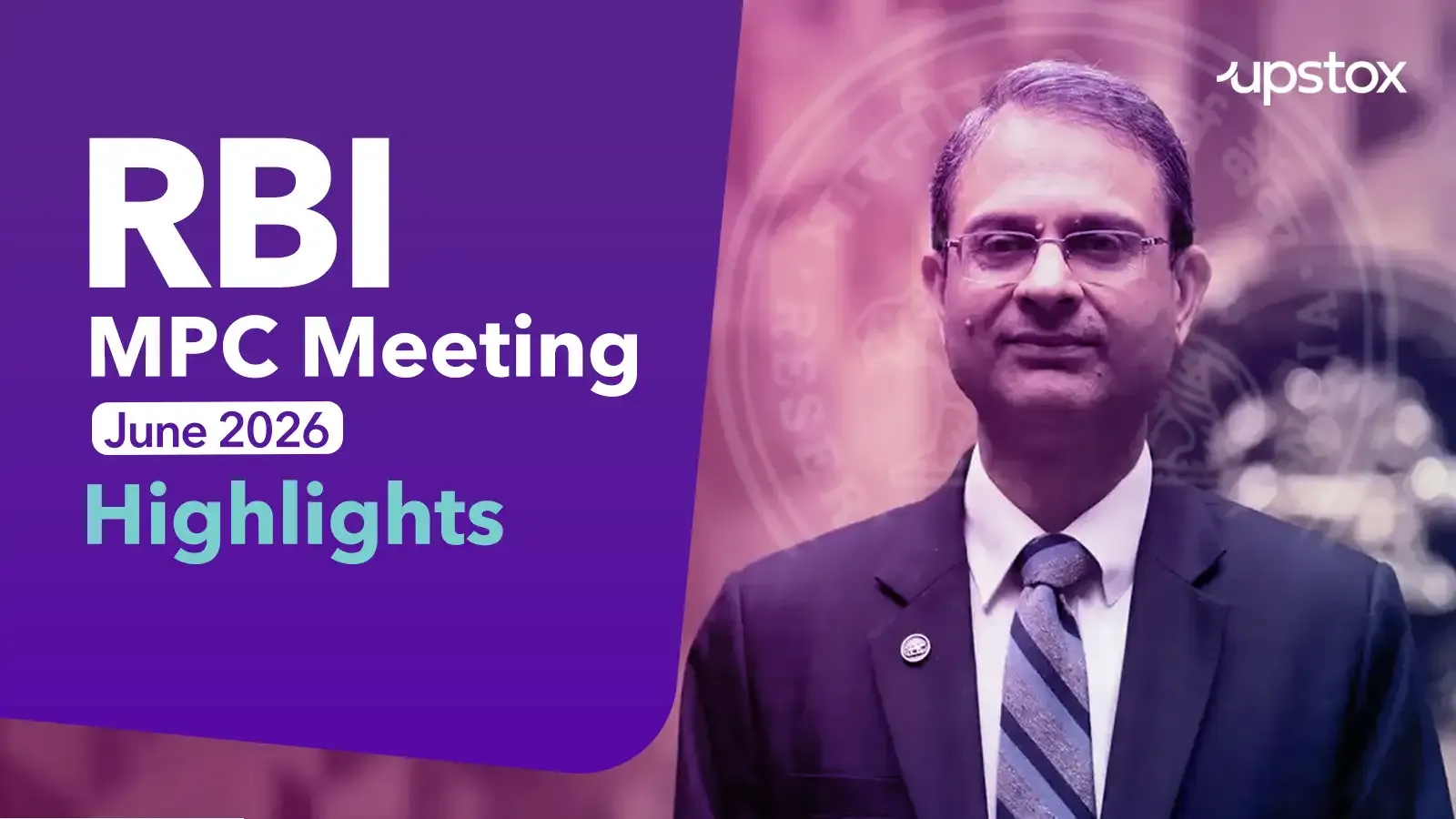
RBI, in its monetary policy committee (MPC) meeting outcome, decided to keep the interest rate of the Indian economy unchanged at 5.25%. The central bank also charted an inflation rate trajectory as per the early estimates.
RBI expects CPI inflation to reach 5.9% by the third quarter of FY2027 due to the underlying inflation pressures in the Indian economy. This estimate edged close to the RBI’s tolerance band of 2% on either side with a 4% target range.
On the growth front, RBI predicts the real GDP growth for the fiscal year ending 2026-27 is estimated to grow at the rate of 6.6% due to the rise in energy prices and other input costs amid the supply chain disruption and West Asia crisis.
Top gainers & losers today
Stocks like Adani Enterprises, Hindustan Unilever, Adani Ports, Bajaj Finance, Axis Bank, and Dr Reddy's were among the top gainers on the NIFTY50 index as of the stock market close on Friday.
Adani Enterprises gained 2.3%, Hindustan Unilever gained 2%, Adani Ports gained 1.9%, Bajaj Finance gained 1.7%, Axis Bank gained 1.6%, and Dr Reddy's gained 1.2% as of the stock market close on June 5.
Other stocks like Wipro, Hindalco, Trent, TCS, Coal India, Tata Steel, and NTPC were among the losers as of Friday’s market session.
Wipro was down 3%, Hindalco was down 2.9%, Trent was down 2.3%, TCS was down 1%, Coal India was down 1.9%, Tata Steel was down 1.7%, and NTPC lost 1.5% as of the stock market close.
Related News
About The Author
Next Story