
Upstox Originals
How inventory has become fashion retail's biggest moat

8 min read | Updated on August 22, 2026, 17:41 IST


SUMMARY
Fashion retail is often judged by brands, store count and premiumisation. But Trent shows that inventory efficiency can be an equally powerful moat. Its private-label model and tight supply-chain control help it move merchandise faster, freeing up cash for expansion while supporting margins and growth. The result is a repeatable retail playbook that has enabled Trent to consistently outpace peers.
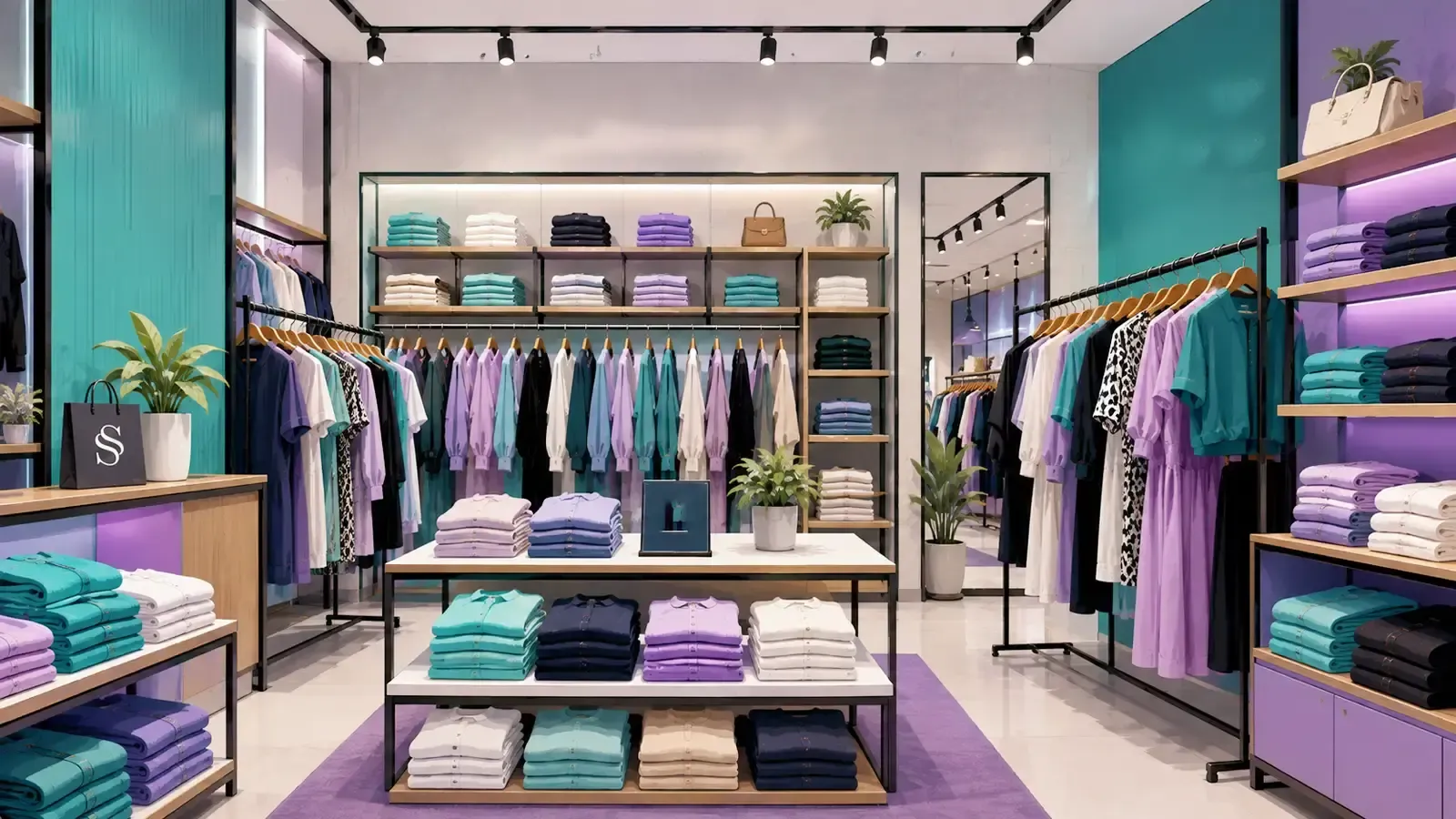
Fashion has a strange problem. Unlike milk or vegetables, a shirt or a pair of jeans don’t technically expire. They can sit on a shelf for months without going bad.
But their value could depreciate surprisingly quickly. The colour or pattern could go out of fashion, or the customers may just stop picking up the same design they were excited about three months ago.
And that’s where the trouble begins. Because in retail, profits aren't created when products arrive. They're created when products leave. The longer it sits on the shelf, the longer the company's money (invested in making or procuring that product) remains locked up. Eventually, many of those products have to be cleared through discounts, which eat into margins.
Simply put, fashion retail is not just about selling clothes; but about selling the right clothes, at the right time, before customers stop wanting them.
This brings us to one of the biggest (and often overlooked) moats in fashion retail: the ability to move inventory faster than everyone else. While the success of a retailer is often viewed through the lens of store count, brand recall or premiumisation, inventory efficiency is an equally or perhaps more critical factor.
And one Indian retailer appears to have become particularly good at it. Case in point: Trent, Tata Group's retail arm that operates stores like Westside and Zudio.
Mastering the inventory
Trent has built one of the most efficient inventory engines in the industry, turning merchandise into cash significantly faster than many of its listed peers. A key metric to understand this efficiency is inventory days, i.e., the average number of days a retail business holds the stock before selling it.
Let’s understand this with a basic example.
Suppose there are two retailers, A and B. Each buys merchandise worth ₹50 crore. Now, it so happens that A manages to sell everything in 50 days, while B takes 100 days.
As a result, A gets a head start to design the next collection and/or focus on expansion. Quicker inventory refreshes also give A’s customers a reason to keep coming back to the store.
.jpg)
This is what Trent has been able to do better than its peers.
But an efficient inventory isn't a happy accident. It's the outcome of a business model meticulously built around speed and control. Let’s delve into how Trent achieved this.
Opting for private labels
Most retailers are, at their core, distributors as they primarily stock third-party brands. While this offers variety, it also limits control. Retailers have relatively little influence over product design, sourcing timelines, manufacturing schedules or replenishment decisions.
This is where Trent’s approach differs. When you walk into a Westside or Zudio outlet, you’ll notice that everything you see belongs to Trent's own brands. And this choice, to sell only private-labels, is one of the biggest reasons for Trent’s inventory efficiency.
Instead of merely ‘selling’ fashion, Trent controls almost every step that creates it, from product design and sourcing to pricing, merchandising and inventory planning. Basically, it controls the entire supply-chain.
Such control also translates into speed.
By reducing dependence on external brands and intermediaries, the company can respond much faster to changing consumer preferences. For instance, if a particular collection performs well, its production can be ramped up. On the other hand, if a category or collection underperforms, inventory exposure can be contained before it turns into a markdown problem.
This control has become even more valuable today as fashion cycles keep getting shorter, thanks to social media and the quick discovery of global trends. Retailers who fail to refresh collections quickly could risk losing customer interest.
Private labels also offer better economics. Without an external brand sitting between the manufacturer and the retailer, Trent retains greater control over pricing, promotions and margins.
Over the years, Trent has successfully applied its private label strategy to Westside (premium lifestyle), which owns 20+ private labels, and Zudio (fast-growing value-fashion), which retails merchandise under its own name. The company is also extending this expertise across newer formats including Burnt Toast (youth-focused fast-fashion), Samoh (premium ethnic and occasion-wear), and Utsa (modern ethnic and traditional Indian wear).
Besides reliance on private labels, Trent’s inventory efficiency is also supported through effective use of technology. The company has invested in AI and data analytics for trendspotting, demand forecasting, merchandise planning and inventory optimisation. Embedding predictive analytics into key processes has enabled its design and buying teams to anticipate demand shifts and respond with greater precision to evolving customer preferences. In other words, it has been able to replenish stores with the right products at the right time.
Reaping benefits
The company’s private-label approach has enabled it to sell merchandise quicker than peers. And this inventory efficiency plays a role in fuelling overall business growth.
First, Trent has outpaced major listed peers in revenue growth while maintaining healthy profit growth. In Q1FY27, the company delivered another quarter of strong margin performance, with revenue and PAT growth of 18% and 21%, respectively, on a year-on-year basis. In the same quarter, Shoppers Stop’s net loss narrowed, while Aditya Birla Fashion & Retail’s net loss widened.
.jpg)
Second, the impact of inventory isn’t limited to profitability. It also fuels expansion.
For any retailer, growth usually comes from two levers: first is selling more from existing stores and the second is opening new ones.
Trent is no exception. Its store count has risen from 339 in FY20 to 1,312 in Q1FY27, including three in the UAE. This is, of course, capital intensive and such rapid expansion could have resulted in a leveraged balance sheet.
But Trent has been able to avoid that problem.
Over the last five years, cumulative capital deployment stood at ₹7,800 crore, used primarily for store expansion, new distribution centres, and related tech and automation interventions. This amount was fully financed through internal accruals, thanks in large part to disciplined inventory management.
Since its inventory converts into cash relatively quickly, less working capital remains trapped inside the business. This frees up internal cash flows and allows the company to finance a significant portion of its expansion without placing undue strain on the balance sheet.
The balance sheet also provides room to invest in new formats and supply-chain capabilities. The company has diversified its presence beyond apparel.
This includes foray into segments including beauty, footwear, accessories, and home products. It enables the company to expand its addressable market while leveraging the same underlying capabilities in private labels, sourcing, merchandising and inventory management. Around 20% of the revenue now comes from these categories, reflecting Trent’s ability to capture wallet share beyond apparel.
And Trent isn't limiting itself to fashion.
Its grocery business, Star Bazaar, is also beginning to borrow many of the same ideas that made Westside and Zudio successful. Though it is a completely different business than fashion, the underlying economics have similarities. Both businesses benefit when retailers control more of the value chain instead of merely acting as distributors.
So, Trent is applying the same principles of private labels, direct sourcing and supply-chain discipline to improve productivity in a notoriously low-margin business. Its efforts are visible in the increasing share of its own brand sales. Private labels accounted for roughly 73% of the revenue in FY26, up from around 45% in FY21. Encouraged by this traction, the management has said that Star will continue to build on the ‘Trent playbook’ and own brands will ‘remain the core differentiating proposition of the brand’ as it expands.
Sustaining with scale
The good part is that Trent’s case is not built on one format alone. It is driven by a repeatable retail playbook across formats ranging from low-cost to premium, modern to ethnic, and apparel to grocery (through its Star supermarket chain). This has allowed the company to grow faster while maintaining strong operating discipline.
Of course, no moat remains unchallenged forever.
A network of over a thousand stores is far more complex to manage than a few hundred. Plus, as the product portfolios become more diverse, maintaining inventory discipline could get harder. Trent’s newer formats such as Samoh and Burnt Toast need to achieve the same efficiency as Westside and Zudio. Meanwhile, the competition is heating up, from existing peers as well as from new-age digital-first labels.
Whether Trent’s edge can be sustained as the company scales remains to be seen. The finish line is nowhere near and it is too soon to announce a winner. But for now, Trent is surely leading the inventory race. And that’s a moat worth having.
About The Author
Next Story

