
Upstox Originals
Can Vodafone Idea turn its survival story into a comeback?
7 min read | Updated on September 09, 2026, 13:42 IST


SUMMARY
Can Vodafone Idea turn its survival story into a comeback? After recording its first quarterly subscriber addition since the 2018 merger in the June quarter, Vodafone Idea is looking to bring back its creative swagger. For a company that has spent years fighting subscriber losses, rising debt and a widening network gap, could the tide finally be turning?
Stock list
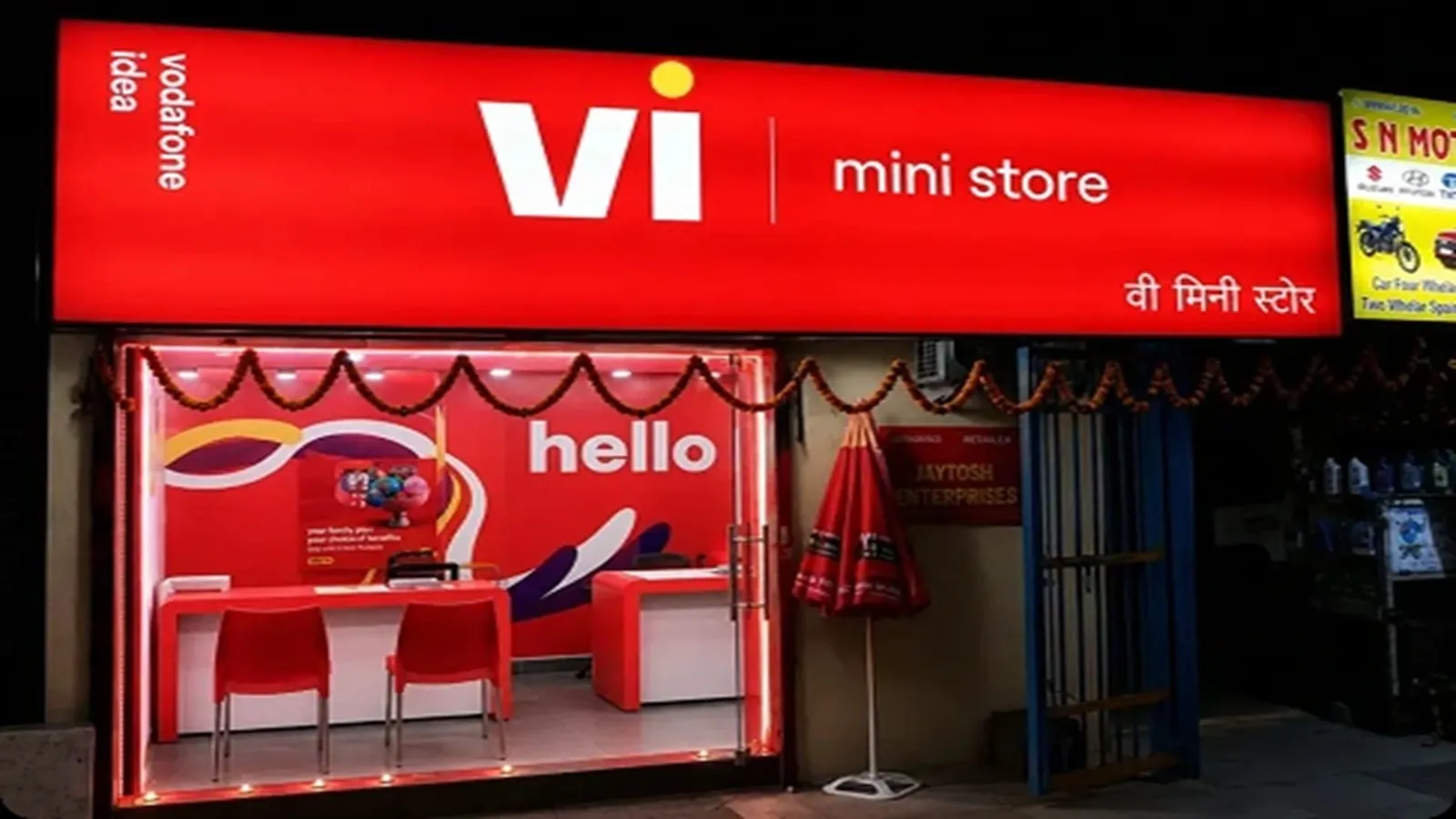
Vi ended FY26 with 192.8 million subscribers. | Image: Shutterstock
For years, Vodafone Idea Limited (Vi) has fought a two-front battle: retaining customers in one of the world's most competitive telecom markets while finding enough capital to rebuild a network that has fallen behind its larger rivals. That equation is beginning to change.
Vi ended FY26 with 192.8 million subscribers, down from 198.2 million a year earlier and 212.6 million in FY24. Those are year-end snapshots, and they still point downwards. The monthly flow, however, seems to be suggesting a small improvement. Vi's net monthly additions turned positive from February 2026, too late to change the FY26 closing figure, since the losses of the first three quarters had already been booked, but early enough to carry into the following quarter.
The June 2026 quarter added about 0.3 million customers, lifting the base to roughly 193.1 million and marking Vi's first quarterly gain since Vodafone India and Idea Cellular merged in 2018.
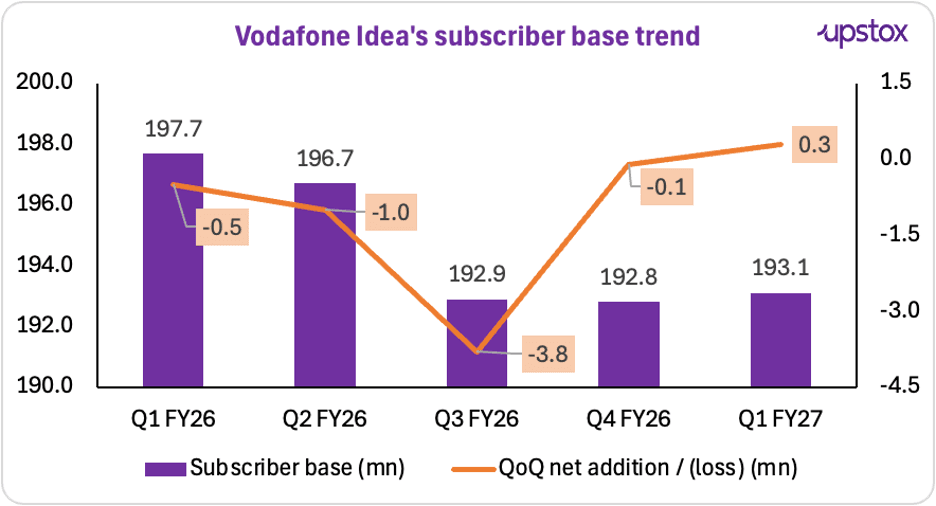
Sources: Vodafone Idea quarterly results/investor disclosures
ARPU is becoming the more important growth engine
Vi's revenue trajectory further supports the argument. Revenue from operations increased from ₹42,651.7 crore in FY24 to ₹43,571.3 crore in FY25 and ₹44,873 crore in FY26. Based on these reported figures, revenue grew at a calculated CAGR of approximately 2.6% between FY24 and FY26.
The growth is modest, but its composition is important. Vi has been losing subscribers while still increasing revenue. That means pricing, customer upgrades and a greater proportion of data users are doing more of the heavy lifting.
Customer ARPU excluding M2M increased from ₹175 in Q4FY25 to ₹190 in Q4FY26, an 8.3% year-on-year increase. Vi attributed the improvement primarily to customer upgrades. This creates an important operating lever: if subscriber stabilisation continues and tariff increases or upgrades lift ARPU further, revenue can grow without requiring a proportionate increase in the customer base.
Network investment is the bridge between survival and growth
Vi's network was the biggest constraint on its competitive position. The company began a major three-year investment cycle after raising ~₹245 billion through equity during FY25, including its ~₹180 billion FPO and promoter/vendor preferential issues. It also entered network agreements worth ~₹300 billion with Nokia, Ericsson and Samsung. The company had outlined a three-year capex programme of ~₹500–550 billion.
The investment is now becoming visible in operating metrics. In FY26, Vi spent ₹8,742 crore on capex, added more than 17,300 unique broadband towers, and increased its total unique broadband towers to more than 202,000. 4G population coverage rose to 86.3%, bringing an additional 48.2 million people under coverage, while 4G data capacity increased by more than 12% over FY25.
Vi also expanded 5G across all 17 priority circles where it holds 5G spectrum, reaching more than 80 cities by March 2026. This is strategically significant. Vi does not necessarily need to match Jio or Airtel tower-for-tower across India immediately. It needs to improve network quality in the markets that matter most for revenue and customer retention.
How far behind Jio and Airtel is Vi, really?
The competitive gap is now less about subscriber counts than about scale, network maturity, customer mix and how much each operator earns from the customers it has. As of March 2026
| As of March 2026 | Vi | Jio | Airtel |
|---|---|---|---|
| Mobile subscribers (mn) | 192.8 | 524+ | 373.2 |
| Wireless subscriber market share | 15.68% | 39.21% | 37.74% |
| ARPU (₹) | 174 | 214 | 257 |
| Opensignal Coverage Experience (pts) | 4.1 | 9.1 | 7.5 |
| Opensignal 5G Coverage Experience (pts) | 0.1 | 5.5 | 3.2 |
Source: TRAI
The wider gap is in what sits alongside the mobile business. Jio no longer positions itself purely as a telecom operator: it had over 268 million 5G users and more than 27 million fixed-broadband connections at March 2026, including around 13 million on JioAirFiber. Airtel has chosen premiumisation, adding 5.8 million smartphone and 0.8 million postpaid customers in Q4FY26 alone, crossing 45 million home passes, and pushing into cloud, cybersecurity, IoT and data centres. Vi has no comparable second engine.
The contrast is therefore clear. Jio is leveraging scale and an integrated digital ecosystem; Airtel is concentrating on premium customers, network quality and convergence; Vi is still in the earlier phase of rebuilding its network and stabilising its base. That makes Vi's rising ARPU and improving subscriber trend encouraging, but it also shows how much ground remains before its economics resemble those of its two larger rivals.
What are the risks to watch?
Funding the network while paying old dues
This is the biggest risk and the strongest test of the turnaround story. Vi still has a very large deferred-payment burden. As of March 2026, its deferred obligations included ₹1,27,360 crore towards spectrum and ₹25,254 crore towards AGR, while scheduled payments against these obligations through March 2027 were ₹7,076 crore. Vi is also planning around ₹45,000 crore of network capex over three years.
The interesting part is the mismatch: the company needs to invest heavily to improve the network at the same time that it needs cash to meet legacy obligations. Vi is in discussions with lenders for additional funding, and it had raised ₹6,400 crore by August 2026, but the funding requirement remains substantial.
The latest HSBC report makes this concern more important. HSBC expects Vi's operating cash flow to fall short of its spectrum payment obligations in FY29, even after assuming a mobile tariff hike in the first quarter of calendar 2027. The brokerage estimates that Vi would need to nearly triple its operating cash flow over the next three years to meet those obligations.
That means the funding challenge does not end once the current network rollout is financed. It extends into the later years of the turnaround plan and could become an even bigger issue when spectrum renewals begin from 2030.
The balance sheet is better, but still the biggest risk
Vi's balance sheet has improved in some respects, particularly after the government converted spectrum-related dues into equity and the company raised fresh capital. Total equity moved from negative ₹1.04 lakh crore in FY24 to negative ₹70,320 crore in FY25 and negative ₹35,758 crore in FY26. But the improvement flatters the position, because most of what Vi owes sits outside conventional debt.
| As of March 2026 | ₹ crore |
|---|---|
| Total equity | (35,758) |
| Total debt and deferred obligations | 1,56,741 |
| Of which scheduled for payment by March 2027 | 7,076 |
Source: Vodafone Idea FY26 annual report.
The AGR reassessment is a major positive for near-term visibility — it removed ₹80,502 crore of recognised liability from the balance sheet — but it does not remove the funding requirement.
At roughly ₹1.57 lakh crore, Vi's combined debt and deferred obligations are close to the entire market value of the company, and they have to be serviced out of a business currently generating about ₹19,000 crore of EBITDA a year.
So, is Vi making a comeback?
It's at an interesting point. Subscriber additions, ARPU, network coverage and Q1FY27 revenue and EBITDA are improving, but cash generation remains the key concern. HSBC expects Vi's operating cash flow to fall short of spectrum payments in FY29, while network investment may only help stabilise market share.
With ₹1.57 lakh crore of debt and deferred obligations, Vi needs stronger cash generation to fund capex and meet future payments. The turnaround has moved beyond survival; the key question is whether Vi can generate enough cash to make it durable.
About The Author
Next Story

