
Upstox Originals
Why Europe’s love for heritage is proving fatal in its worst heatwave

4 min read | Updated on July 09, 2026, 21:20 IST


SUMMARY
A massive heatwave has claimed over 3,700 European lives this summer, with indoor deaths seeing a spike. Despite temperatures crossing 40°C in some places, Europe is known to resist air conditioning with only 20% of households owning AC units compared to 90% in the US. What is the reason for this reluctance when people are dying in large numbers?
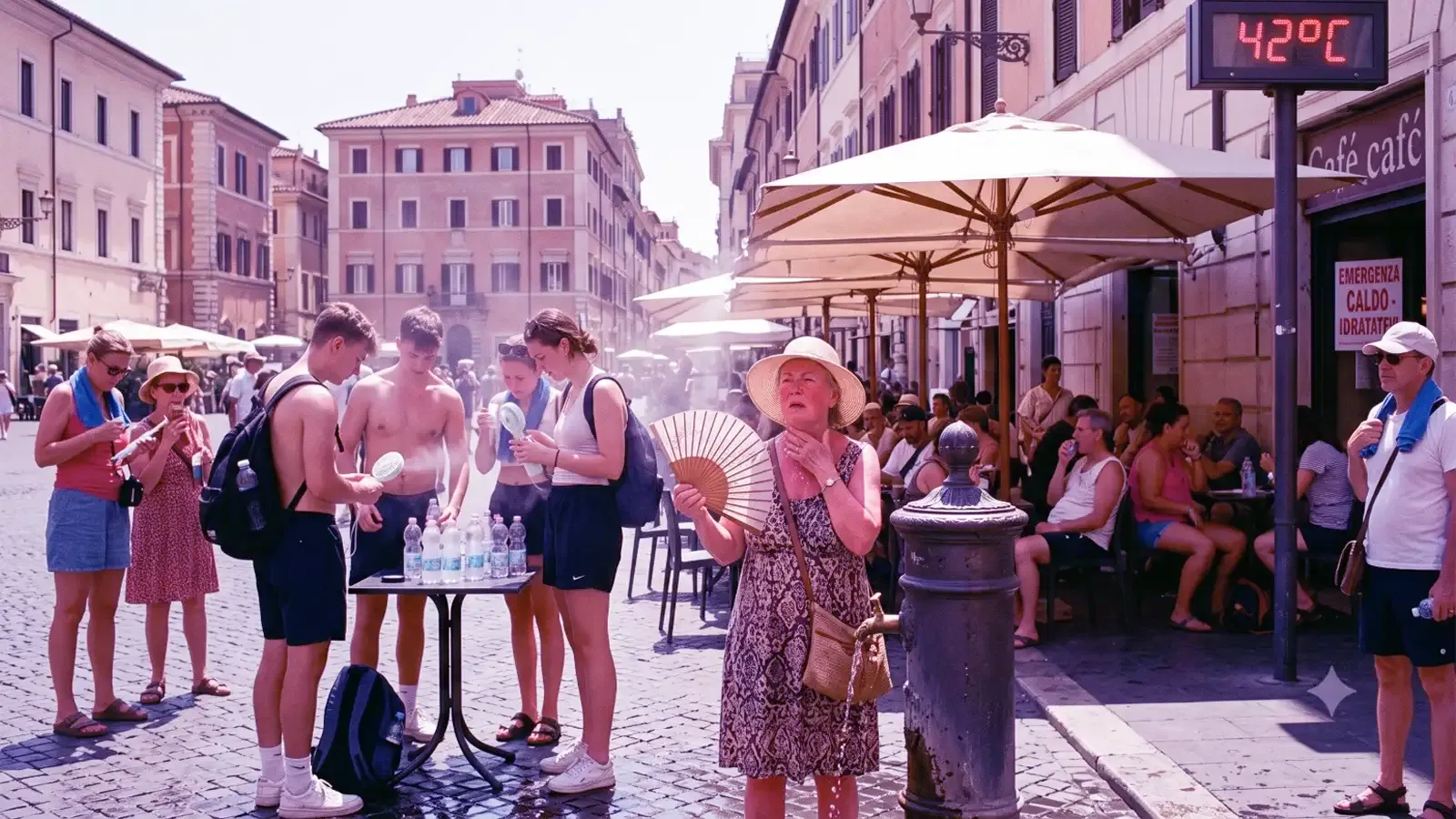
European countries have experienced more than 3,700 heat-related deaths this summer | AI generated image
As we face unprecedented temperatures and unexpected weather events in India, Europe has been reeling under a massive heatwave. European countries have experienced more than 3,700 heat-related deaths this summer, with France alone witnessing 2025 additional deaths, which is 29% higher than average. Deaths inside homes rose by over 90% between June 22 and 28 compared to the previous week.
Temperatures have soared past 40°C, with France, Belgium and the Netherlands being the hardest hit. Health systems are struggling to cope as Europe becomes the fastest-warming continent on Earth.
What has caused this massive heatwave and why are people dying in large numbers? When temperatures are known to rise every year why were European households not prepared?
Europe’s resistance to air conditioning is very real and deeply entrenched in their lifestyle and culture. Across the European Union, only 20% of households own air conditioners, while in the US 90% of houses have air conditioning. In France, the percentage is 25%. The resistance is driven largely by cultural and environmental reasons, government regulations and aesthetic preferences.
Aesthetic concerns
Citing environmental and aesthetic concerns, Audrey Pulvar, deputy mayor of Paris, as quoted by the Wall Street Journal, said, “The goal is not to be like some Italian, Brazilian or American cities where you have entire rows, entire walls of convectors outside buildings that make an unbearable racket, releasing heat and toxic fumes.” European urban planners consciously avoid entire building facades covered in metal condenser boxes and pipes.
Strict heritage laws
In historic cities like Paris, Geneva, Florence and Rome, it is illegal to drill holes into historic facades. If you live in a 19th century building or a protected conservation area, local councils can deny permits to protect the limestone structures and cultural charm. Any physical modifications require a long list of approvals. European architecture spans thousands of years and encompasses several historical building styles like the Gothic, Renaissance and Neoclassical to name a few.
Consent from neighbours
Moreover, if you are living in an apartment in Europe, you need unanimous consent from your building’s co-owners association to install an AC unit.
Strict noise laws
Even if you bypass the aesthetic regulations, you have to contend with Europe’s strict noise laws. For example, French law allows building associations to block an AC unit if its sound exceeds strict decibel limits, which sometimes are set as low as the sound of a "light breeze." Noise disputes regarding air conditioners are rampant, having become a booming sector for local law firms.
Climate consciousness
Europe prides itself on being a global leader in fighting climate change. The Paris Agreement is an international treaty on climate change that was signed in 2015 to limit global temperature rise under 1.5 degrees centigrade above pre-industrial levels. Many Europeans view the AC as being detrimental to the climate and politicians argue that ACs are not the way out for the problem as it will trigger a vicious cycle of driving up energy demand and worsening the urban heat.
Running costs
European energy costs are among the highest in the world. About 38% of Europeans report not being able to afford ACs. Installing ACs is also expensive as the buildings are mostly thick-walled and old.
Solutions are not being implemented fast enough as mindsets are taking time to change. “Europe is going in for longer-term solutions like shade, insulation and cooling centres rather than mechanical cooling,” says Hans Kluge, the head of the WHO’s Europe office.
But what about managing the current crisis, which has affected vulnerable groups like elders the most?
The heatwave tragedy in Europe this year has shown how vulnerable its citizens are in the face of an extreme climate crisis. While long-term solutions like green spaces, better insulation and cooling centers are necessary goals, citizens need solutions on an urgent basis. As climate change accelerates, Europe can no longer afford to treat air conditioning as an aesthetic eyesore. Urban planners need to strike a balance between preserving historic architectural beauty and human survival in this deadly heat.
About The Author
Next Story

