
Upstox Originals
What drives India’s obsession for mangoes

4 min read | Updated on June 19, 2026, 18:29 IST


SUMMARY
For Indians, the mango is a deeply rooted cultural identity with a centuries-old historical legacy. Summer months are incomplete without the sweet taste of mango. Although India is the world’s largest producer, it exports less than 1% of its crop. Domestically, Indians consume almost the entire harvest. But this can change if the cold-chain infrastructure improves and global demand remains high.
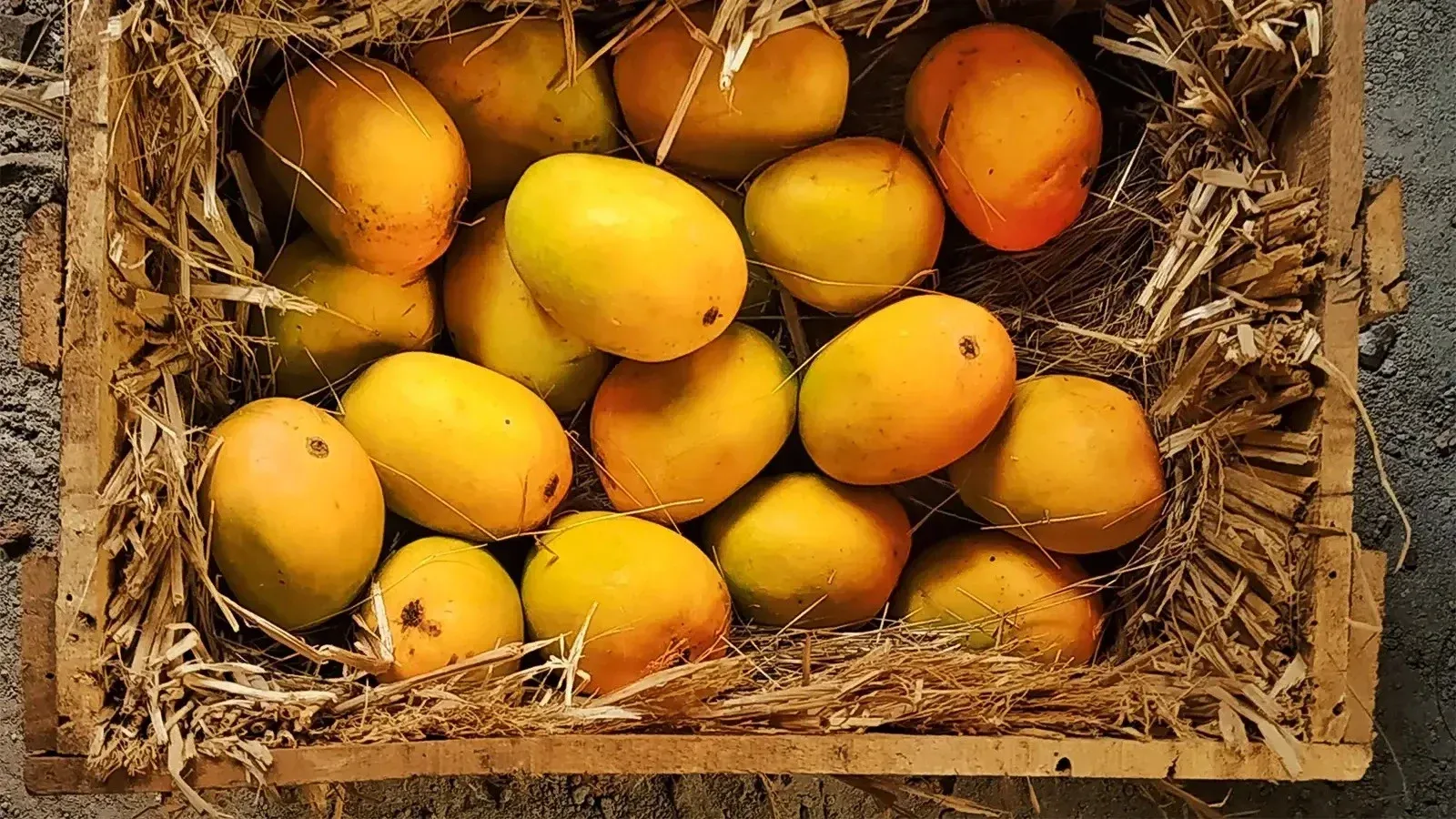
India exports barely 1% of its total crop, accounts for 43% of total global mango consumption | Image: Shutterstock
As most Indians wait for the sweltering summer heat to get over, there is one saving grace that a nation of 1.4 billion people take solace from in the summer months. It’s our singular obsession with the King of fruits: the mango. It is not just a fruit but a cultural identity that unites India. It’s a thousand-year-old cultural and historical legacy that Indians are proud of.
The obsession is not a recent marketing gimmick. It can be traced back hundreds of years. The Mughal emperors were crazy about mangoes. Emperor Akbar planted the Lakhi bagh in Darbhanga, Bihar, an orchard containing 1 lakh mango trees at a time when fruit-farming on a large scale was not common. The 19th century Urdu poet Mirza Ghalib was so addicted to mangoes that he even wrote verses about them.
India’s obsession in numbers
India is the world's largest producer of mangoes accounting for nearly 50% of the world’s supply. The country produces roughly 24 to 26 million metric tonnes of mangoes every year.
But here’s the catch. Despite producing half of the world’s mangoes, India exports barely 1% of its total crop. Indians love mangoes so much that they consume almost the entire harvest themselves. India alone accounts for 43% of total global mango consumption.
India grows around 1,500 varieties of mangoes. While the world knows the Alphonso, the domestic market thrives on regional varieties like the Kesar, Langra, Dusehri, Himsagar, Chausa and Banganapalli
The global mango landscape
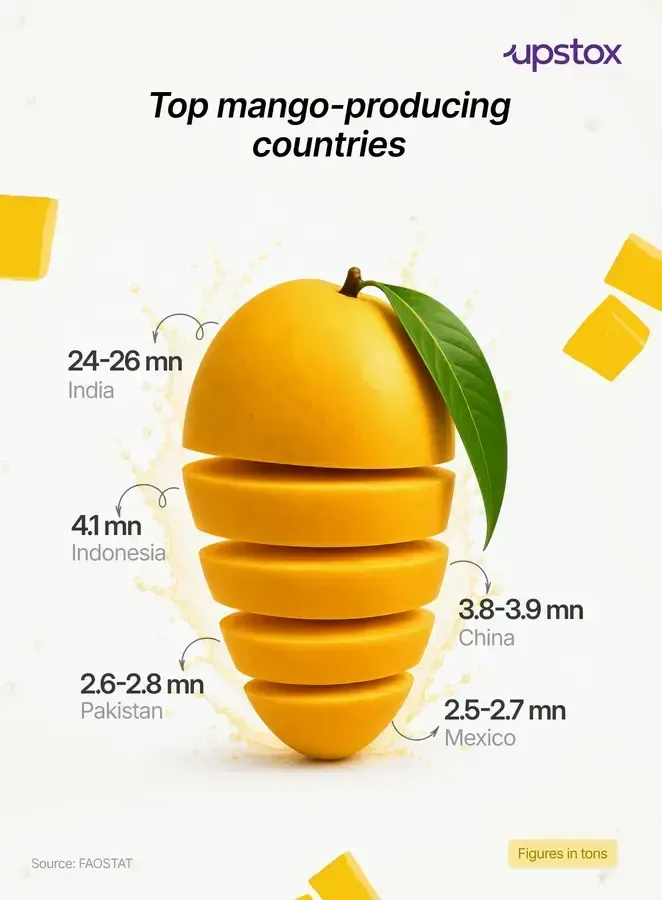
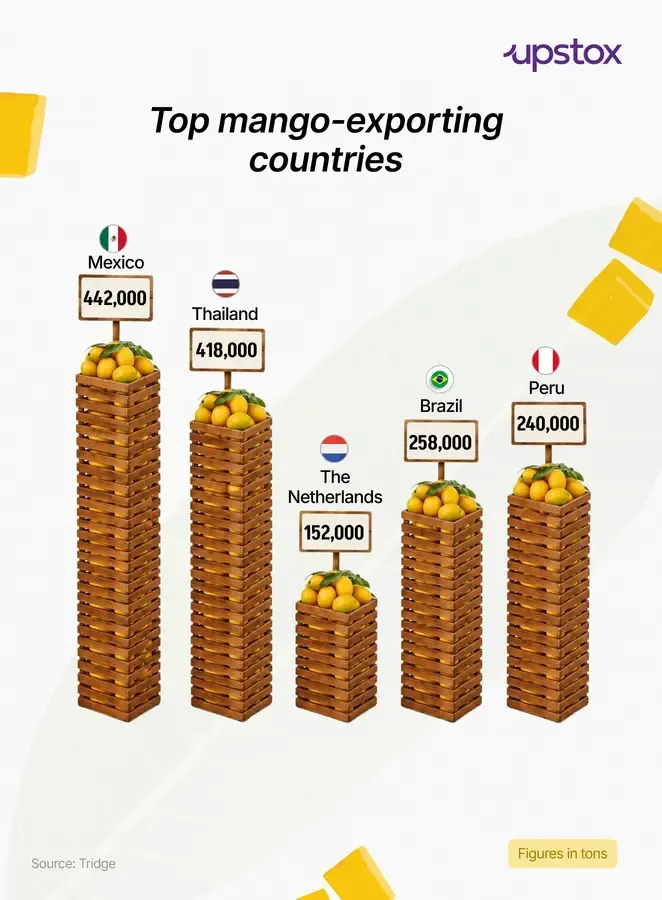
Why is India not on this list?
India is not one of the top 5 exporters despite being the largest producer. It ranks sixth globally in exports. India exports less than 1% of its total annual yield, and the rest of the produce is consumed domestically.
But apart from our mango obsession there are other factors, too, like biological traits, logistical gaps and strict trade barriers. Here are a few reasons:
Indian varieties have a short shelf-life
Indian varieties like Kesar, Banganapalli, Alphonso are thin-skinned and highly perishable. They have a post-harvest shelf-life of just 7-14 days. By contrast, Mexico produces varieties that have a thick skin, ideal for long-distance travel.
Strict international trade safeguards
Wealthy nations are known to enforce stringent Sanitary and Phytosanitary standards to prevent foreign pests from entering their land. For years, regions like the European Union and the United States have placed temporary bans or strict restrictions on Indian mangoes due to pest concerns. To clear these restrictions, Indian mangoes must undergo specialised, highly regulated post-harvest treatments but the country has very few certified facilities capable of executing these treatments.
High logistics costs
Due to the short shelf-life and treatment requirements, exporting Indian mangoes to premium markets like the US, UK and Europe requires air freight. Air freight is more expensive than sea freight. High international cargo rates send the final costs of mangoes soaring, making them less competitive.
Infrastructure gaps
The path from an Indian orchard to a foreign port is strewn with obstacles. There is a critical shortage of unbroken cold chains. Much of the produce spoils before it can reach an export terminal.
The top five mango-consuming states in India
Interestingly, the highest-producing states are also the biggest consumers. Uttar Pradesh is the largest producer of mangoes, generating over 23–24% of the country’s entire yield and also the top consumer.
Based on data from the Ministry of Agriculture, the top five mango-producing and consuming states in India are as follows:
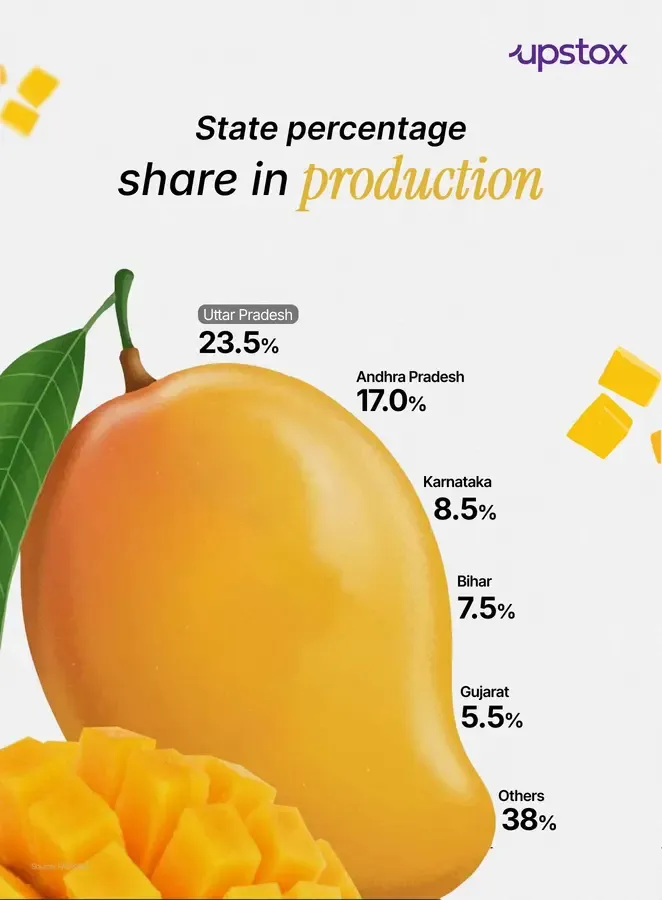
The next chapter
The global demand for Indian mangoes remains high. For the Alphonso and Kesar varieties, the global demand has never been stronger, particularly in regions with a high diaspora population. Air India transported more than 1,000 tonnes of mangoes across its global network between March and May 2026 accounting for a third of the over 3,300 tonnes of fresh produce carried by the airline during the period.
As infrastructure catches up with demand through cold chains and expansion of treatment facilities, transporting mangoes might become a smooth ride. The Indian mango, fiercely protected by Indians, might just become an international craze in the years to come.
About The Author
Next Story

