
Upstox Originals
Should you buy a car now or wait amid the ethanol push?

6 min read | Updated on June 22, 2026, 10:31 IST


SUMMARY
Here are 7 FAQs that seek to make sense of India’s ethanol-blending targets for car owners and potential car buyers.
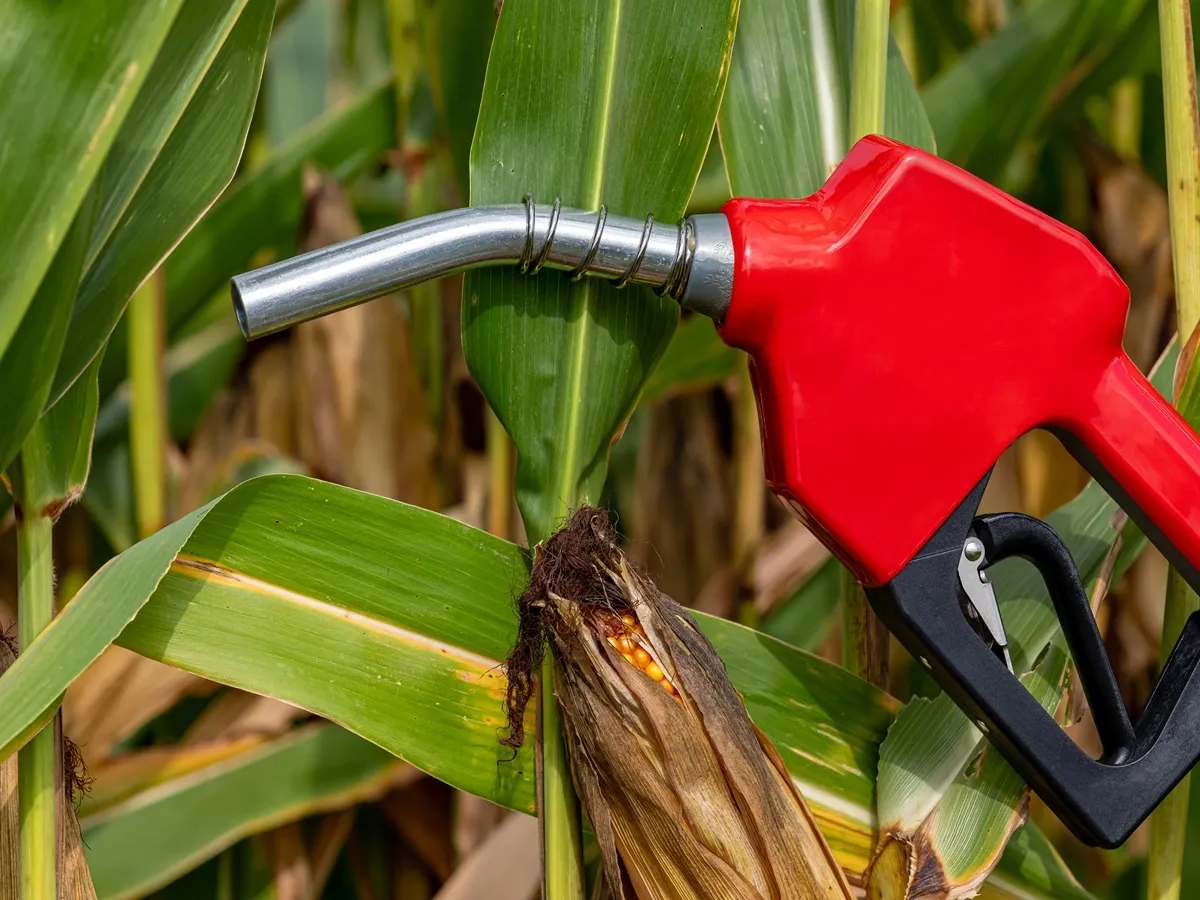
Making sense of India’s ethanol-blending targets for car owners and buyers
The Indian government has hit the ethanol accelerator hard. In a span of just 74 days, it has moved from making E20 mandatory nationwide on April 1, 2026, to clearing the regulatory framework for E100 on June 13, 2026. Consequently, vehicle owners and buyers are grappling with more questions than answers.
In order to make your life easier, we have collated the most common questions and addressed them based on the best available information.
Here is what is actually happening on the ground:
| Fuel Blend | Availability | Status |
|---|---|---|
| E20 | 🟢 Everywhere | Mandatory at every pump from April 1, 2026. If you refuel your car today, this is what goes into your tank. |
| E22, E25 and E30 | 🔴 In the works | Fuel quality standards notified by BIS (IS 19850:2026, effective May 15, 2026). Pump rollout is awaiting vehicle testing results. |
| E85 | 🟡 Highly limited | Active at approximately 48 pilot stations; proposed expansion to ~500 outlets by December 2026. |
| E100 | 🔴 In the works | Regulatory framework signed on June 13, 2026. No commercial pumps exist yet. |
Why? Because fuel pumps, vehicles, and ethanol supply chains all take years to build and need to converge around the same time.
Two factors, however, suggest the pace could be faster than expected. First, the E20 rollout was achieved roughly five years ahead of its originally planned 2030 deadline. Second, the government recently waived central excise duty on E22–E30, which is a meaningful signal to oil marketing companies (OMCs) like HPCL, BPCL and IOCL to scale up production.
No, but the answer depends on which model India settles on. The most likely outcome is the Brazil-style multi-dispenser model, where the same petrol pump carries two nozzles: one for standard E20 and one for higher blends from E25 onwards. You would be able to choose based on what your vehicle is rated for, similar to how premium and regular petrol coexist today.
To an extent, yes. But the answer depends on exactly when your vehicle was made. Not all pre-2025 cars are in the same boat. Here is where each era stands:
| Time of manufacture | Ethanol compatibility |
|---|---|
| Pre-2012 | Designed for E5 or lower |
| 2012 to March 2023 | E10-compliant |
| April 2023 onwards | E20-compliant by design |
| April 2025 onwards | Fully E20-certified across all components |
- 56% reported reduced mileage or fuel efficiency
- 43% cited engine performance issues such as power loss, knocking, or rough idling
- 34% reported increased repair and maintenance costs
- 20% experienced fuel system issues
- 19% reported increased engine heating
- 19% said they had experienced a combination of these issues
The gap between what owners are reporting and what the government is saying is real. The most practical step: if your vehicle predates April 2023 and you are noticing any of the above symptoms, raise it at your next service visit rather than waiting.
Not for every phase, but yes for the larger leaps. Automakers design vehicles for fuel ecosystems, not specific blending percentages. The direction the government has signalled by legalising E85 at a limited scale and clearing E100 is clearly toward flex-fuel vehicles as the long-term platform.
The logical industry response would be to develop two tiers: a next-generation baseline fleet rated up to E25 for the mass market and a flex-fuel range capable of running on anything from E20 to E85.
On timing, the auto industry has formally requested a minimum six-month notice window before any new blend mandate takes effect, as reported by CNBC TV18.
Go in informed. If you are buying a new car from a mainstream brand today, it is E20-compliant and E20 will remain available.
If you want to future-proof yourself against the next five years of ethanol policy, ask specifically about flex-fuel capability before signing. Models from Maruti, Toyota, and Hero (in case you are interested in 2-wheelers) with FFV variants are entering the market and will be capable of handling higher ethanol blends.
What you should avoid is buying a pre-April 2023 used car without checking its fuel system condition first as they are not E20 compliant by design.
What is playing out right now is not confusion for its own sake; it is the early friction of a fuel transition that could reshape what Indians pay at the pump for decades. In the meantime, stay informed, service regularly and watch the flex-fuel pipeline.
Related News
About The Author
Next Story

