
Upstox Originals
From sponge city to chief heat officer: How the world is preparing to survive climate change

4 min read | Updated on August 11, 2026, 16:38 IST


SUMMARY
Record-breaking global temperatures and escalating extreme weather are leading the world to a climate crisis, which threatens global stability, food security and economic resilience. Countries are now moving from reactive disaster response to proactive measures. Through a mix of innovative engineering and nature-based infrastructure, countries are proving that surviving climate change requires learning to design with nature rather than against it.
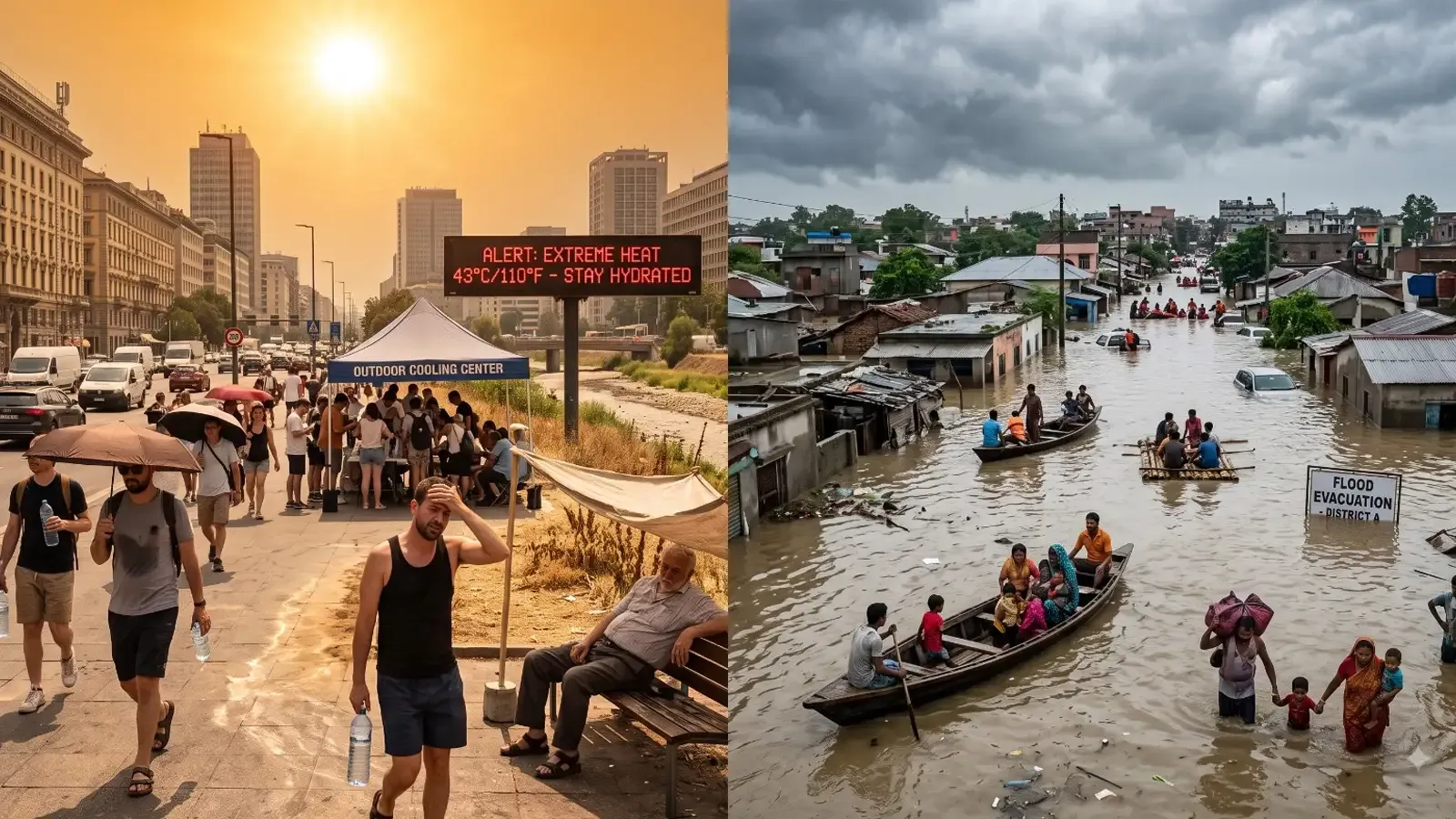
The last decade was the warmest on record, with the period between 2023-2025 witnessing the worst heatwaves and floods | AI-generated image
The world is getting hotter and the climate crisis is not a future threat any longer. It has become our reality. Global average temperatures have already risen 1.2 degrees celsius above pre-industrial levels driving a surge in record-breaking heat and weather catastrophes. The World Meteorological Organisation’s State of the Global Climate 2025 report paints a dark picture. It says, the last decade was the warmest on record, with the period between 2023-2025 witnessing the worst heatwaves and floods. Driven by a 20-centimetre rise in sea levels since 1900, countries are struggling to adapt to immediate damage while coming up with long term solutions.
The United Nations Secretary-General has asked world leaders to invest as much in adaptation as they do in mitigation because without adaptation, economies, food security, and global stability are under threat. Let’s look at some unique initiatives countries are undertaking to safeguard themselves from extreme weather events caused by climate change?
A ‘Room for the River’ strategy in Netherlands
River Waal in Netherlands, a distributary of the Rhine, has been both a source of prosperity and a threat for the people of Nijmegen due to regular flooding. The flood plain areas have been sensitive to high water levels especially where the river bends and narrows down. Instead of building higher levees, the Netherlands has adopted a ‘Room for the River’ strategy. The idea is to live with the water instead of fighting it. The strategy gives water more space to spread out when floods take place. This reduces damage and loss of life. The Dutch government moved dikes inland, widened rivers, raised bridges, dug flood channels, and added river catchment areas. Today, when storms hit, the river safely expands into a newly dug side-channel, and the flood level drops.
The ‘School Oasis’ in Milan, Italy
Milan’s air and climate plan targets urban heat islands by redesigning public school grounds. Urban Heat Islands (UHI) occur when an urban, densely populated area gets warmer than its surrounding rural areas. The city has identified concrete, heat-trapping school courtyards using satellite heat-risk mapping. It then strips away asphalt to turn them into green ‘oases’. After school hours, these courtyards function as cool parks and storm water retention sinks for the community. Milan can get very hot and humid during the day, which is why more than 400 fountains are spread across the city to keep temperatures down.
China’s national ‘Sponge City’ mandate
A trash dump in Wuhan received a new lease of life when the municipal government decided to implement the ‘Sponge City’ plan. In 2016, Wuhan witnessed catastrophic flooding bringing the city to a standstill. For decades the Jinkou garbage dump was a foul-smelling landfill that had pushed 600 families to move out of the area due to the smell and sludge. Engineers have turned the 30 square km area into the Wuhan Garden Expo Park. Beneath the walking paths, they installed permeable concrete, artificial wetlands and rainwater harvesting tanks. The park absorbs 70% of local rainfall, purifies it naturally and reuses it to water the greenbelts.
Coastal and low-lying nations
Bangladesh is vulnerable to extreme weather events. It is frequently exposed to flood hazards and has a large population living in low-lying areas. In order to prepare for rising flood risks due to climate change, the government upgraded the country’s coastal embankment system to a higher flood safety standard. The coastal embankment rehabilitation project is one such initiative. As part of such improvement plans, mangroves and shrubs are being planted on the seaside of embankments to tackle coastal flooding. Mangroves can reduce disaster risks, especially losses from storm surges and coastal floods. They dampen storm surge heights and decelerate waves. Moreover mangrove soils and biomass can store large quantities of carbon.
There has been significant mangrove reforestation and restoration in the Mekong Delta in Vietnam. This has helped reduce coastal erosion, which is a threat to the country’s shoreline stability. These forests are known to support marine life by supplying seafood and accumulating carbon, thereby mitigating the harmful effects of climate change.
Chief Heat Officers
Cities like Athens, Cape Town and Dhaka among many others have appointed Chief Heat Officers to tackle the increasingly intolerable heatwaves. Eleni Myrivili was Europe’s first CHO, appointed in 2021. Raising awareness about the impacts of heatwaves, identifying vulnerable groups and implementing cooling projects are some of the responsibilities of CHOs.
Between 1995 to 2024, extreme weather events have led to devastating consequences. There were more than 8,32,000 fatalities and economic losses exceeding $4.5 trillion worldwide, resulting from 9700 events according to the Climate Risk Index 2026.
Innovative ways to tackle climate change are urgently needed. Climate-resilient infrastructure, both natural and man-made, is the need of the hour.
About The Author
Next Story

