Market News
Balrampur Chini, Shree Renuka Sugars, EID Parry: Sugar stocks tumble up to 6%; here is why

5 min read | Updated on August 21, 2026, 12:13 IST


SUMMARY
The government on Thursday allowed duty-free imports of 10 lakh tonnes of raw sugar under a tariff rate quota till October 31 amid rising prices of the sweetener in local markets.
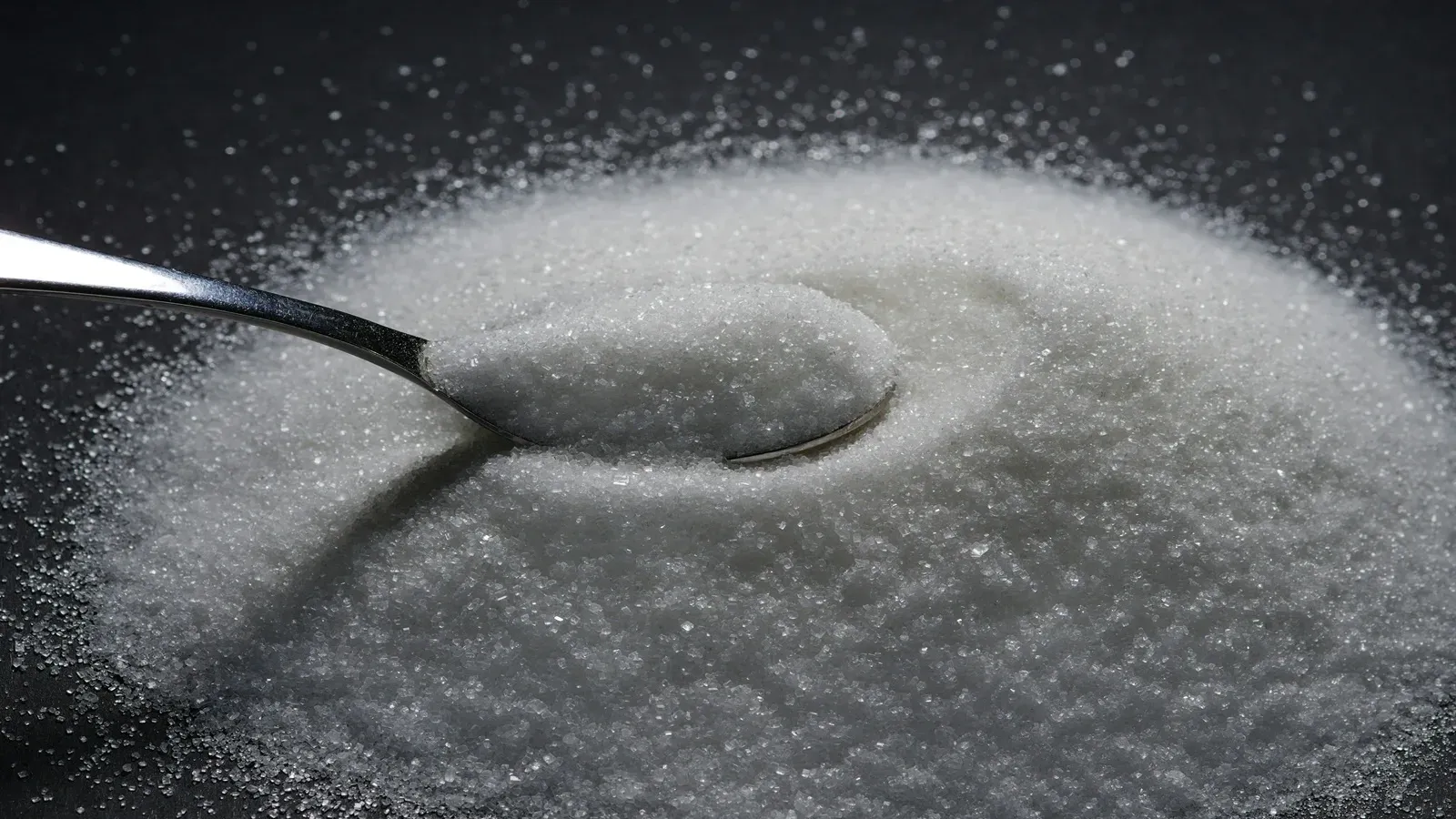
At 9:42 AM, shares of Balrampur Chini Mills were down 2.88% at ₹745 apiece on the NSE. Image: Unsplash
Shares of sugar companies were trading with notable losses on Friday, August 21, as the government on Thursday allowed duty-free imports of 10 lakh tonnes of raw sugar under a tariff rate quota till October 31 amid rising prices of the sweetener in local markets.
The move is aimed at enhancing domestic availability and capping price rise.
To control prices, the government has also imposed a stockholding limit on bulk consumers who use more than 10 tonnes of sugar a month, capping their stock at 15 days' consumption.
How sugar stocks were performing
At 12:11 PM, shares of Balrampur Chini Mills were down 4.92% at ₹729.35 apiece on the NSE. The stock slipped as much as 5.99% to hit a low of ₹721.10.
Dalmia Bharat Sugar and Industries was down 2.92% at ₹493.25 on the NSE, while Bajaj Hindusthan Sugar was down 3.77% at ₹22.45, while Shree Renuka Sugars was trading 3.9% lower at ₹25.11 on the NSE.
E I D-Parry (India) Ltd quoted 1.97% lower at ₹794.30 on the NSE.
Why are sugar stocks falling?
Sugar stocks are in the red today as the government's move is expected to reduce sugar prices, which can hurt the profitability of sugar companies.
Investors are pricing in the possibility that lower sugar prices could compress margins for sugar producers, which is why stocks such as Balrampur Chini, Shree Renuka Sugars and Dalmia Bharat Sugar came under selling pressure.
-
In simple terms, more imports mean more supply. The government has allowed 10 lakh tonnes of duty-free raw sugar imports. That means more sugar will be available in India, reducing the supply shortage.
-
Prices may stop rising: Sugar mills have been benefiting from higher domestic sugar prices. If imported sugar increases supply, prices could soften or rise at a slower pace, leading to lower revenue realisations for mills.
-
Stock limit curbs hoarding: Bulk buyers can now hold only 15 days' worth of sugar stock, which discourages hoarding and further eases demand pressure.
The government order: In detail
"The import policy for raw sugar is amended to allow 10 lakh MT of duty-free imports under Tariff Rate Quota (TRQ) till October 31, 2026," the Directorate General of Foreign Trade said in a notification.
The order has come against the backdrop of a sharp rise in sugar prices, with ex-mill rates hitting record levels due to a lower opening stock ahead of the 2026-27 season. The all-India average ex-mill price rose to ₹5,400-₹5,500 per quintal on Tuesday, up from ₹3,900 a year earlier, according to an industry body.
Retail sugar prices have climbed about 13% year-on-year to ₹52.30 per kg as on August 18, from ₹46.34 a year ago, as per consumer affairs ministry data.
Demand for sugar typically rises between August and November, as the country celebrates major festivals, such as Ganesh Chaturthi, Dussehra, and Diwali.
Food Minister Pralhad Joshi, in a social media post, announced that bulk consumers using more than 10 tonnes of sugar a month will not be allowed to hold stock beyond what they will consume in 15 days.
The food ministry has notified the Sugar (Stockholding Limit of Bulk Consumers) Order, 2026, which covers confectioners, soft drink manufacturers, food processing units, sweetmeat sellers and other institutional buyers.
"The proactive step taken by the government will immediately dispel speculation & ensure adequate supply to consumers at reasonable and stable prices over the coming year," the food ministry said in a post on X.
The order will come into force from September 1 and remain in effect till November 30.
This follows an earlier order, effective August 1 to November 30, capping stock with sugar dealers at 4,000 quintals for 30 days.
The curbs come against the backdrop of a sharp rise in sugar prices, with ex-mill rates hitting record levels due to a lower opening stock ahead of the 2026-27 season. The 2026-27 season will begin on October 1.
The all-India average ex-mill price rose to $5,400-₹5,500 per quintal on Tuesday, up from ₹3,900 a year earlier, according to an industry body.
Other key details
A bulk consumer has been defined as a confectioner, soft drink manufacturer, food processing unit, sweetmeat seller or any other institutional buyer with an average monthly consumption of not less than 10 tonnes over the last one year, excluding the current month.
The tighter stockholding norm comes amid concerns over sugar availability for the 2026-27 season, which begins on October 1. Industry estimates put opening stocks for the new season at 40-42 lakh tonnes, while some researchers peg the figure lower, at 32-35 lakh tonnes -- both below the estimated domestic requirement of around 50 lakh tonnes.
Related News

About The Author
Next Story