
Market News
Asian Paints, Berger, Kansai Nerolac: What to expect from paint stocks as festive season nears, oil stays elevated

5 min read | Updated on September 07, 2026, 10:42 IST


SUMMARY
The paint stocks, along with other crude sensitives were in the spotlight as Brent crude price rose towards $97 a barrel amid concerns over prolonged supply disruptions through the Strait of Hormuz.
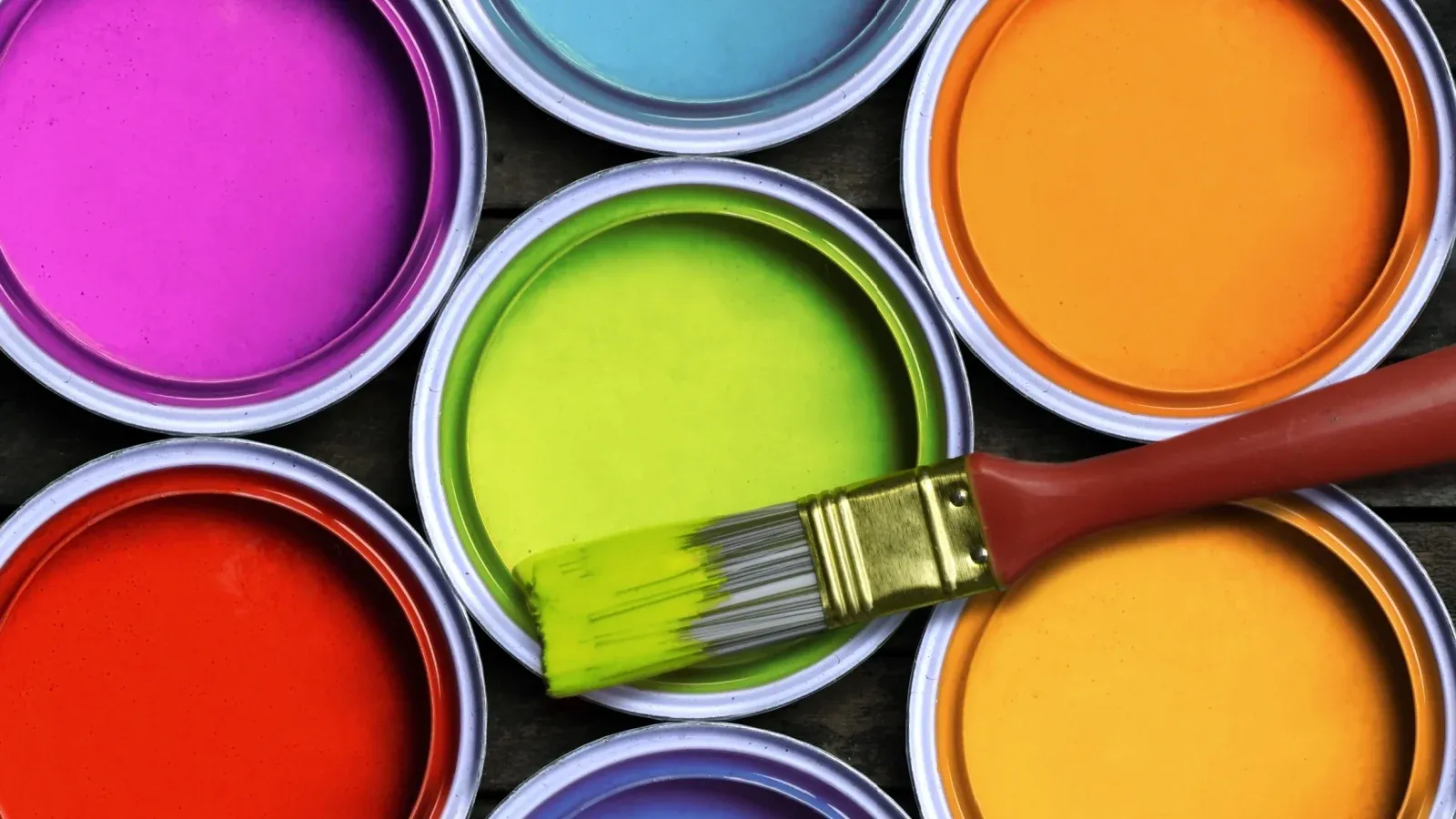
JSW Dulux was up 0.2% at ₹3,181 on the NSE. Image: Shutterstock
Paint stocks were trading mixed on Monday, September 7, amid a rise in crude oil prices. In the early trade, shares of Asian Paints traded 0.43% lower at ₹2,516.40 apiece on the NSE, while Kansai Nerolac Paints was trading 0.71% higher at ₹195.58 on the NSE.
Berger Paints India was down 0.19% at ₹484.40 on the NSE, and Indigo Paints was trading at ₹1,158.20, down 2.33% on the NSE.
JSW Dulux was up 0.2% at ₹3,181 on the NSE.
The paint stocks, along with other crude sensitives were in the spotlight as Brent crude price rose towards $97 a barrel amid concerns over prolonged supply disruptions through the Strait of Hormuz.
Paint stocks are sensitive to crude oil because several key raw materials, including solvents, resins and other petrochemical derivatives, are linked to crude prices.
When crude rises, these input costs increase and put pressure on paintmakers’ operating margins.
Analysts note that companies can offset some of the impact through price hikes and cost efficiencies, but there is usually a lag, meaning margins can come under pressure in the near term.
With crude prices rising again, Asian Paints, Berger Paints and Indigo Paints could therefore face higher input-cost pressure in the rest of FY27.
What companies say
Leading paint manufacturers expect healthy demand to continue through the festive season, with companies targeting strong volume and revenue growth, while fresh price hikes are being implemented to offset higher input costs.
According to a latest report by PTI, Asian Paints, Berger Paints, Kansai Nerolac and JSW Dulux expect sustained demand from housing, infrastructure and automotive sectors, though they also remain wary of uncertainty in crude-linked raw material costs amid geopolitical tensions, as the bulk of their production costs rely on petroleum-derived resources.
Berger Paints and JSW Dulux projected double-digit growth, and Asian Paints guided for 8-10% volume growth for FY27.
The top leadership of the leading listed paintmaker in their latest earnings calls reported healthy growth in the June quarter and indicated that price hikes taken during the first quarter will continue to support revenues in the coming months.
Asian Paints Managing Director and CEO Amit Syngle said demand conditions remained "decent" through the quarter and the company continues to expect volume growth of 8-10% for FY27.
"We are entering a festive quarter where the month of September becomes good enough from some festive sales. As we look at even quarter three and quarter four, overall, we have given our direction that we should stay in the volume region of about 8-10%," Syngle said.
Syngle said demand conditions were "decent" through the quarter, though growth in metro and large urban markets (T1, T2) trailed that in smaller towns (T3, T4), a shortfall he said was offset by strong government-led B2B spending in bigger cities.
On competition, Syngle said rivalry remained intense "across the board" — economy, premium and luxury segments alike — and predicted it could sharpen further in the economy segment, where heavier discounting helps convert contractors. He said the gap between economy and premium in competitive pressure "is not much different."
Similarly, Berger Paints MD and CEO Abhijit Roy projected double-digit revenue growth to sustain through FY27, on the back of the full quarterly impact of price hikes taken in the second quarter.
Replying to a query on growth in Q2, Roy said: "The volume growth will be somewhere around similar levels as quarter one, slightly below maybe, so we were at 8.5%, maybe it will be 7.5 to 8%, approximately, and a price increase which is there, varying from 7.5% to 8.59%."
When asked about the competition intensity, he said it remains "intense" and "challenging".
Kansai Nerolac Paints Managing Director Pravin Chaudhari said geopolitical conflicts, supply-chain disruptions, elevated crude oil prices, uncertainty over raw material availability, rupee depreciation and higher import costs are still key risks for the sector.
On pricing, Chaudhari said: "In quarter 2, I believe decorative paints, we should see an additional 3-odd per cent, which will flow through, which we did not last quarter. And industrial paints, I guess, it will be another maybe 3 per cent to 5 per cent." The company had already taken a roughly 5 per cent hike in the first quarter, he said.
However, Chaudhari noted that demand from infrastructure, construction and automotive sectors remains supportive.
JSW Dulux (formerly Akzo Nobel India) said growth remained "fairly strong," with July — typically a weak month due to a delayed monsoon — still delivering healthy numbers. Its Joint MD and CEO Rajiv Rajgopal said the company continued to target double-digit growth in both volume and value.
"We believe that the festive demand is going to be continuously strong. We see no issue there," Rajgopal earlier told PTI in an interaction.
The industry has already implemented several price hikes to offset rising costs.
Paint sector: Intense competition
Over the past five to six years, several new players, including Pidilite with Haisha Paints, Grasim with Birla Opus and JSW Paints, have entered the market, intensifying competition.
Asian Paints MD Amit Syngle said competition has increased across segments, from economy to premium and luxury paints, and is likely to remain elevated. The economy segment is particularly competitive, with companies offering higher discounts to attract contractors and dealers, although the gap in competitive intensity between economy and premium segments remains limited.
Asian Paints, Berger Paints and Kansai Nerolac remain the major players, together accounting for more than three-fourths of the Indian paint market, according to industry reports.
Related News

About The Author
Next Story

