
Upstox Originals
What IRCTC teaches investors about business moats and their limits

7 min read | Updated on September 09, 2026, 14:25 IST


SUMMARY
IRCTC’s dominant position in online railway ticketing gives it a powerful moat, strong cash flows and attractive profitability. However, despite its monopoly business, the company’s stock has underperformed in recent years. Its catering, Rail Neer, and tourism businesses offer diversification but face higher operational costs and competition.
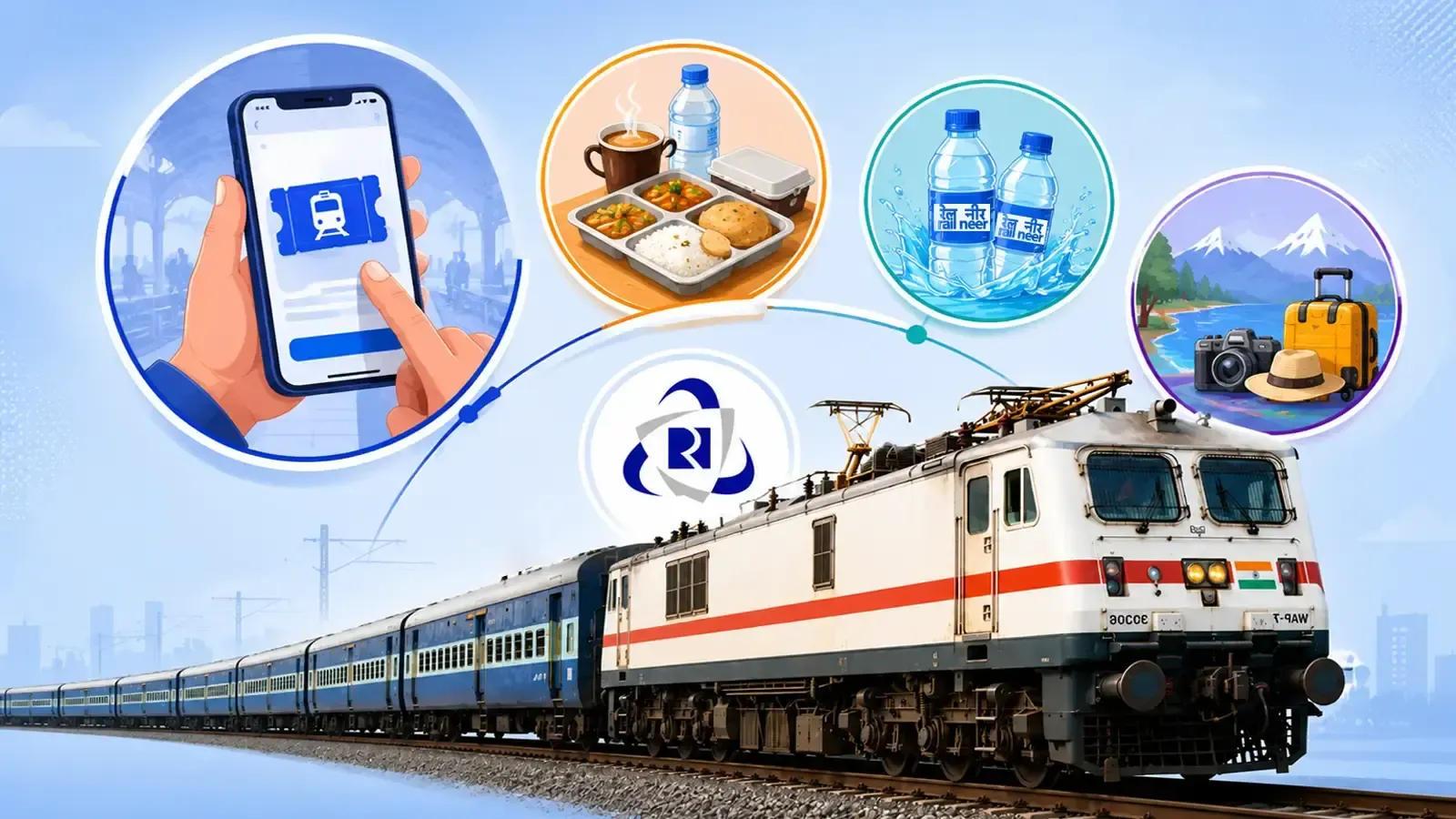
IRCTC handles over 1.5 million ticket bookings every day, making it one of the most heavily transacted websites in the Asia-Pacific region.
In George R. R. Martin's epic, A Game of Thrones, King Robert Baratheon famously tells Ned Stark, “Sitting a throne is a thousand times harder than winning one.”
The line may belong to one of the most popular book adaptations of our time, but its wisdom extends well beyond castles and crowns. Building a dominant position is one challenge. Staying there, and finding ways to keep growing, is often even harder.
And that is the position in which the Indian Railway Catering and Tourism Corporation (IRCTC) finds itself today.
Most of us have interacted with IRCTC’s website or app, even if only while frantically trying to enter a ‘captcha’ and book a ticket before the seats disappear. The Navratna public-sector enterprise has become almost synonymous with train travel for a simple reason: it is the only entity authorised by Indian Railways to sell train tickets online. So even if you book through another travel portal, IRCTC is still the platform doing the heavy lifting in the background.
That exclusive access to India’s largest passenger transport network gives IRCTC a near-monopoly. A staggering 89% of rail tickets in India are booked online, while the remaining 11% are booked at station counters. Add to that an asset-light model, strong cash flows and consistent profitability, and on paper the company looks close to ideal.
Yet the stock has struggled.
Over the past year, IRCTC’s share price has fallen nearly 30%. And over a 5-year period, the stock has risen just ~5%, well below the benchmark indices: Nifty50 (51%) and Sensex (44%).
Clearly, just having a dominant market share doesn’t guarantee market returns. A monopoly is not bad, but is it enough? Which brings us to the real question: can a company with such a dominant franchise keep creating value once the easy growth has already been captured?
The moat begins with access
IRCTC’s strongest advantage is not a product, website or service. It is access.
The company was originally set-up to professionalise railway catering and tourism services. But its real power came from becoming the digital gateway to Indian Railways. Today, it handles more than 1.5 million ticket bookings every day, making it one of the most heavily transacted websites in the Asia-Pacific region.
This is a powerful moat because IRCTC benefits from the massive railway network without having to build or maintain it. Indian Railways provides the trains, routes, stations and passenger base. IRCTC simply operates the digital layer sitting on top of it.
That also makes the economics attractive. Every time someone books a ticket, IRCTC earns a convenience fee: ₹15 for non-AC tickets and ₹30 for AC tickets. More importantly, the technology platform can handle huge volumes at low incremental cost. It constitutes less than one-third of revenue but three-fourths of profits, making it the company’s most profitable business. But, and this is where it gets more nuanced, ticketing is not its only business.
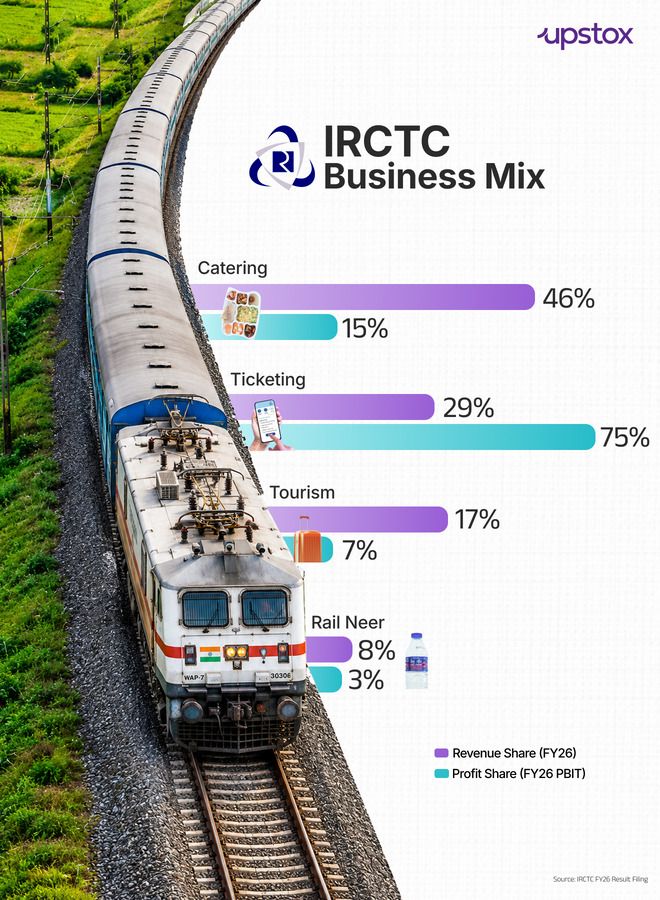
Four businesses, four economics
Think of IRCTC less as one company and more as four businesses living under the same roof. One (ticketing) is a software-like business with enviable margins. The other three look much more like traditional operating businesses.
Let’s look at them one by one.
First is catering, IRCTC’s largest segment by revenue.
Back in the day, travelling on a long-distance train usually meant carrying a well-stocked ‘food bag’ that was packed to the brim with theplas, lemon rice and dry snacks – because train or station food was simply unreliable.
That is fast becoming a distant memory.
Today, IRCTC’s catering business spans across: Mobile Catering Services (food served across various trains through pantry), Static Catering Services (located at station premises) and E-Catering Services (through third-party tie-ups).
Through this blend of owned kitchens and tie-ups with 550+ restaurant brands across India, the company enables passengers to receive fresh meals in transit. So, you can have a Domino's pizza in Nagpur, a thali in Bhopal or biryani in Vijayawada delivered straight to your seat!
The consumer benefit is easy to see. But unlike ticketing, catering isn't a business where profits automatically scale with volume.
IRCTC incurred expenses of around ₹1,84,228 lakh on catering services in FY26, up 18% year-on-year. Food quality, pricing, logistics, contractor management and railway regulations all affect margins. That difference shows up clearly in the numbers, with the catering business’ profit before interest and taxes (PBIT) falling by 8% year-on-year in FY26.
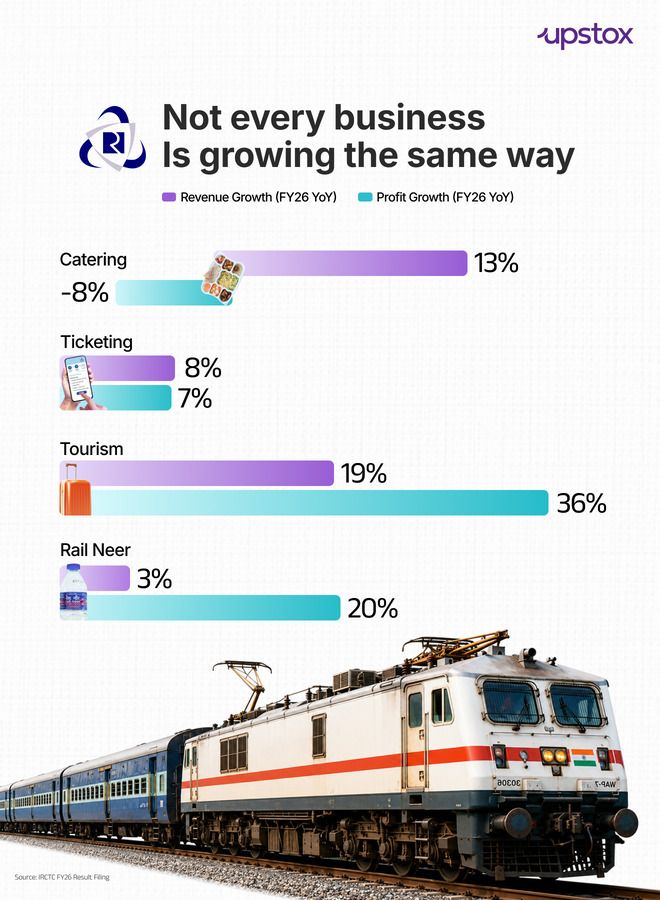
The second business is Rail Neer, IRCTC’s packaged drinking-water business. It manufactures and distributes bottled water across stations and trains, giving it access to millions of railway passengers every day. The company owns about 19 manufacturing plants and is exploring more greenfield plants and capacity expansions.
However, in this segment, Rail Neer has to compete with other bottled-water brands that are approved for sale in the railway network. Basically, it has captive distribution, but not captive demand. Another constraint is pricing, as the MRP of Rail Neer is fixed by the Ministry of Railways and falls under controlled price segment. Meaning that IRCTC cannot, on its own, increase prices to match rising raw-material, electricity, labour or freight costs.
The third and perhaps the most ambitious bet is tourism. IRCTC sells rail tour packages, hotel stays, air tickets, cruises and premium train experiences, often bundling transport with accommodation, meals and sightseeing.
The obvious question is: how different is this from other travel platforms and tour operators? Well, it has an edge but is not completely unique. IRCTC's strength lies in railway-led holidays, pilgrimage circuits and curated train journeys that naturally fit into the Indian Railways ecosystem. That's a niche where it enjoys both credibility and reach.
Outside that niche, however, it competes like everyone else.
There is no monopoly here. Customers compare prices. They read reviews. And execution and customer experience matter much more than they do in ticketing.
Chasing new kingdoms
When you step back and look at all four businesses together, one thing becomes clear.
Internet ticketing remains the crown jewel. The other businesses certainly add revenue. They deepen customer engagement and reduce dependence on a single segment. But they are also harder to scale and require more operational effort.
That is why IRCTC's biggest challenge today isn't protecting its monopoly. It's finding another business that can come even close to matching the economics of ticketing.
This also brings capital allocation into focus. IRCTC’s cash-rich balance sheet does indeed provide comfort. The company paid total dividends of around ₹9 per share in FY26, including interim and final dividends. For income-oriented investors, that is attractive. But investors seeking long-term compounding must also ask how surplus cash can be used to create new profit pools. Because a cash-rich company can produce modest shareholder returns if it has limited avenues to reinvest.
And that's the key investing lesson. A moat is an advantage, not an end in itself. Markets eventually stop rewarding companies for what they have already built and start rewarding them for how effectively they can extend it. In IRCTC’s case, it has already secured the ‘Iron Throne’ of railway ticketing. What matters now is whether its businesses beyond ticketing can grow into meaningful growth engines in their own right. That will likely define the company's next phase of growth – and the market's perception of it.
About The Author
Next Story

