
Upstox Originals
Why social media bans can’t outsmart digitally fluent teenagers

4 min read | Updated on November 16, 2026, 16:29 IST

SUMMARY
One year after Australia banned social media for children under 16, the overall impact remains mixed. According to Australia’s statutory regulator eSafety, while account ownership by minors dropped from 52% to 42% of total account ownership, tech-savvy youngsters have found ways to bypass verification checks, leaving the core issue unaddressed. Restricting access does not seem to fix addictive algorithms or harmful feeds.
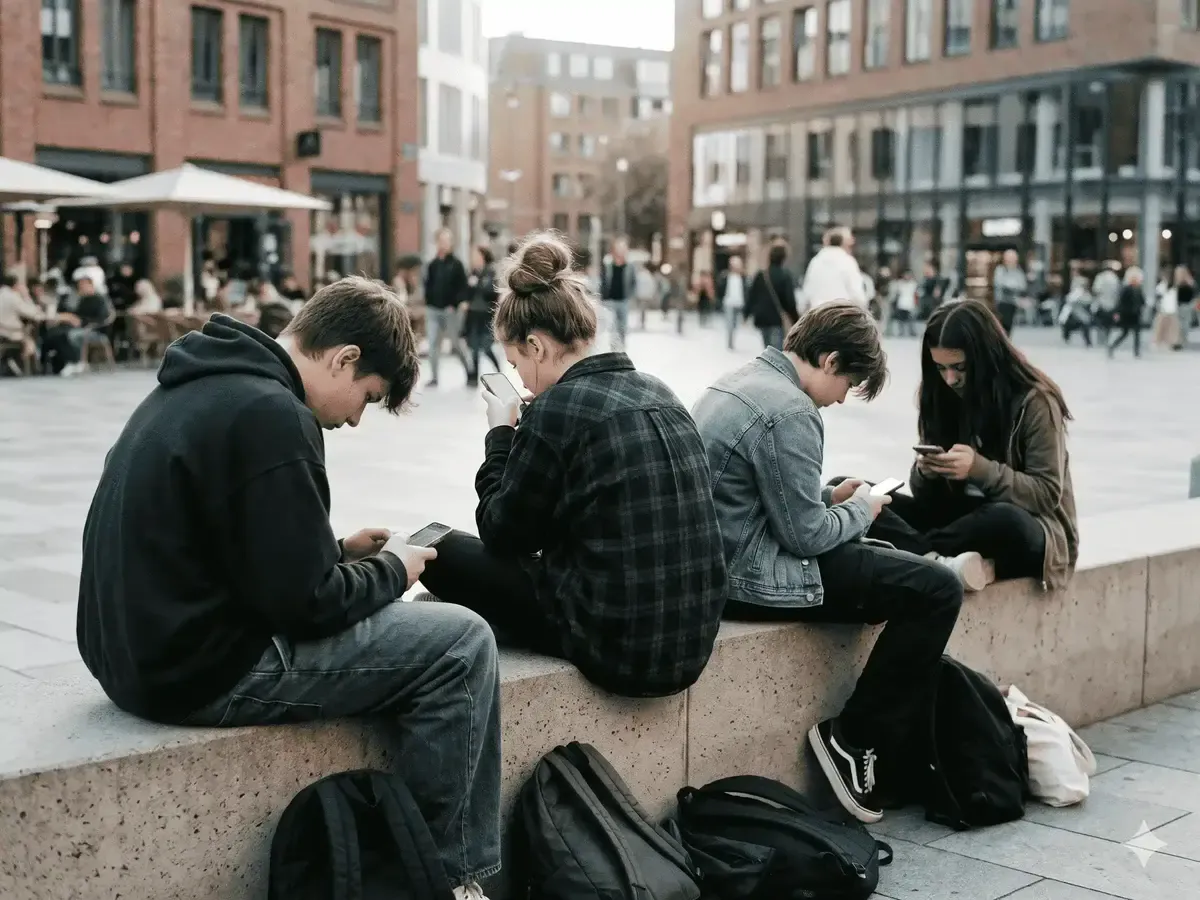
Although social platforms have introduced age-verification tools including facial scans and behaviour analysis, in practice these restrictions are easy to bypass. | AI-generated image
It’s been almost a year since the first social media ban for children under 16 years was implemented in Australia on Dec 10, 2025. But how much has changed on the ground? The ban, when proposed, had generated mixed responses. Over 40 countries have either already implemented or passed legislation in order to curb children’s social media use while some are still considering the move. But has limiting access really made online spaces safer for children?
Why was the ban imposed in the first place?
According to Global Burden of Disease (GBD) Study 2023, by the Institute for Health Metrics and Evaluation (IHME), the burden of mental health disorders has more than doubled globally over the last three decades, with the highest rates seen among adolescents. Total burden attributable to mental disorders rose by 104.5%—from 83.6 million in 1990 to 171 million in 2023. Older adolescents recorded the highest rate at 2,617.3 affected per 100,000 population.
Social media was considered harmful due to its addictive nature, possibilities of online harassment, harmful and extreme content, all of which allegedly led to mental health decline among adolescents.
While some parents support the current ban based on the age of the child, many feel that the ban must be more nuanced with additional measures in place. The bans should consider children’s rights to participation, privacy, protection and access to information.
How are adolescents navigating the ban?
In Australia children adapted quickly, with the ban not changing how they spend time online. Even though age checks are now built into platforms, new prompts appear as young people log on, nothing much has changed in how they use social media. Speaking to UNICEF Australia, children revealed that even though platforms have introduced age-verification tools including facial scans and behaviour analysis, in practice these restrictions are easy to bypass. This only reinforces how digitally fluent youngsters are today. They can find workarounds and function with little or no disruption. But a national survey conducted by the Australian government three months after the ban found a small yet significant decrease in social media account ownership among children ages 10–15 years old, from 52% before the ban to 42% after the ban.
Are there alternatives to an age-based ban?
The issue still remains that the ban restricts who can access these platforms, but it does nothing to change what actually appears on their feeds. The algorithms that determine the content, visibility and reach remain unchanged. In fact, the addictive nature of these platforms has not changed. Social media platforms have been accused of being addictive by design, which is harmful for children's mental health. It is the central allegation driving major public health advisories and landmark lawsuits against major tech companies.
In August this year, Meta settled with 47 US states for up to $17 billion, agreeing to place limits on platforms like Instagram and Facebook for teens, such as restricting use to two hours per day and removing features like the infinite scroll, beauty filters and "like" buttons.
How are youngsters across the world responding to the ban?
Amnesty International spoke to some young people who are opposed to the idea. “It’s ironic, because we’re in a world where young people are expected to deal with economic crisis, political instability, but not social media,” one said. According to him, policy makers need to teach critical thinking, promote digital literacy and provide better mental health support instead of prohibiting the use of social media altogether. A youngster from Norway says there’s a need for better regulations from governments to prevent hate expressed online from being magnified by algorithms. A student from Italy says she would feel so much safer if there was transparency on how the internet works, especially algorithms. "No one educated us about how to use these platforms,” she adds.
Some youth advocates are worried that restricting children from using social media could worsen mental health issues among people instead of improving it. Lucy Thomas, cofounder and CEO of Project Rockit, an organization in Australia that works with children to prevent cyberbullying points out that the ban would make the young more isolated. She explained how restricting access could remove sources of connection and support for children.
A broad consensus has emerged that tech companies must take responsibility for cleaning up what appears on their feeds, rather than just tracking who logs on. Australia may have taken the earliest step with the ban, but the rest of the world still waits for more evidence and time before jumping to conclusions about its effectiveness.
About The Author
Next Story

