
Upstox Originals
Rethinking the Indian ‘thali’: How India can bridge its protein gap

5 min read | Updated on August 18, 2026, 19:03 IST


SUMMARY
India faces a widespread protein deficiency driven by carb-heavy eating habits, dietary misconceptions, and confusion around nutritional information among other factors. To meet ICMR’s recommended 0.8g/kg protein intake, Indians must flip their plate proportions, moving away from cereals toward protein-dense, whole-food combinations.
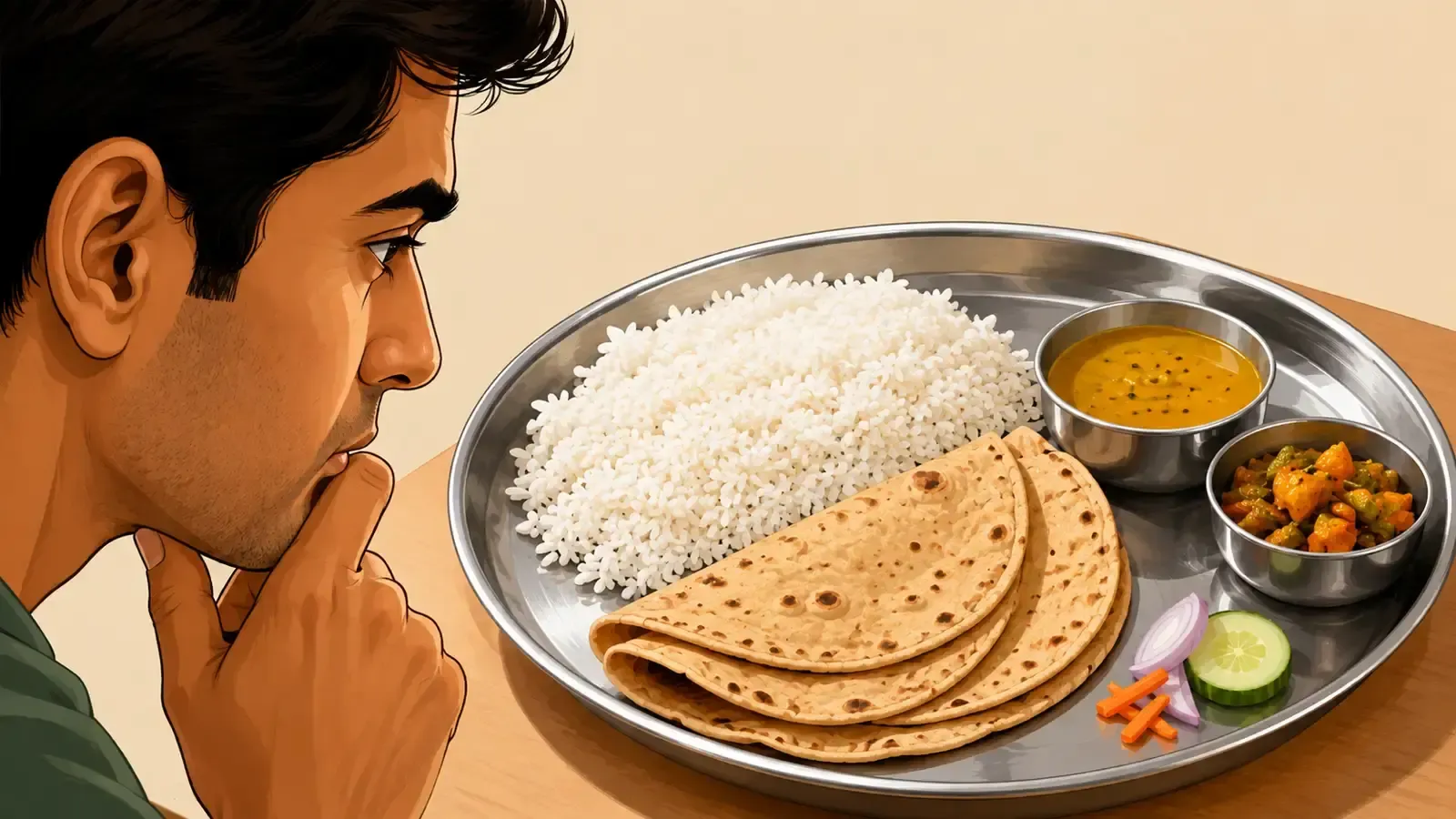
While nearly 50% of Indians include protein in every meal, 93% of those who track their intake are still confused about nutritional information. | AI-generated image
Indians are making common mistakes with their protein consumption, leading to a silent epidemic of protein deficiency. For decades, Indian households have operated under the belief that as long as there is a bowl of dal on the table, the family is getting its protein. It is a long cherished belief but is scientifically wrong. Our current lifestyles and lack of knowledge have added to it.
The arithmetic of the Indian plate
The flaw is not just in what we eat but how we serve the food. The arithmetic of the Indian plate is skewed towards carbohydrates like rice, chapati and breads, which take up most of the real estate on the plate while the protein source is a watery lentil soup tucked away in a small bowl. The Indian thali was designed for ancestors who did heavy manual labour and needed calorie-rich carbohydrates for survival. Although time has passed, the thali has not evolved. Grains still occupy 80% of the plate and protein sources like paneer, dal are relegated to a side dish. In order to get sufficient protein from dal, you would need to consume 4-5 bowls of it per meal.
Confusion about nutritional information
Although young urban Indians today have become conscious about consuming adequate protein, there is not much clarity around the types of protein and amount needed. Not many are able to understand nutritional information on food labels. ‘India's Protein Paradox’ a report by PulseAI Research surveyed 2,000 Indian consumers to analyse modern protein habits. The results were astonishing. While nearly 50% of people include protein in every meal, 93% of those who track their intake are still confused about nutritional information. The report noted that more than 71 per cent of respondents perceive protein as affordable or only slightly expensive. Instead, consumers are looking for greater clarity in making protein decisions.
Protein requirements
This brings us to the question of how much protein do we really need in a day? The Recommended Dietary Allowance as suggested by the Indian Council of Medical Research (ICMR) is 0.8 grams of protein per kilogram of body weight for a standard adult. This is the basic amount you need for your nutritional requirement.
According to the recent ICMR study Indians continue to rely heavily on cereals. According to the findings, cereal intake in most parts of the country far exceeds the recommended monthly limit of 7.5 kg per person. Kerala, Punjab and Tamil Nadu were the exceptions where cereal consumption remained below the prescribed levels. The highest cereal consumption in rural India was recorded in West Bengal, Odisha, Tripura and Manipur, where individuals consumed nearly 11.2 kg per person per month.
Here are some of the other reasons why Indians are still struggling to meet our basic protein needs.
India’s agricultural policies
Farmers receive strong price guarantees and procurement support for growing wheat and rice. Before every sowing season, the Central Government announces an MSP based on recommendations from the Commission for Agricultural Costs and Prices (CACP). The MSP ensures at least a 50% margin over the estimated cost of production. Pulses do not receive the same level of market protection. This leads to higher retail prices for lentils.
Carbohydrates are cheap calories. Getting 20 grams of protein from paneer, chicken, eggs, or even un-diluted lentils costs significantly more per meal than getting equivalent energy from a stack of rotis or a heap of rice. In order to attain National Food Security, India had launched the Green Revolution in the 1960s, prioritising high-yielding varieties of wheat and rice. That's when pulses got sidelined and policies were directed towards production of grains.
The dairy illusion
Several Indians genuinely believe they are consuming adequate protein as they consume dairy products. Here’s a reality check. 100 ml of standardise contains only about 3 grams of protein along with fats and sugars. To get 20 grams of protein from milk alone, one would have to drink over 600 ml daily.
Creating real change
Commercial whey or plant protein powders must be avoided according to the ICMR guidelines. The recommendations stem from several health and nutritional concerns. The ICMR emphasizes minimizing ultra-processed substances, as regular intake of these additives is linked to metabolic disruption and long-term health risks. Consuming ultra-concentrated protein supplements over extended periods can create an unnecessary burden on the body, affecting organs.
What is needed is a fundamental shift in the plate arithmetic. By demoting the grains and promoting protein sources on the plate we can get a balanced diet. The Indian Council of Medical Research (ICMR) recommends a 3:1 ratio of cereals to pulses/legumes for vegetarian diets to ensure you get a complete amino acid profile. Vegetarians need to upgrade their plant proteins. Because plant proteins are often incomplete or less concentrated, vegetarians must be strategic about density and food combinations.
Quick-fix supplements and trend diets will not solve the protein deficiency problem. Bridging the gap will require policy support and also personal intent. A conscious redesigning of our everyday habits based on correct information can be a start. Adopting a 3:1 Grain-to-Pulse ratio, switching from watery lentil soups to dense whole-food sources like sprouted legumes, paneer, tofu, soybeans, eggs, and lean meats, incorporating protein-rich seeds and nuts into daily meals are some habits that can be inculcated. At the systemic level, agricultural incentives will need to be rebalanced to make protein sources more accessible and affordable. Nutrition labels should help shoppers identify actual protein content. The solution to the protein problem lies in a combination of policy-driven accessibility and a conscious change in eating habits.
About The Author
Next Story

