
Upstox Originals
How India’s weakest monsoon in over a decade is straining rural demand and energy output

4 min read | Updated on October 28, 2026, 17:48 IST

SUMMARY
Driven by a Super El Niño, India’s 2026 southwest monsoon delivered 13% less rainfall than normal. According to IMD, this is its weakest performance since 2015. The deficit is affecting crop yields, squeezing rural incomes, and has caused food inflation. Reservoirs have run dry causing decade-high power shortages, dampening consumer demand. Here's a look at how the monsoon has affected India’s economy this year and what can be expected in the coming months.
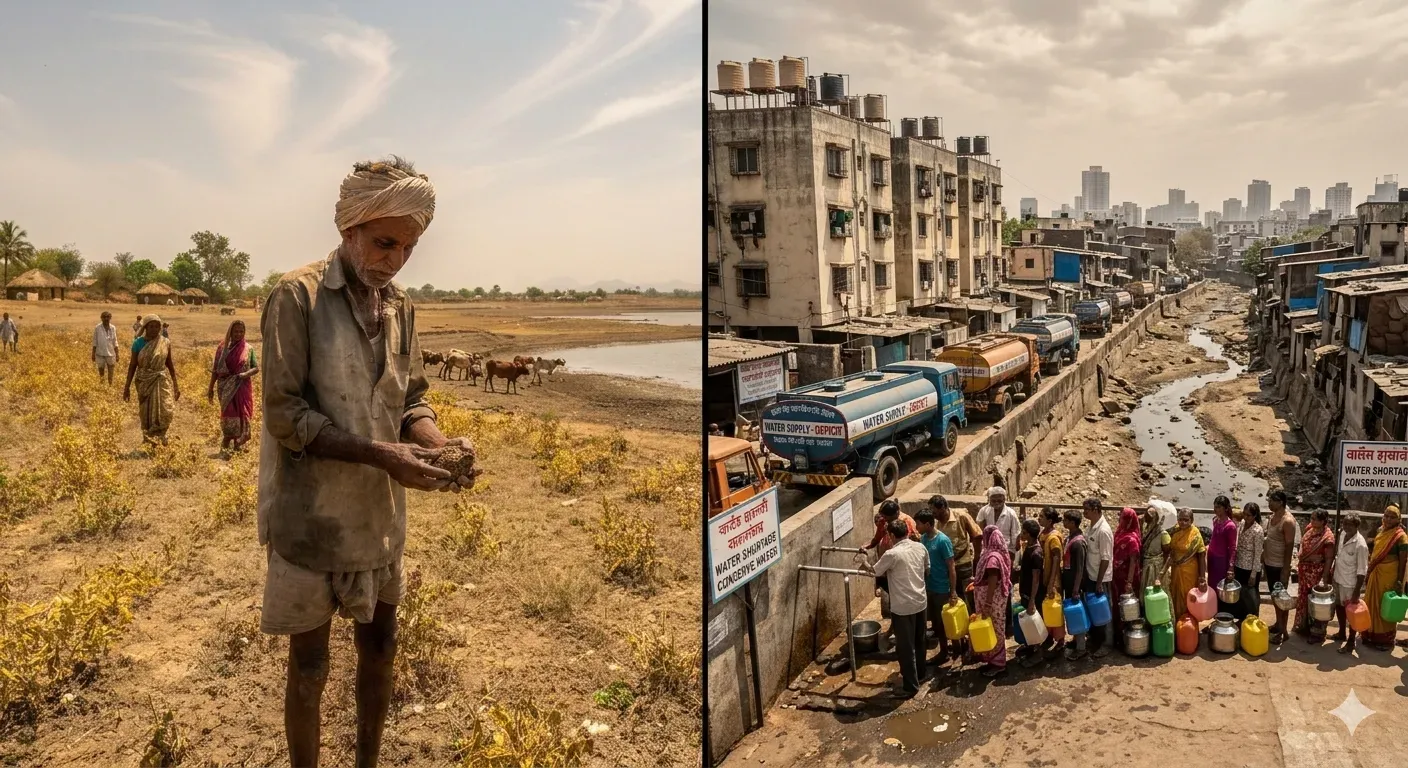
The 2026 rain shortfall has affected agricultural yields across farming belts of Maharashtra, Madhya Pradesh and Karnataka | AI-generated image
Unusually warm sea surface temperatures in the equatorial Pacific ocean can directly affect the amount of rain the southwest monsoon brings to India. This far-fetched but very real phenomenon is referred to as the El Nino effect. In 2026, this effect has been magnified, affecting global weather patterns, and global weather agencies have dubbed it a Super El Nino.
As a result, India has seen the worst rainfall deficit this year. This year, the monsoon delivered nearly 13% less rainfall than normal, making it the weakest in the last two decades. As expected, a weak monsoon has unleashed a chain reaction across India’s economy.
Agricultural impact of El Nino
As the monsoon delivers 70% of India’s annual rainfall and sustains nearly half its workforce, its performance directly influences the core sectors of the economy. This year, that lifeline fell short. The country recorded just 759.4 mm of rain between June and September, well below the long-term average of 868.6 mm.
The 2026 rain shortfall has affected agricultural yields across farming belts of Maharashtra, Madhya Pradesh and Karnataka, creating an immediate supply shortfall for the Kharif or summer crop and has posed risks for the upcoming Rabi or winter cycle. The Kharif season relies heavily on timely rain between June and September. This year, the monsoon arrived in most parts of India by the end of June. As a result, the area sown under Kharif crops in June was almost 22% lower than a year earlier. Prolonged dry spells in Maharashtra and Karnataka drove output of pulses down by 15% to 20%.
Rising food prices
The economic strain of less or uneven rainfall extends beyond the summer months. The southwest monsoon replenishes groundwater levels and fills surface reservoirs needed for winter agriculture. Rabi crops such as wheat, mustard and chickpeas are already in trouble as soil moisture levels have hit historic lows. It looks like agricultural supply disruptions will continue well into 2027.
So here is what happens. When a monsoon deficit cuts farm yields, farmers have less to sell at the local market. When farmers lose income, they cut down everyday purchases. Cities and factories feel the impact, too. Low harvest leads to rising food prices. Food makes up nearly 45% to 50% of the average Indian family's monthly expenses. When people spend more just to eat, they spend less on other items.
The impact on India’s power system
The southwest monsoon deficit has caused a decade-high power deficit across India in September 2026. Lower rainfall meant reduced inflows into reservoirs, leading to a deficit in hydropower generation. Hydropower output fell almost 16% in September from a year earlier, according to Grid India data. Electricity shortages reached 560 million kilowatt-hours, the highest monthly shortfall in more than three years, even while more cooling was required in urban and semi-urban areas due to the dry spell. Electricity demand has risen sharply putting pressure on the energy supply chain. In short, hydroelectricity is unable to meet the demand under such conditions.
Higher inflation
The prices of some staples have risen sharply. Department of Consumer Affairs data found that onions were 93% more expensive in September than a year earlier, while sugar prices rose by 28% and rice by about 8%. A deficit in rainfall triggered by the El Nino has caused a ripple effect. Lower agricultural output leads to higher food prices and subdued rural demand . According to economists, the key concern is the impact on rural demand. Sectors with high rural exposure like FMCG, automobiles, consumer durables and agri-inputs could witness slower growth in the coming quarters.
India’s weakening monsoon is not an anomaly. It is a challenge for all sectors. What is needed are adaptive strategies to navigate climate change and ensure energy security. The Super El Nino is already increasing global temperatures and it can cause ripple effects well into 2027.
About The Author
Next Story

