
Upstox Originals
Empty runways: How the fuel shock has disrupted global airlines

6 min read | Updated on May 06, 2026, 18:17 IST


SUMMARY
The collapse of Spirit Airlines and the potenital loss of 17,000 jobs is not an isolated failure. It is a warning signal. An 80% surge in jet fuel prices, trimming of global airline capacity, and an average 12% rise in global airfares have disrupted the low-cost airline model. Is this the beginning of the end for ultra‑cheap tickets or a temporary stress test before conditions normalise? The answers lie in a few key variables now shaping airlines.
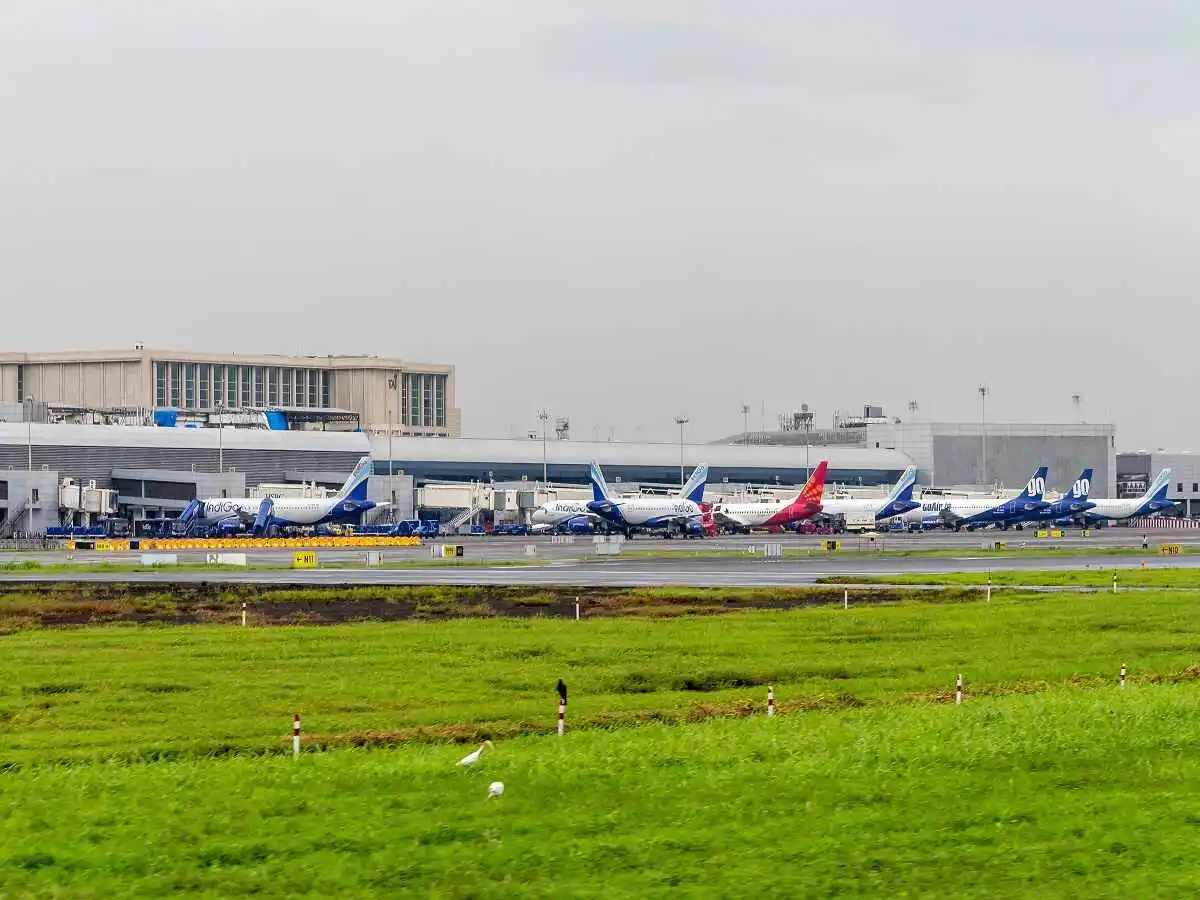
Domestic air passenger traffic fell 2.9% year-on-year to 1.26 crore in July, even as IndiGo maintained its dominance with a 65.2% market share and the best on-time performance at 91.4%.
For the past few decades, there was a budget airline ready to take you where you wanted at the most optimum cost. From the yellow planes of Spirit Airlines in the US to the ubiquitous blue of IndiGo in India, the democratisation of the skies benefited millions of travellers.
As travelers stare at "Cancelled" notices on departure boards, a larger question looms: Just how deep in the water is the global aviation industry?
The crude shock
Airlines do not buy crude oil, but their single largest variable cost — jet fuel — tracks crude closely. Prices averaged around $100 per barrel before the conflict and climbed to approximately $179 per barrel by late April, according to figures cited by Air India — an increase of nearly 80% in under two months.
In normal conditions, fuel accounts for 25–30% of an airline’s total operating costs. Right now, that share has blown past 40% for many carriers, according to India’s Federation of Indian Airlines (FIA).
Aviation has survived fuel shocks before. But those disruptions played out over months, giving airlines time to rehedge, renegotiate, and restructure routes. This one arrived in weeks. For carriers already operating on thin margins, that speed is the difference between a difficult quarter and an existential crisis.
Global flight cancellations on the rise
The response from airlines has been swift and global.
In Europe, Lufthansa has announced the cancellation of around 20,000 short-haul flights through October — a move it says will save over 40,000 metric tons of fuel. Air France-KLM has trimmed 2% of flights at its budget Transavia subsidiary; KLM has cut 1% of its European schedule. Ryanair has announced reductions from Berlin and Dublin.
In North America, United Airlines was the first major carrier to move, announcing a 5% reduction in planned routes across the second and third quarters. Canada’s Air Transat has cut 6% of its May–October schedule.
In Asia, AirAsia X, Southeast Asia’s largest low-cost long-haul carrier, has cut roughly 10% of its overall flights and raised fares by up to 40%.
In India, the FIA, representing Air India, IndiGo, and SpiceJet, wrote to the Ministry of Civil Aviation warning the industry was “on the verge of a complete shutdown.” Air India has announced cuts to long-haul routes, including London, New York, Sydney, and Singapore, through July 2026. Air India’s group losses for FY26 are projected to exceed ~₹22,000 crore, with the fuel spike a significant contributor.
The first casualty
On May 2, Spirit Airlines, the American ultra-low-cost carrier, shut down with immediate effect after 34 years of operation. All flights were cancelled. More than 17,000 jobs were lost. Spirit’s collapse matters. As of February 2026, the airline still held a 3.9% share of the US domestic passenger market.
With Spirit gone, that competitive pressure disappears on every route it previously served. Fewer carriers, less competition, higher prices — a dynamic already playing out in the data.
Why budget carriers bleed faster
Full-service carriers generate revenue from business and first-class cabins, cargo operations, corporate contracts, and loyalty programmes. That mix provides a cushion when one cost rises sharply.
Budget carriers have almost none of it. Their model is built on selling the maximum number of economy seats at the lowest viable price. Pre-war industry data makes the vulnerability stark:
| Airline type | Fuel as % of operating costs | Typical EBIT margin (2024) |
|---|---|---|
| Full-service carriers (FSCs) | ~25–30% | ~7–14% |
| Low-cost carriers (LCCs) | ~28–33% | ~2–5% |
| Ultra-low-cost carriers (ULCCs) | ~30–35% | -1% to 1% |
Source: IBA Insight, Oliver Wyman Airline Economic Analysis, CAPA Centre for Aviation
Airlines with fuel-hedging programmes — contracts that lock in fuel prices in advance — have had some protection. Lufthansa and Ryanair are both reported to have partial hedges in place. But hedges expire. As those contracts roll off through 2026, the full weight of current fuel prices will hit even the better-prepared carriers.
Your ticket is getting more expensive
The cost pass-through to passengers is already visible. Global average airfares for the week of April 13 were 12% higher than the same week in 2025, based on the lowest available economy fares, according to the Official Airline Guide. At the peak of the shock in early April, that figure hit 24% YoY.
Individual carrier moves tell the same story. AirAsia has raised fares by up to 40%. Air New Zealand has increased short-haul economy fares by NZ$20 and long-haul fares by NZ$90 per ticket. Thai Airways expects a 10–15% fare increase. IndiGo, Air India and Akasa Air have added route-based fuel surcharges on international routes.
Governments are being asked to step in
The scale of the disruption has prompted airlines around the world to appeal for government support. In the US, the industry trade body has sought $2.5 billion in federal relief. In India, the FIA has called for an immediate deferral of the 11% excise duty on ATF and a uniform pricing mechanism for aviation fuel. In Europe, formal government engagement is at an earlier stage.
What investors should watch for
For investors with exposure to aviation stocks, travel platforms, or fuel-linked commodities, three variables matter most right now.
-
First, the duration of the disruption. Every additional week of restricted supply through the Strait of Hormuz extends the fuel shock and narrows the window for airlines to recover financially before the summer season ends.
-
Second, hedging contract timelines. Airlines that appear relatively protected today will face rising exposure as their forward contracts expire.
-
Third, government intervention. Meaningful ATF duty relief in India, or a substantive federal fuel package in the US, could change the calculus for carriers currently on the edge.
The global summer travel season is around the corner. Millions of passengers are already booked. Airlines have committed to their schedules. The only variable still genuinely in play is the oil price — and that, for now, is a question being answered far from any airport.
The pressure on consumers is coming from two directions simultaneously. Airlines are adding surcharges on top of base fares that are themselves rising because of reduced capacity. Fewer flights and fewer carriers on any given route means less competition and, by extension, higher prices.
About The Author
Next Story

